Equipment
Ingredients
For the Beans
- 450 g white beans
- 2 whole cloves
- 100 g yellow onion, halved
- 2 bay leaves
- 75 g carrots, cut into 5cm chunks
- 1 garlic cloves, halved horizontally
- 30 g fresh thyme
- fine sea salt, to taste
- 6 g fresh parsley, chopped
- 3 g fresh chives, finely chopped
- 5 ml lemon zest, grated
- 45 ml extra virgin olive oil
- freshly ground black pepper, to taste
For the Lamb
- 4000 g bone-in leg of lamb, trimmed and tied
- 6 garlic cloves, cut into quarters lengthwise
- kosher salt
- freshly ground black pepper
- 30 ml extra virgin olive oil
- 400 g yellow onion, halved crosswise
- 2 celery stalks, cut into 7cm-long pieces
- 60 g fresh thyme bunches
- 60 g fresh rosemary sprigs
- 475 ml dry white wine
- 680 g carrots
- 27 g unsalted butter
- watercress, for garnish
Nutrition (per serving)
Method
Place the white beans in a Dutch oven or heavy-bottomed pot. Add 1.9L of water and bring to a boil over high heat. Stick one whole clove into each half of the halved onion. Add the prepared onion, bay leaves, carrots, halved garlic head, fresh thyme, and salt to the pot. Reduce heat to a low simmer, cover with the lid slightly ajar, and cook for 30 minutes. Taste the broth and add salt if needed. Continue to simmer for another 30 minutes, checking for tenderness after 15 minutes. Remove from heat and let the beans cool in their cooking liquid. They can be made several hours or up to a day in advance.
Prepare the lamb by making about 24 small slits evenly over its surface using a sharp paring knife. Insert a quartered garlic clove into each slit.
Season the leg of lamb generously with kosher salt (about 40g, or 1% of the lamb's weight) and about 1g of black pepper. Drizzle with 30ml of olive oil and rub it all over the meat along with the seasonings. Allow the lamb to rest at room temperature for at least 1 hour before roasting. For a more intense flavor, you can season it, wrap it, and refrigerate it for up to 24 hours; bring to room temperature before proceeding.
Preheat oven to 245°C (475°F). Arrange the halved onions and celery pieces in a sturdy roasting pan. Lay the fresh thyme and rosemary sprigs on top of the vegetables and place the lamb leg on the herbs. Roast uncovered for 20 minutes. Add the white wine to the pan, then reduce the oven temperature to 175°C (350°F). Continue roasting, basting occasionally, until a meat thermometer registers 54°C (130°F) for medium-rare or 60°C (140°F) for medium. This will take up to 1.5 hours.
Remove the lamb from the roasting pan and transfer it to a cutting board. Tent it loosely with foil and let it rest for 15 to 20 minutes. Discard the onions, celery, thyme, and rosemary from the roasting pan. Skim off any excess fat from the pan juices.
Place the roasting pan over medium-high heat and bring the pan juices to a simmer, scraping up any browned bits from the bottom. If the juices are too concentrated or salty, add a splash of water to adjust the flavor.
While the lamb is resting, boil the carrots in well-salted water until tender, about 10 to 12 minutes. Drain them and toss with the butter. Keep warm.
Reheat the beans in their broth. Drain the beans, reserving the broth for another use. Remove and discard the onion, bay leaves, carrots, garlic, and thyme from the beans. Place the beans in a warm serving dish and gently toss them with the chopped parsley, chives, lemon zest, 45ml of olive oil, and freshly ground black pepper (about 1g). Strain the pan juices and pour them into a serving vessel.
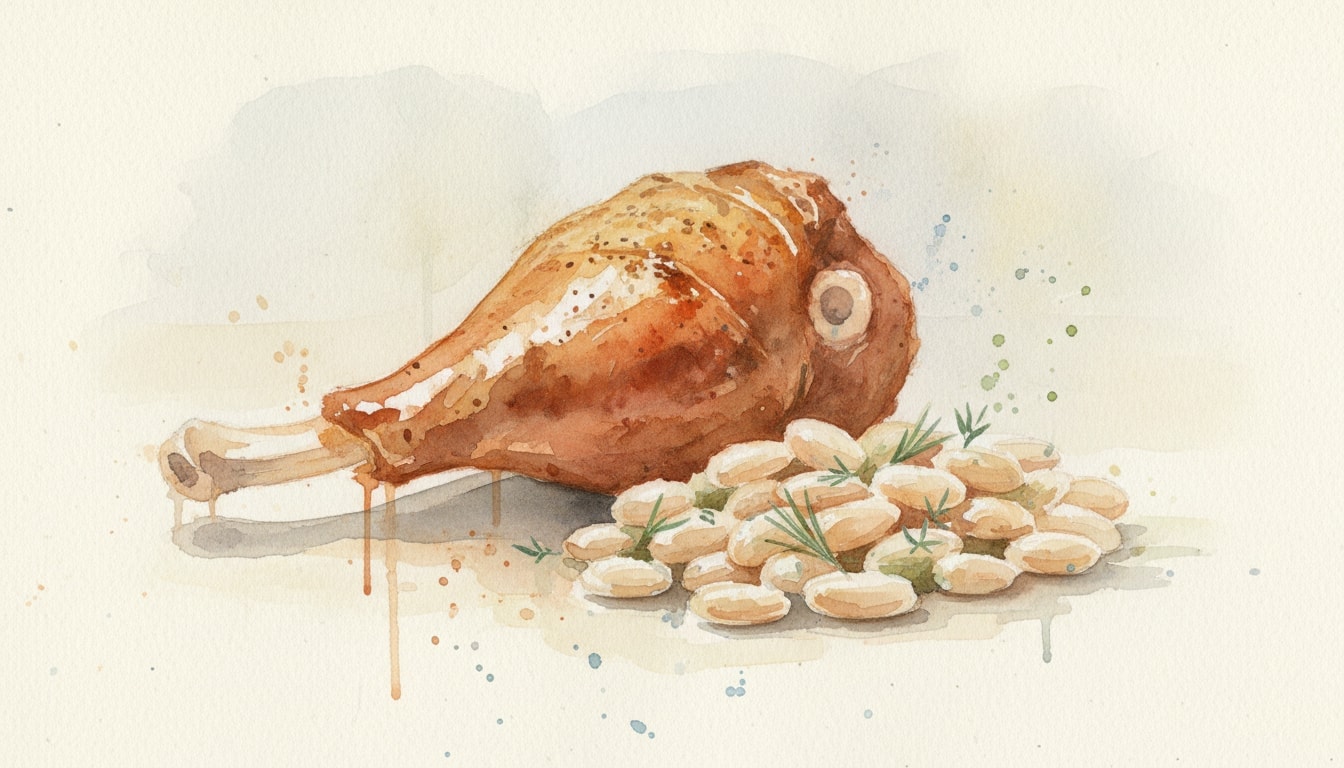
Carve the rested lamb and arrange it on a serving platter with the buttered carrots. Garnish with watercress, if desired. Serve the beans alongside the lamb and carrots, with the pan juices for drizzling.
Chef's Notes
- Use a meat thermometer to ensure the lamb reaches the desired internal temperature.
- Resting the lamb is essential for juicy results.
- For the best flavor, use high-quality ingredients, especially the olive oil and lamb.
Storage
Refrigerator: 3 days — Store lamb and beans separately in airtight containers.
Freezer: 2 months — Freeze cooked lamb and beans separately in airtight containers or freezer bags.
Reheating: Reheat lamb in a low oven until warmed through. Reheat beans gently on the stovetop.