Equipment
Ingredients
The Pheasant
- 1 whole pheasant, cleaned and patted dry
- 20 g unsalted butter, divided
- kosher salt
- black pepper, freshly ground
Bacon & Cabbage
- 150 g smoked streaky bacon, diced into lardons
- 600 g savoy cabbage, cored and shredded
- 1 yellow onion, finely sliced
- 2 garlic, minced
- 3 fresh thyme, whole sprigs
Pan Sauce
- 120 ml dry white wine
- 250 ml chicken stock
- 20 g unsalted butter, cold and cubed
Nutrition (per serving)
Method
Preheat the oven to 200°C/400°F.
Use paper towels to ensure the pheasant is completely dry inside and out. Season the cavity and exterior generously with salt and black pepper.
Melt 20g of unsalted butter in an ovenproof skillet over medium-high heat. Sear the pheasant on all sides until the skin achieves a deep golden brown, taking care not to tear the delicate skin.
Transfer the ovenproof skillet with the pheasant into the preheated oven. Roast for 35 to 40 minutes, basting once halfway through with the pan juices, until a meat thermometer inserted into the thickest part of the thigh registers 74°C/165°F and juices run clear.
Carefully remove the skillet from the oven. Transfer the pheasant to a carving board and let it rest undisturbed for 15 minutes. Retain the ovenproof skillet with the drippings for the sauce.
While the bird rests, heat a large sauté pan over medium heat. Add the diced smoked streaky bacon and fry until the fat renders out and the edges are crisp.
Add the sliced yellow onion and minced garlic to the bacon fat. Cook until the onion turns translucent. Stir in the shredded savoy cabbage and thyme sprigs. Sauté, tossing frequently, until the cabbage collapses and becomes perfectly tender.
Place the original ovenproof skillet with the pheasant drippings over medium heat. Pour in the dry white wine to deglaze, scraping the bottom with a wooden spoon to release caramelized fond. Pour in the chicken stock and simmer rapidly until the liquid reduces by half. Remove from the heat and aggressively whisk in the cold cubed butter until the sauce emulsifies and turns glossy.
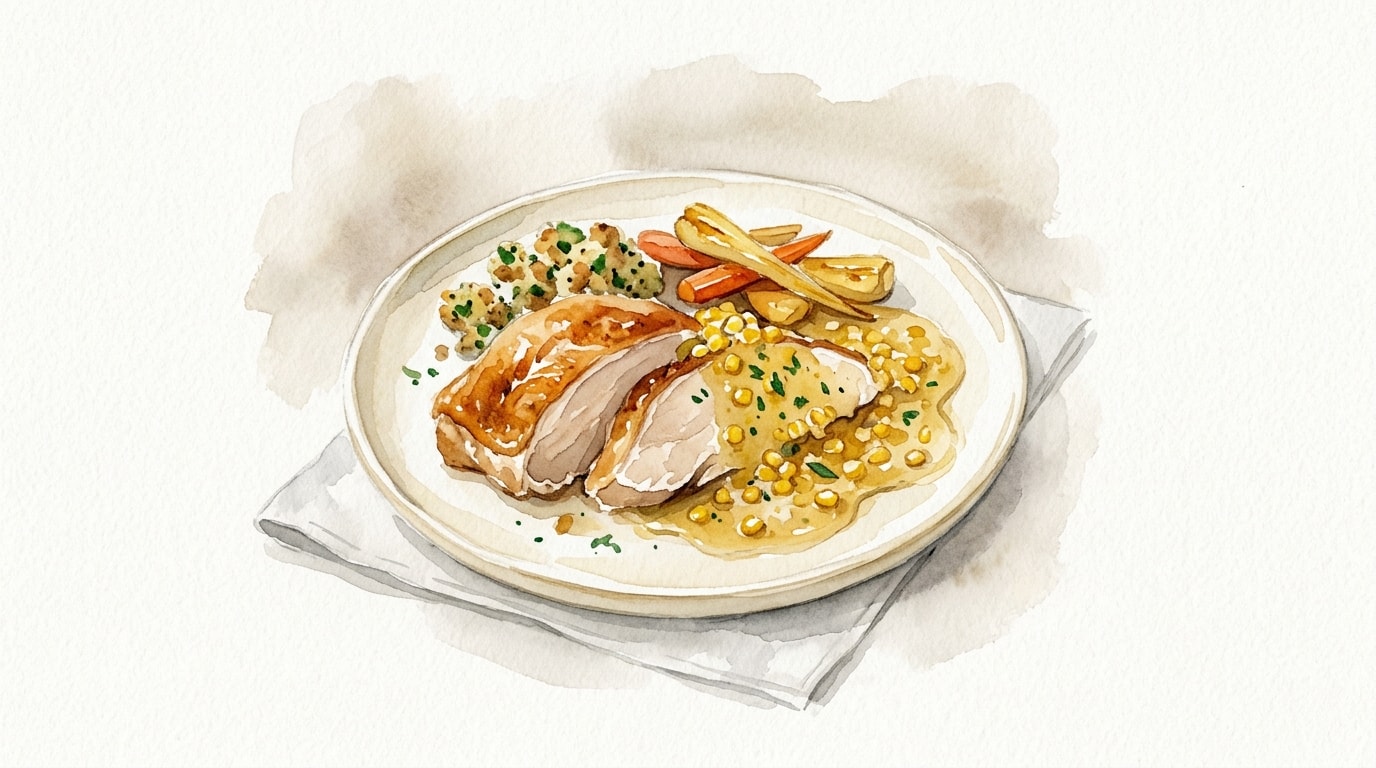
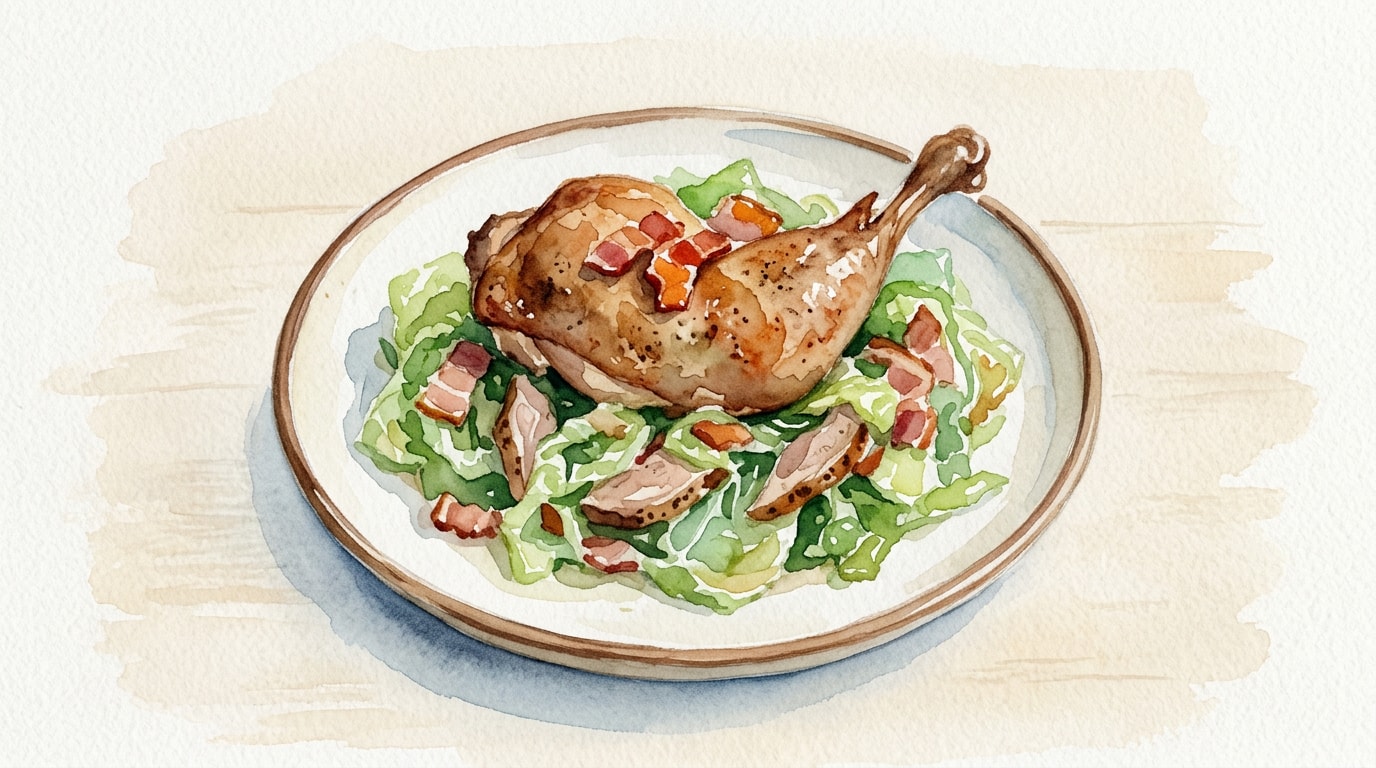
Using a chef's knife, carve the rested pheasant into breasts and leg quarters. Discard the thyme sprigs from the cabbage mixture. Divide the warm bacon cabbage between plates, top with the carved pheasant pieces, and generously spoon the rich pan sauce over the meat and vegetables.
Chef's Notes
- Pheasant is famously lean. Allowing the bird to come to room temperature for 30 minutes prior to roasting ensures more even cooking.
- Barding the breast (draping it with streaky bacon) before roasting is a traditional technique to add fat and protect the delicate meat. If you do this, remove the bacon for the final 10 minutes to allow the skin to crisp.
- Savoy cabbage pairs beautifully with the gaminess of the bird. Do not overcook it to the point of turning grey; it should retain a slight bite and vibrant color.
- The resting phase is critical. Cutting into the pheasant immediately out of the oven will cause the juices to violently spill onto the board, leaving you with dry meat.
Storage
Refrigerator: 3 days — Store the pheasant and cabbage in separate airtight containers to maintain textures.
Freezer: 1 month — Freeze the meat and sauce only; the cabbage will become unpleasantly mushy upon thawing.
Reheating: Reheat gently in a 150C/300F oven, covered with foil and a splash of stock, until warmed through to prevent drying out the lean meat.