Equipment
Ingredients
stuffing
- 450 g prunes, pitted
- 240 ml port or madeira
- 30 g unsalted butter
- 100 g onion, chopped
- 2 garlic, minced
- 6 celery, chopped
- 12 g parsley, chopped
- ½ g dried thyme
- 1 g dried sage
- 450 g apple, peeled, cored, and chopped
- 120 g breadcrumbs
- 5 g salt
- 2 g black pepper
goose
- 4080 g goose
- 1 lemon, halved
Nutrition (per serving)
Method
Soak the pitted prunes in the port or madeira for at least 1 hour.
Preheat your oven to 175°C (350°F).
Melt the butter in a skillet over medium heat.
Add the chopped onion, minced garlic, and chopped celery to the skillet and cook until softened.
Stir in the chopped parsley, thyme, sage, and chopped apples and cook for 5 to 10 minutes until the apples begin to soften.
Add the soaked prunes and their soaking liquid to the skillet and cook for 15 to 20 minutes to allow the liquid to reduce.
Remove the skillet from the heat, stir in the breadcrumbs, and season with salt and pepper.
Remove any excess fat from the goose cavity and reserve it for other uses.
Thoroughly dry the goose, inside and out, using paper towels.
Rub the inside and outside of the goose with the cut sides of the lemon halves, then season with salt and pepper.
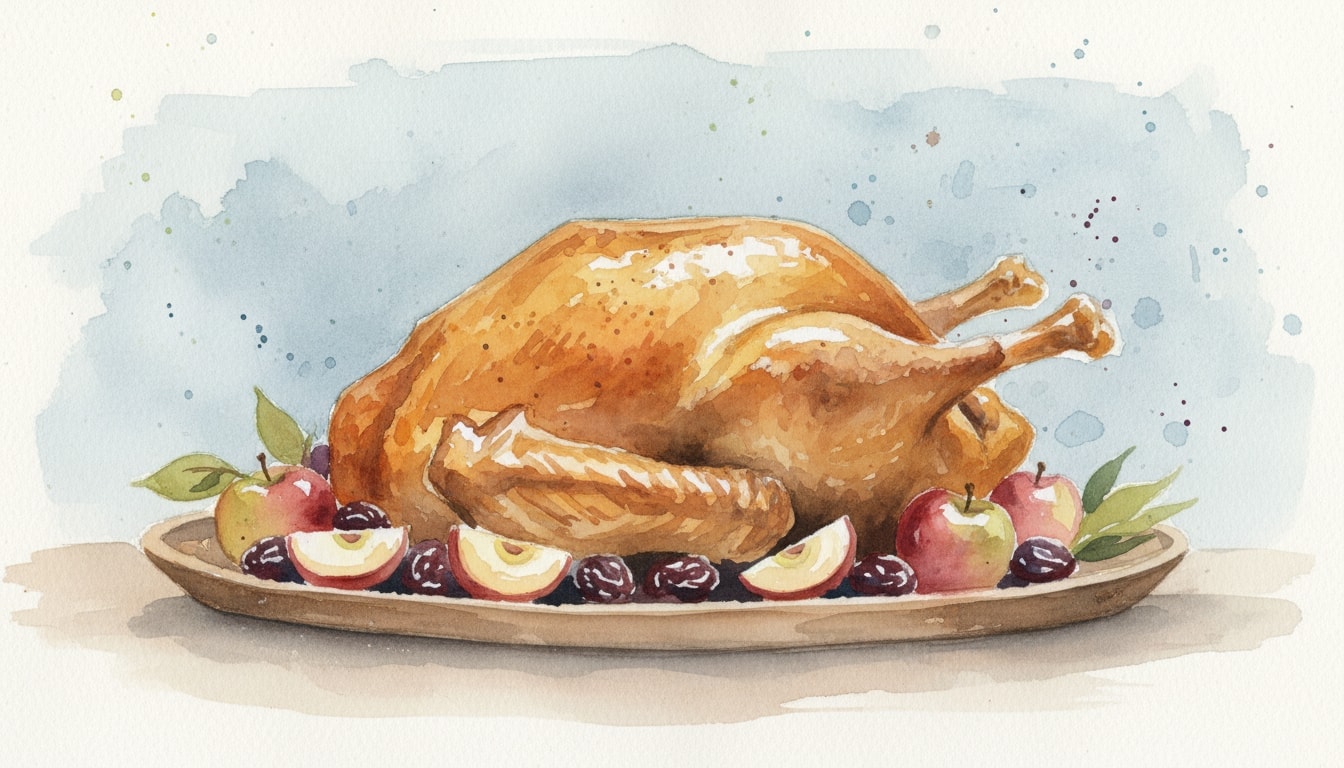
Fill the goose cavity with the apple and prune stuffing mixture.
Truss the goose with kitchen twine to secure the stuffing and ensure even cooking.
Place the goose on a roasting rack in a roasting pan and roast for 3 to 3.5 hours at 175°C (350°F).
Baste the goose with its rendered juices every 30 to 45 minutes during the roasting process.
Allow the goose to rest for 15 minutes before carving.
Chef's Notes
- For crispier skin, ensure the goose is thoroughly dried inside and out before roasting. You can also prick the skin all over with a fine needle or the tip of a sharp knife, being careful not to pierce the meat.
- Don't discard the rendered goose fat! It's liquid gold for roasting potatoes or other vegetables, imparting an unparalleled flavor.
- The port or madeira soak for the prunes is crucial for plumpness and flavor. If you're short on time, a quick soak in hot water can work, but the depth of flavor will be less pronounced.
- Using a meat thermometer is the most reliable way to ensure the goose is cooked through. Insert it into the thickest part of the thigh, avoiding the bone.
- Allowing the goose to rest after roasting is as important as the cooking itself. This lets the juices redistribute, resulting in more tender and moist meat.
Storage
Refrigerator: 3 days — Store in an airtight container.
Freezer: 2 months — Remove meat from bones before freezing.
Reheating: Reheat covered in a 150°C (300°F) oven with a splash of water or stock to prevent drying.