Equipment
Ingredients
Noodles and Protein
- 150 g dried soba noodles
- 200 g firm tofu, drained and cubed
Sesame Dressing
- 30 g sesame paste
- 30 ml soy sauce
- 15 ml rice vinegar
- 10 ml toasted sesame oil
- 15 ml water, cold
- 10 g sugar
- 5 g fresh ginger, peeled and finely grated
Fresh Produce and Garnish
- 100 g cucumber, julienned
- 2 scallions, thinly sliced
- 5 g toasted sesame seeds
Nutrition (per serving)
Method
Place the block of firm tofu on a plate lined with paper towels. Let it sit to drain excess moisture while you prepare the other ingredients.
In a mixing bowl, combine the sesame paste, soy sauce, rice vinegar, toasted sesame oil, cold water, sugar, and grated ginger. Whisk until perfectly smooth and emulsified. If the dressing is too thick, add water one teaspoon at a time.
Bring a medium pot of unsalted water to a rolling boil at 100C/212F. Add the soba noodles and cook according to the package directions, stirring occasionally to prevent sticking.
Drain the cooked soba noodles in a colander and immediately rinse them vigorously under cold running water. Rub the noodles gently with your hands to remove the excess surface starch.
Cut the drained tofu into bite-sized cubes. Transfer the rinsed and well-drained noodles to a serving bowl. Pour half of the sesame dressing over the noodles and toss to coat evenly.
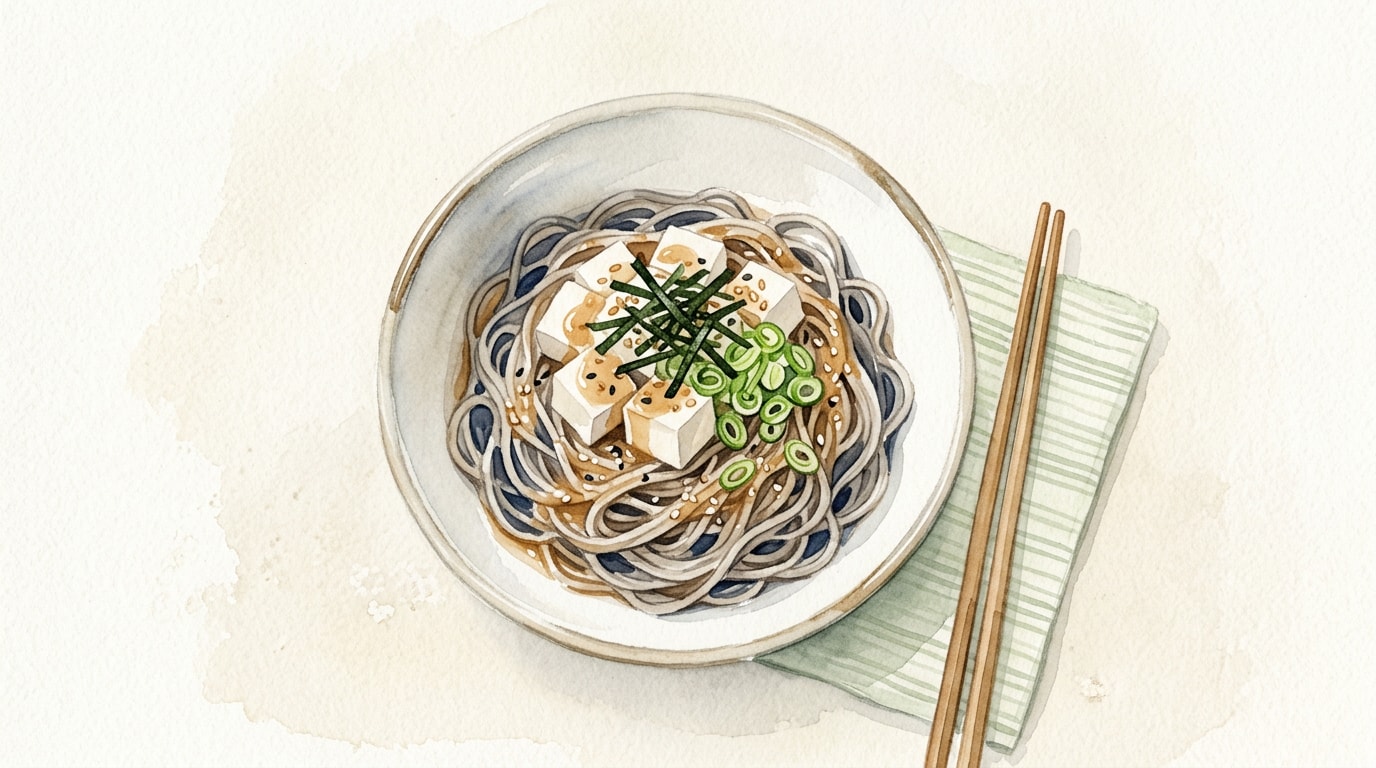
Arrange the tofu cubes and julienned cucumber on top of the dressed noodles. Drizzle the remaining dressing over the tofu and vegetables. Garnish with thinly sliced scallions and toasted sesame seeds. Serve immediately.
Chef's Notes
- Always check the label on your soba noodles. Many brands use a blend of wheat and buckwheat flour. For a completely gluten-free dish, seek out 100 percent buckwheat soba (juwari soba), but note they are more delicate to cook.
- Japanese sesame paste (nerigoma) is made from unhulled toasted sesame seeds, giving it a deeper, nuttier flavor than standard Middle Eastern tahini. If using tahini, add an extra splash of toasted sesame oil to replicate that depth.
- This recipe thrives on contrasting temperatures and textures. Ensure the noodles are completely chilled before serving to highlight the refreshing nature of the dish.
- Do not salt the water when boiling soba noodles. Unlike Italian pasta, soba noodles already contain a significant amount of sodium in the dough.
Storage
Refrigerator: 2 days — Store noodles and dressing separately to prevent the soba from becoming soggy.
Reheating: Serve chilled or at room temperature.