Equipment
Ingredients
Base Aromatics and Meat
- 150 g pancetta, diced
- 15 ml extra virgin olive oil
- 2 garlic, smashed and peeled
- 1 g red pepper flakes
Pasta and Liquid
- 500 ml dry red wine, room temperature
- 400 g spaghetti, dry
- 2000 ml water
- 20 g coarse salt
Finishing
- 60 g pecorino romano, finely grated
- 2 g black pepper, freshly cracked
Nutrition (per serving)
Method
Place the extra virgin olive oil and diced pancetta in a large cold skillet. Set over medium heat and cook until the fat has rendered and the pancetta is deeply browned and crisp, about 5 to 7 minutes. Using a slotted spoon, remove the pancetta to a paper towel-lined plate, leaving the rendered fat in the skillet.
Add the smashed garlic cloves and red pepper flakes to the rendered pancetta fat. Cook until the garlic is fragrant and lightly golden, about 2 minutes. Remove and discard the garlic cloves.
Pour 400ml of the red wine into the skillet with the flavored fat. Bring the mixture to a rapid simmer over medium-high heat and let it reduce by half, which will take about 5 minutes.
Meanwhile, bring the water to a rapid boil 100C or 212F in a large pot. Add the coarse salt, then drop in the spaghetti. Cook the pasta for exactly half the time indicated on the package directions, usually about 4 to 5 minutes. The pasta will be very firm and undercooked.
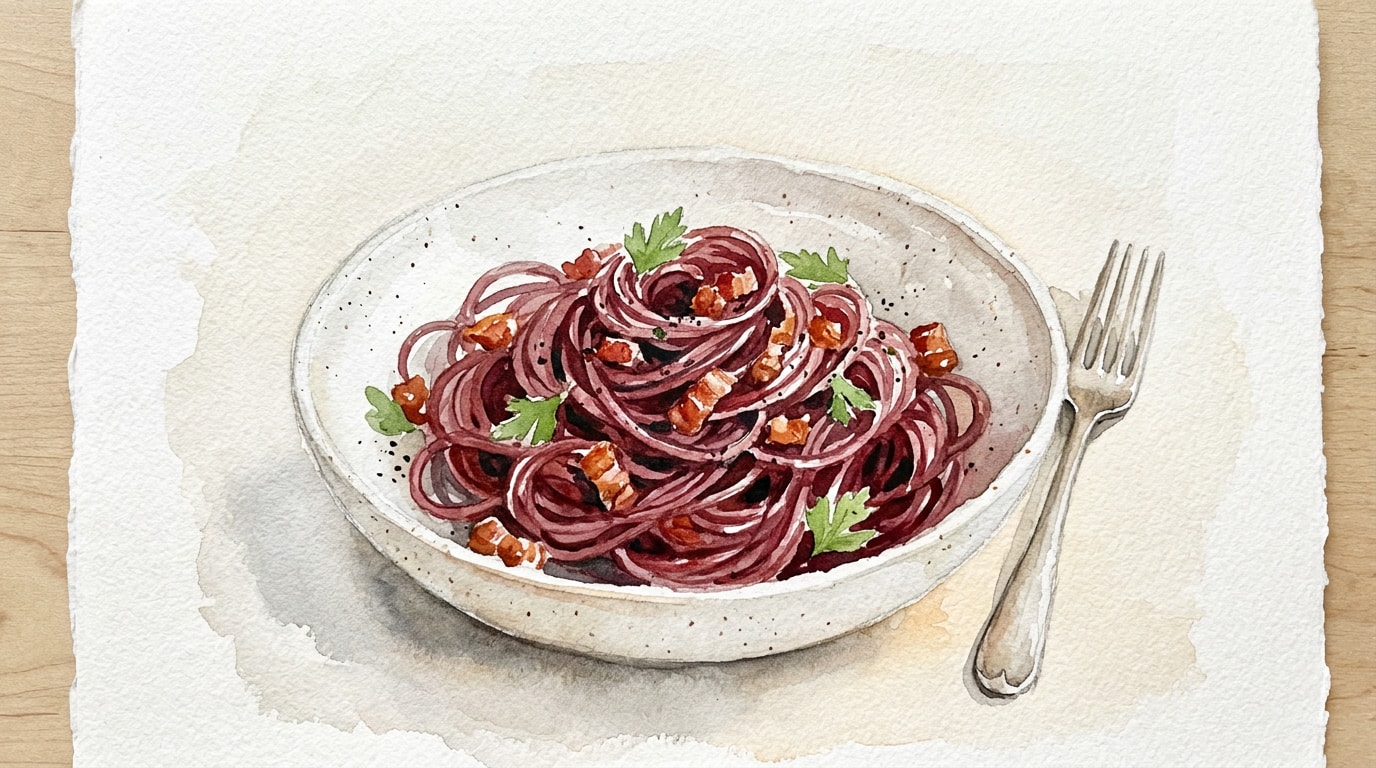
Using tongs, transfer the parboiled spaghetti directly from the water into the skillet containing the reduced wine. Pour the remaining 100ml of fresh red wine over the pasta. Continue cooking over medium heat, tossing the pasta continuously with tongs, until the pasta is al dente and the wine has reduced to a glossy syrup that clings to the noodles. This should take about 4 to 5 minutes.
Remove the skillet entirely from the heat. Sprinkle the finely grated Pecorino Romano, freshly cracked black pepper, and the reserved crispy pancetta over the pasta. Toss vigorously and continuously for about a minute. The residual heat will melt the cheese into the liquid, creating a creamy, emulsified sauce.
Divide the pasta immediately into warm, shallow bowls. Scrape any remaining sauce and pancetta bits from the bottom of the skillet and distribute evenly over the servings.
Chef's Notes
- Wine Selection: Do not use cooking wine. Choose a dry, robust red wine that you enjoy drinking. The flavor will concentrate significantly as it reduces, so fruit-forward but dry varieties like Chianti or Sangiovese provide the best balance of acidity and depth.
- The Risottata Technique: Finishing the pasta directly in the wine reduction is called the risottata method. This allows the pasta to absorb the flavor of the wine directly while releasing its starches into the pan to thicken the sauce naturally.
- Cheese Temperature: Pecorino Romano is prone to separating if subjected to direct, high heat. Grating it finely with a microplane ensures it melts quickly and evenly into the residual heat of the sauce.
- Salt Management: Pancetta and Pecorino Romano are both highly salted ingredients. Be cautious with additional seasoning. Salt your pasta water slightly less than you normally would to prevent the final dish from becoming overly salty once the liquid reduces.
Storage
Refrigerator: 3 days — Store in an airtight container. The pasta will absorb more liquid as it sits, altering the texture slightly.
Reheating: Reheat in a skillet over medium-low heat with a small splash of water to help re-emulsify the sauce.