Equipment
Ingredients
Chicken and Aromatics
- 200 g chicken breast, boneless, skinless, diced into 2cm cubes
- 15 ml vegetable oil
- 50 g yellow onion, finely diced
- 1 garlic, minced
- 5 g fresh ginger, grated
Spices and Sauce
- 6 g curry powder, mild or medium
- 3 g kosher salt
- 100 g canned diced tomatoes, with juices
- 60 g plain yogurt, full-fat, room temperature
- 5 g fresh cilantro, roughly chopped
Nutrition (per serving)
Method
Using a sharp chef's knife and a dedicated cutting board to prevent cross-contamination, dice the raw chicken breast into even pieces. Thoroughly wash hands and surfaces after handling.
Heat the vegetable oil in a skillet over medium heat. Add the finely diced onion and cook until softened and translucent, about 3 minutes.
Add the minced garlic, grated ginger, and curry powder to the skillet. Stir constantly for 1 minute to toast the spices and release their fat-soluble flavors.
Increase the heat slightly and add the diced chicken breast and kosher salt. Toss to coat the chicken in the spice mixture and sear for 3 to 4 minutes until lightly browned on the outside.
Pour the diced tomatoes and their juices into the skillet. Bring the mixture to a gentle bubble, then reduce the heat to medium-low. Cover partially and simmer for 5 to 7 minutes, or until the chicken is completely cooked through and reaches a safe internal temperature of 74°C/165°F.
Remove the skillet entirely from the heat. Allow the residual bubbling to stop for about 1 minute, then gently stir in the room-temperature plain yogurt until a cohesive, creamy sauce forms.
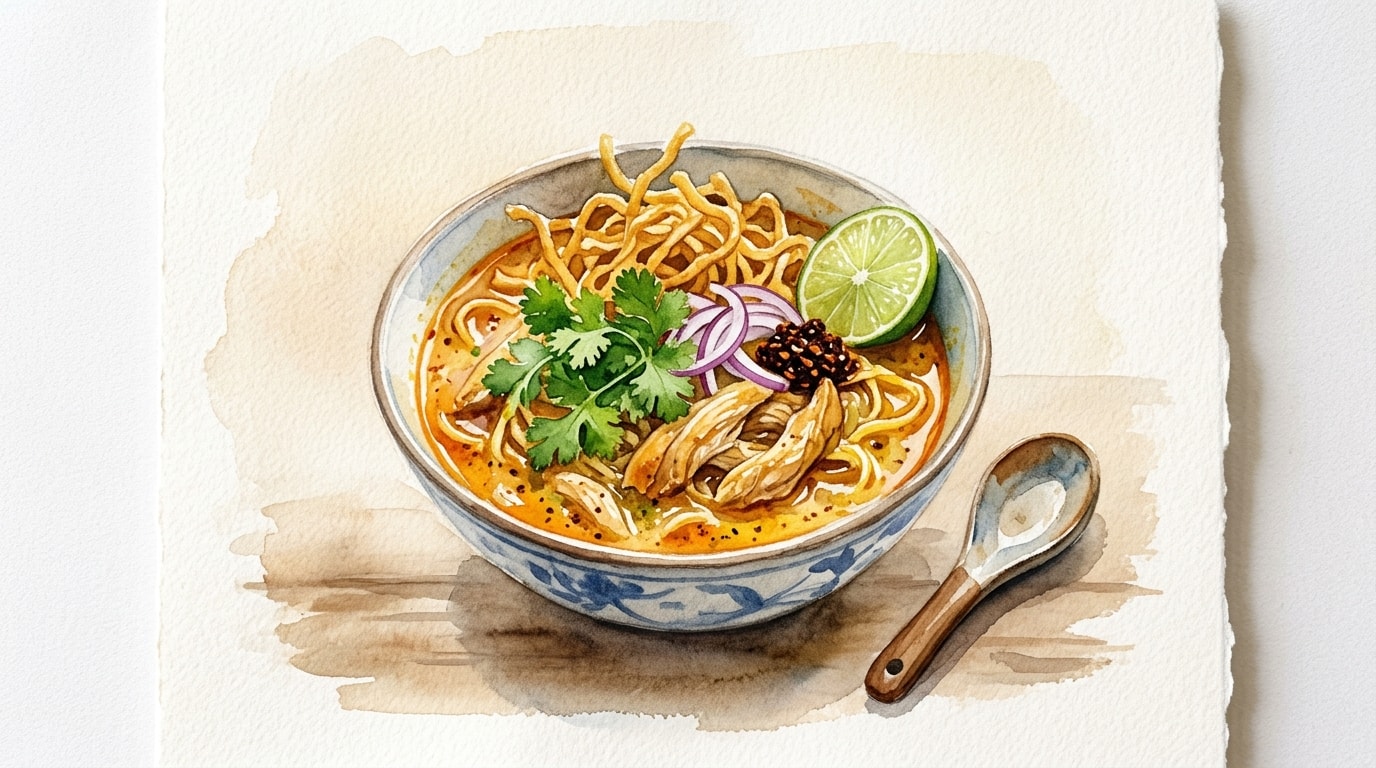
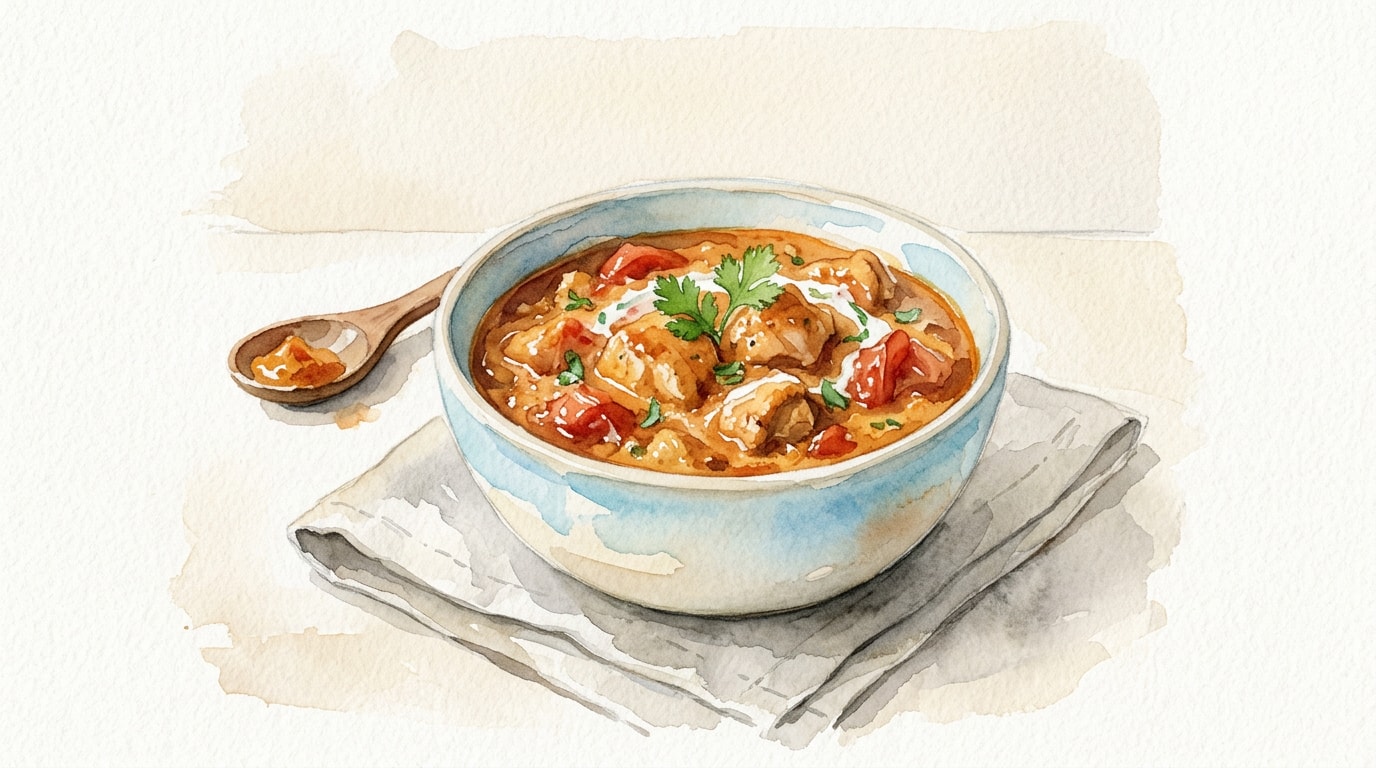
Transfer the finished chicken curry to a serving bowl. Garnish with chopped fresh cilantro and serve immediately.
Chef's Notes
- Full-fat yogurt is crucial here. Low-fat or non-fat yogurts lack the necessary stabilizers and lipids to withstand being introduced to a hot, acidic tomato sauce without splitting.
- Blooming or toasting the curry powder in the oil before adding liquids is a non-negotiable step. Spices contain volatile flavor compounds that are fat-soluble; skipping this results in a raw, powdery taste.
- If your canned tomatoes are particularly acidic, a tiny pinch of sugar added during the simmer step will balance the flavor profile beautifully.
- For enhanced depth, swap the vegetable oil for ghee (clarified butter) to introduce a rich, nutty backbone to the entire dish.
Storage
Refrigerator: 3 days — Store in an airtight container. Reheat gently to prevent the yogurt from separating.
Freezer: 1 month — Freezing may cause the yogurt-based sauce to split upon thawing. Stir vigorously when reheating.
Reheating: Reheat in a saucepan over low heat or microwave in 30-second bursts, stirring in between.