Equipment
Ingredients
Pasta
- 400 g spaghetti
- 15 g kosher salt
Sauce Base
- 3 eggs, room temperature
- 1 egg yolk, room temperature
- 100 g pecorino romano cheese, finely grated
- 4 g black pepper, freshly cracked
Sage Butter
- 45 g unsalted butter
- 15 g fresh sage leaves, washed and dried
Nutrition (per serving)
Method
Bring a large pot of salted water to a rolling boil at 100°C/212°F. Add the spaghetti and cook until al dente, about 1 minute less than the package instructions.
While the pasta boils, combine the whole eggs, egg yolk, finely grated pecorino romano cheese, and black pepper in a mixing bowl. Whisk vigorously until a thick, uniform paste forms.
Place a large skillet over medium heat. Melt the unsalted butter, then add the fresh sage leaves. Sauté until the leaves turn crispy and the butter begins to smell nutty and brown slightly, then completely remove the skillet from the heat source.
Carefully scoop out and reserve 120ml of the starchy pasta water. Drain the pasta, or simply use tongs to transfer the noodles directly from the pot into the skillet.
Add the hot pasta to the skillet with the sage butter. Toss thoroughly with tongs to coat the noodles in the fat and evenly distribute the crispy sage leaves.
With the skillet completely off the heat, pour the egg and cheese mixture over the pasta. Immediately begin tossing the pasta vigorously. Gradually drizzle in 60ml of the reserved pasta water to emulsify the sauce into a rich, creamy consistency. Add more water in small splashes if needed.
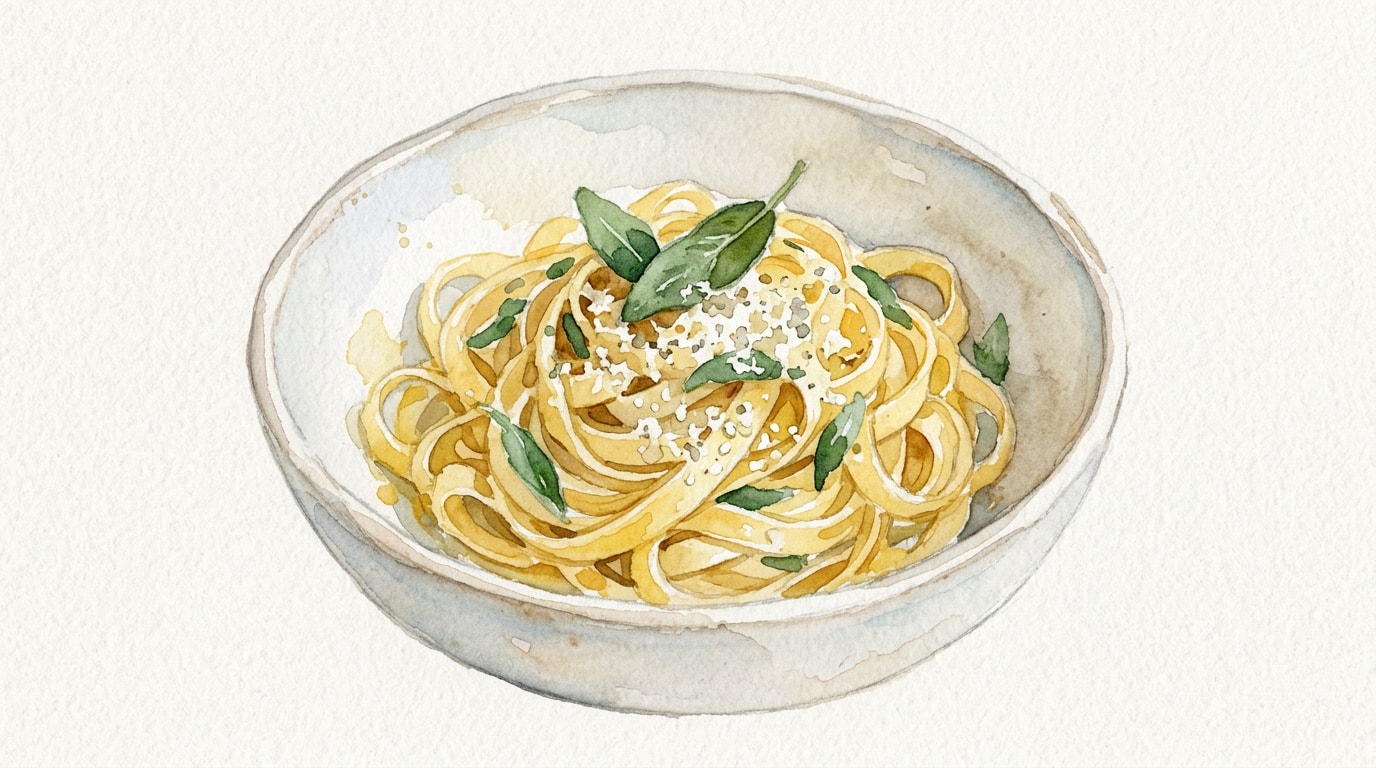
Divide the pasta among warmed bowls. Garnish with any remaining crispy sage leaves from the pan, an extra grating of pecorino, and a generous crack of black pepper. Serve immediately.
Chef's Notes
- The residual heat of the pasta and the addition of hot pasta water gently cooks the eggs to form a luscious sauce. To ensure utmost food safety for vulnerable groups, use pasteurized shell eggs.
- Authentic PDO Pecorino Romano is produced using animal rennet. If cooking for individuals adhering to a strict vegetarian diet, verify your cheese is an alternative made with microbial or plant-based rennet.
- Starchy pasta water is the secret to a stable emulsion. Always reserve more than you think you will need; it acts as the essential binder between the fat in the butter and the eggs.
- Do not discard the butter the sage was fried in. This brown butter is packed with fat-soluble flavor compounds from the herb and forms the foundational flavor profile of the dish.
Storage
Refrigerator: 1 day — Reheating will likely scramble the egg sauce; best eaten immediately after cooking.