Equipment
Ingredients
Noodles & Protein
- 150 g dried flat rice noodles, sen lek or medium width
- 200 g shrimp, peeled and deveined
- 2 eggs, lightly beaten
Pad Thai Sauce
- 45 g tamarind concentrate
- 30 ml fish sauce
- 30 g coconut sugar
- 30 ml water
Aromatics & Vegetables
- 15 ml neutral cooking oil
- 10 g garlic, minced
- 20 g shallot, finely sliced
- 100 g bean sprouts, rinsed and drained
- 30 g garlic chives, cut into 3cm lengths
- 1 lime, cut into wedges
Nutrition (per serving)
Method
Place dried rice noodles in a large mixing bowl and cover with boiling water (100°C/212°F). Let soak for 8 to 10 minutes until pliable but still slightly firm to the bite, then drain thoroughly.
In a small mixing bowl, vigorously whisk the tamarind concentrate, fish sauce, coconut sugar, and water together until the sugar is completely dissolved.
Heat the neutral oil in a large wok or skillet over high heat. Add the shrimp, ensuring they are arranged in a single layer. Sear for 1 to 2 minutes per side until they turn pink and opaque, reaching an internal temperature of 63°C/145°F. Wash hands thoroughly after handling the raw shrimp. Remove shrimp from the wok and set aside.
Lower the wok heat to medium. Add the minced garlic and sliced shallots to the residual oil. Sauté for 30 seconds until highly fragrant but not completely browned.
Push the garlic and shallots to one side of the wok. Pour the beaten eggs into the empty space and let them sit for 10 seconds before lightly scrambling them until just set.
Add the drained rice noodles and the prepared tamarind sauce to the wok. Using tongs, toss the mixture constantly for 2 to 3 minutes until the noodles absorb the liquid and become tender and glossy.
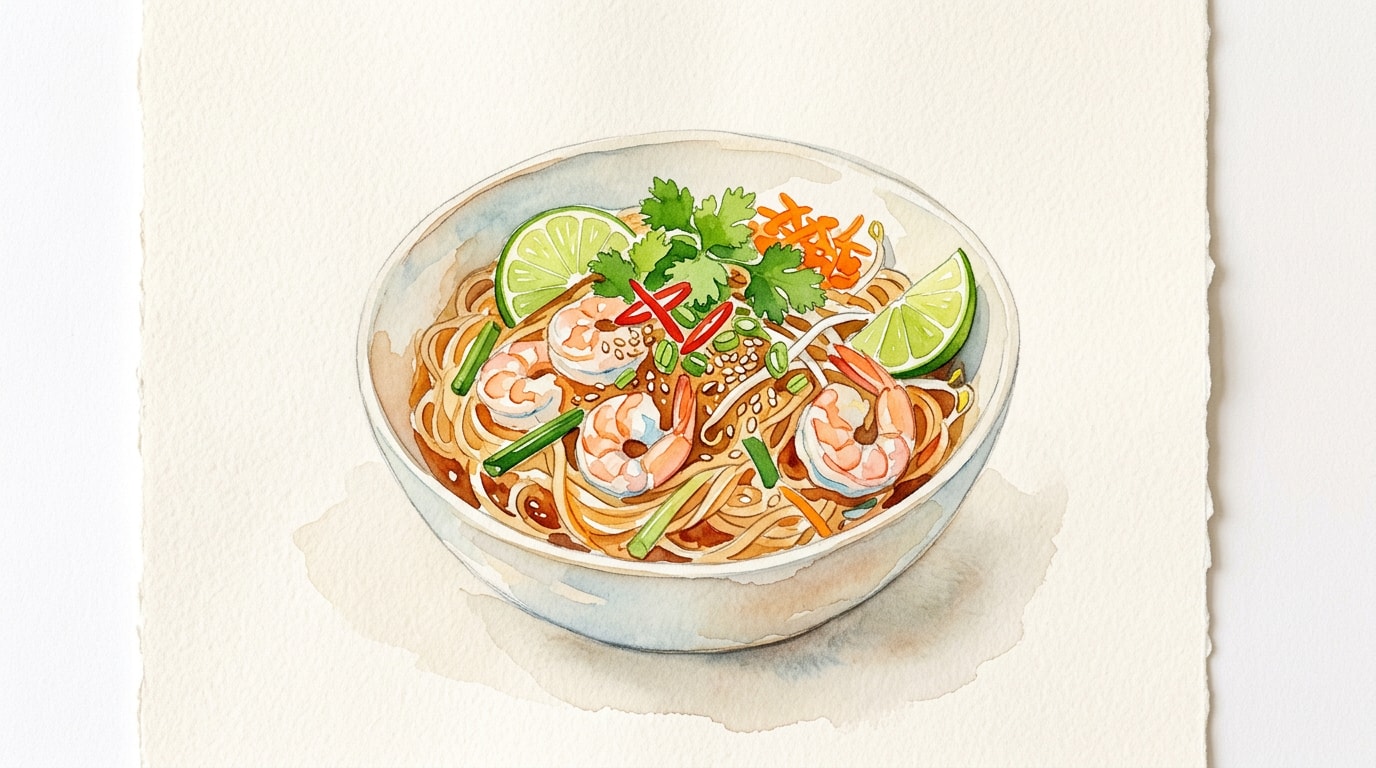
Return the cooked shrimp to the wok along with the bean sprouts and garlic chives. Toss everything together for 1 final minute to warm the shrimp and slightly soften the vegetables.
Divide the Pad Thai between two plates. Serve immediately with fresh lime wedges on the side for squeezing over the top.
Chef's Notes
- For the best authentic texture, use dried sen lek (medium flat rice noodles) rather than fresh noodles, which can easily become gummy and break apart in a quick stir-fry.
- Tamarind concentrate varies wildly in strength depending on the origin and brand. If you are using a very dark, thick paste from a jar, you may need to dilute it slightly more than if using a thinner liquid extract.
- Mise en place is critical here. Prepare all ingredients, mix the sauce, and have everything within arm's reach before turning on the stove. Stir-frying happens incredibly fast, leaving no time to chop while cooking.
- Because this recipe removes peanuts to maintain a nut-free profile, you can substitute lightly toasted sunflower seeds or pepitas as a garnish if you crave that classic textural crunch.
- If your wok is small, consider cooking the dish in two batches. Overcrowding the pan lowers the temperature, which steams the noodles instead of stir-frying them.
Storage
Refrigerator: 3 days — Store in an airtight container.
Reheating: Reheat gently in a skillet over medium heat with a splash of water to revive the noodles.