Equipment
Ingredients
Broth and Protein
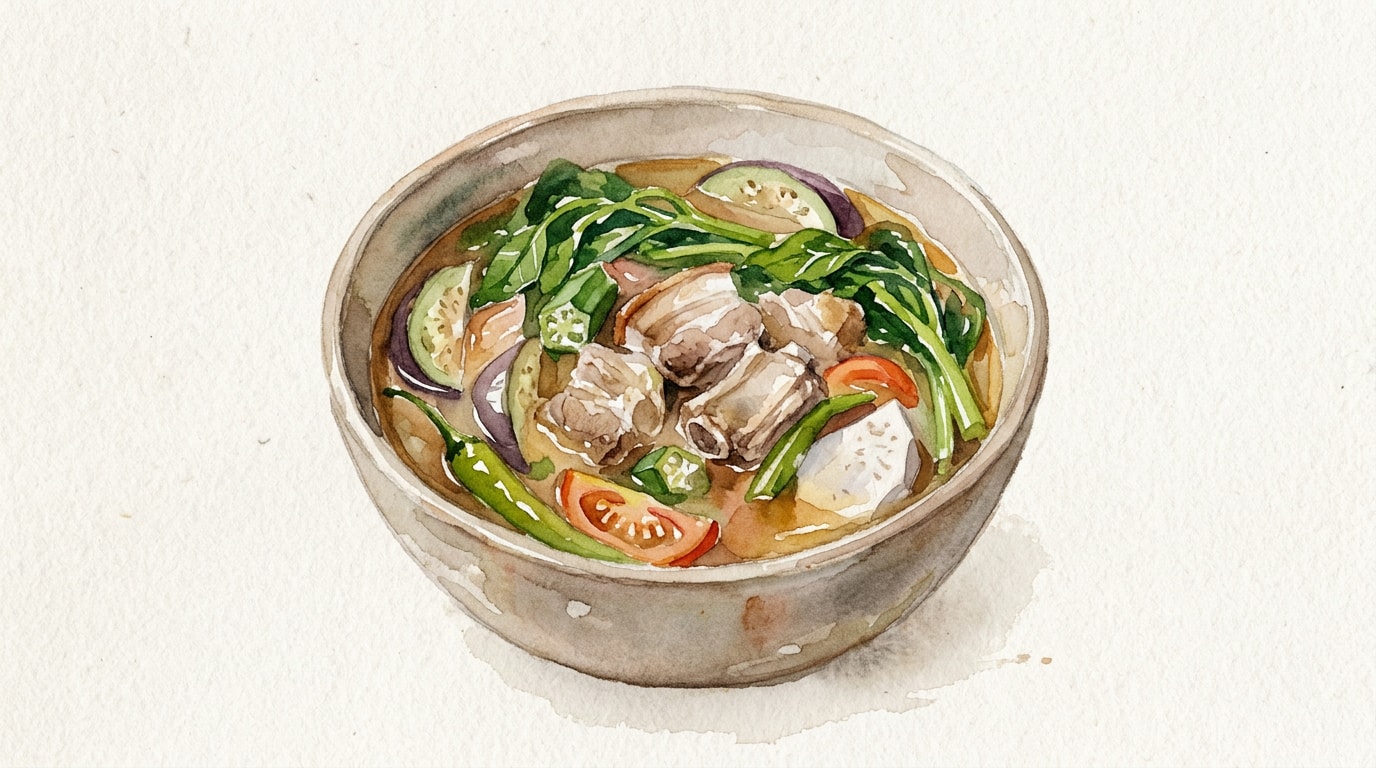
- 800 g pork ribs, cut into 5cm chunks
- 2000 ml water
- 3 tomato, quartered
- 1 red onion, quartered
- 45 ml fish sauce
- 60 g tamarind concentrate
Vegetables
- 250 g taro root, peeled and cut into large cubes
- 200 g daikon radish, peeled and sliced into half-moons
- 150 g eggplant, sliced diagonally
- 100 g snake beans, cut into 5cm lengths
- 2 green finger chilies, left whole
- 150 g water spinach, thick stems removed, cut into manageable lengths
Nutrition (per serving)
Method
Place the raw pork ribs, quartered tomatoes, and quartered red onion in a large heavy-bottomed pot. Wash your hands thoroughly with soap and water after handling the raw pork to prevent cross-contamination. Pour in the water and place over high heat to bring to a rapid boil at 100C/212F.
As the water boils, lower the heat to maintain a gentle simmer. Carefully skim off and discard the grey foam that rises to the surface using a skimmer. This step is crucial for achieving a clean, clear broth.
Cover the pot and let the pork gently simmer until tender, reaching a safe internal temperature of 74C/165F. This will take time to break down the connective tissues in the ribs.
Add the cubed taro root to the pot. Continue to simmer uncovered until the taro is completely tender and the edges begin to dissolve, which naturally thickens the soup base.
Stir in the tamarind concentrate and fish sauce. Taste the broth carefully. The flavor should be assertively sour and perfectly seasoned. Adjust with more tamarind or fish sauce as needed.
Add the sliced daikon radish, eggplant, snake beans, and whole green finger chilies to the boiling broth. Simmer until the vegetables are cooked through but still retain a pleasant bite.
Submerge the water spinach leaves into the hot broth. Immediately turn off the heat and cover the pot. Allow the residual heat to gently wilt the delicate greens for a few minutes before serving hot alongside steamed rice.
Chef's Notes
- For an incredibly authentic and luxurious mouthfeel, substitute the plain tap water with the water used to rinse uncooked rice (hugas bigas). The suspended starches lend the broth a silky consistency.
- Do not slice or break the green finger chilies unless you want a very spicy soup. Leaving them whole infuses the broth with a beautiful, floral chili aroma without overpowering the sourness with capsaicin heat.
- When adding the tamarind, it is best practice to dilute the paste in a small bowl with a ladle of hot broth first to ensure it dissolves evenly into the main pot without clumping.
- Acid hardens proteins and slows down the cooking of starches. Always ensure your pork and taro are fully tender before introducing the tamarind concentrate to the pot.
Storage
Refrigerator: 3 days — Store water spinach separately if possible to prevent it from becoming overly soggy.
Freezer: 1 month — Vegetables will become mushy upon thawing; best to freeze only the broth and pork, adding fresh vegetables when reheating.
Reheating: Reheat gently in a pot over medium-low heat until simmering.