Equipment
Ingredients
Parsley Pesto
- 30 g flat-leaf parsley, leaves picked and washed
- 1 garlic, peeled
- 20 g pine nuts, lightly toasted
- 60 ml extra virgin olive oil
- 15 ml lemon juice, freshly squeezed
- 2 g sea salt
Winter Vegetables
- 100 g leek, white and light green parts only, washed thoroughly
- 100 g carrot, peeled
- 100 g parsnip, peeled
- 30 g unsalted butter
Scallops and Broth
- 600 g queen scallops, cleaned, adductor muscles removed
- 500 ml fish stock, high quality or homemade
- 50 ml dry white wine
- 2 fresh thyme, whole sprigs
Nutrition (per serving)
Method
Combine the flat-leaf parsley, garlic, toasted pine nuts, lemon juice, extra virgin olive oil, and sea salt in a food processor. Blend until a smooth, vibrant green pesto forms. Taste for seasoning, adjust if necessary, and set aside.
Using a chef's knife and cutting board, carefully cut the leek, carrot, and parsnip into fine, even matchsticks to ensure they cook quickly and uniformly.
Melt the unsalted butter in a sauté pan over medium heat. Add the julienned winter vegetables and cook gently, stirring occasionally, until softened but still retaining a slight bite. Remove from heat and cover to keep warm.
Rinse the queen scallops briefly under cold water and pat them completely dry with paper towels. Thoroughly wash your hands and immediately sanitize the cutting board or any surfaces that came into contact with the raw seafood to prevent cross-contamination.
In a saucepan, combine the fish stock, dry white wine, and fresh thyme sprigs. Bring the liquid to a gentle, steady simmer, maintaining a temperature of approximately 85°C (185°F). Do not allow it to reach a rolling boil.
Using a slotted spoon, gently lower the prepared scallops into the simmering stock. Poach for exactly 1 to 2 minutes until just opaque. For vulnerable populations, ensure the scallops reach a safe internal temperature of 63°C (145°F), though for optimal culinary texture they are traditionally served having reached 54°C (130°F).
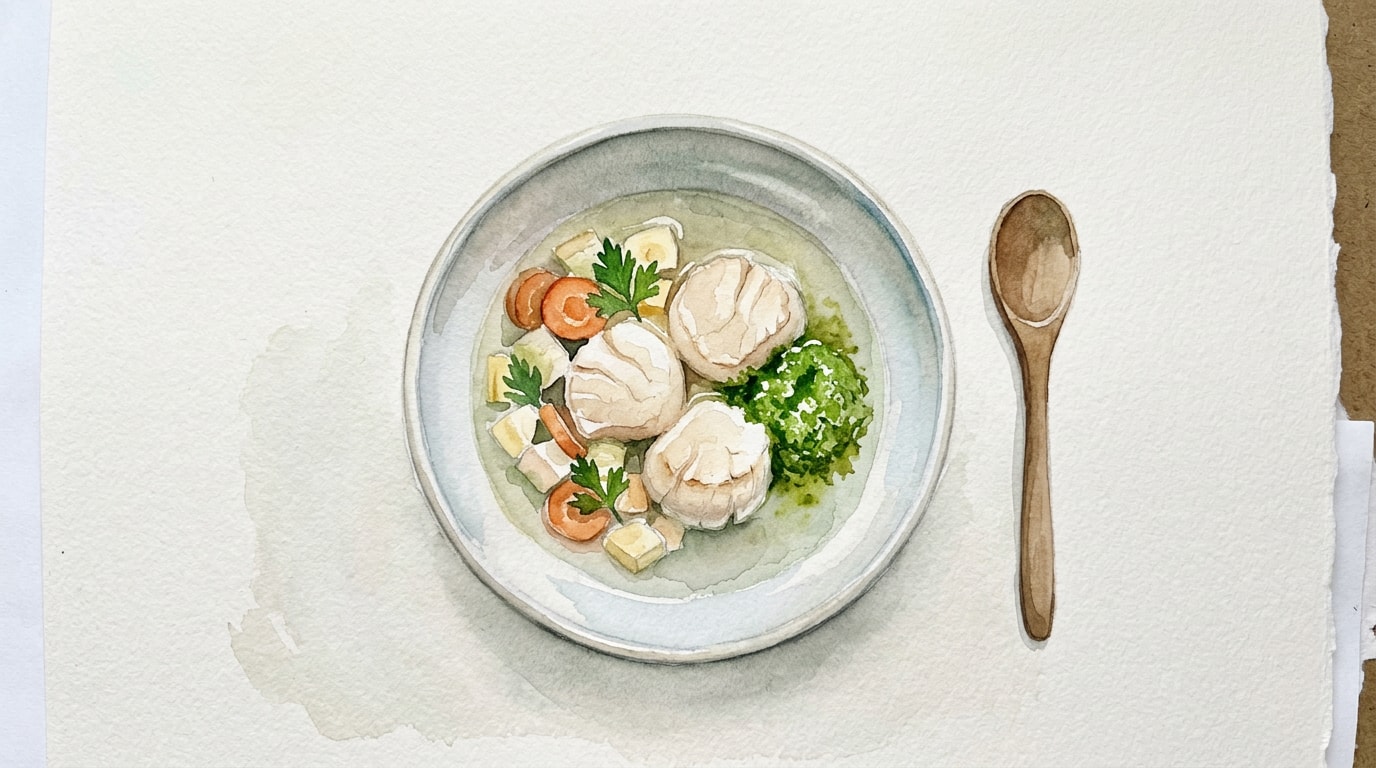
Divide the warm sautéed vegetables evenly among four shallow bowls, creating a nest in the center of each. Use the slotted spoon to carefully lift the poached scallops from the liquid and arrange them elegantly over the vegetable beds.
Ladle a few tablespoons of the hot, aromatic poaching broth into the bottom of each bowl. Generously drizzle the vibrant parsley pesto over the scallops and serve immediately.
Chef's Notes
- Queen scallops are naturally smaller, sweeter, and more delicate than King scallops. They require significantly less cooking time; do not step away from the stove during the poaching phase.
- If you prefer a milder garlic flavor in your pesto, drop the whole peeled garlic clove into boiling water for 30 seconds to blanch it before blending.
- The quality of this dish relies entirely on the fish stock (fumet). Avoid dark or overly fishy stocks; a clear, lightly gelatinous stock made from white fish bones is ideal.
- Cutting your root vegetables into a precise, uniform julienne not only elevates the visual presentation but guarantees they will cook at the exact same rate, providing a refined textual contrast to the soft scallops.
Storage
Refrigerator: 1 day — Store leftover scallops, broth, vegetables, and pesto in separate airtight containers.
Reheating: Gently warm the broth and vegetables in a saucepan over low heat. Scallops should be eaten cold or at room temperature, as reheating will overcook them.