Equipment
Ingredients
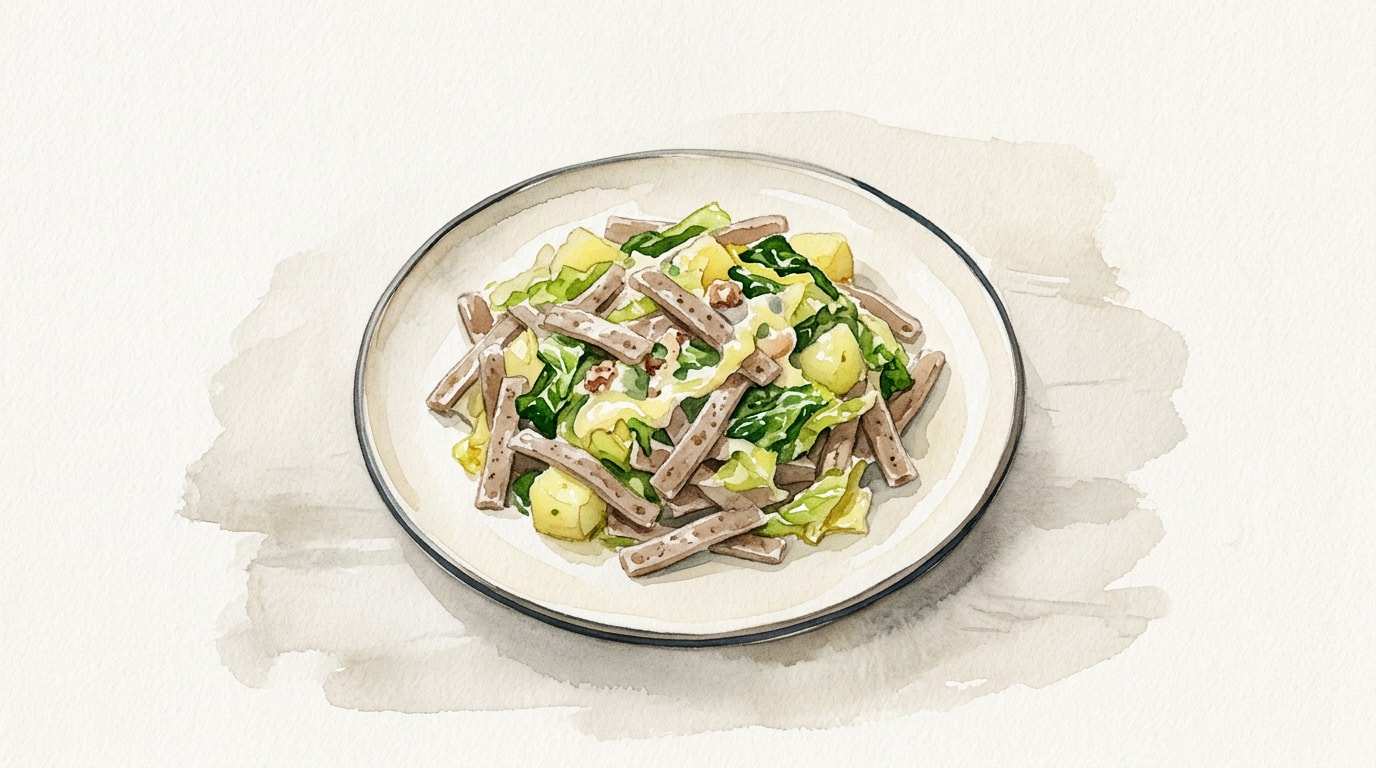
Pasta and Vegetables
- 400 g buckwheat pasta, pizzoccheri style short flat ribbons
- 300 g potatoes, peeled and cubed into 1.5cm pieces
- 250 g swiss chard, leaves and tender stems sliced into 3cm ribbons
Dairy and Aromatics
- 250 g valtellina casera cheese, rind removed and cut into small cubes
- 80 g parmigiano-reggiano, freshly grated
- 100 g unsalted butter, cubed
- 3 garlic, peeled and lightly crushed
- 5 g fresh sage, whole leaves
Seasoning
- fine sea salt
- black pepper
Nutrition (per serving)
Method
Preheat the oven to 200°C/400°F.
Bring a large stockpot of heavily salted water to a rolling boil.
Add the cubed potatoes to the boiling water and cook for 5 minutes.
Add the Swiss chard ribbons and buckwheat pasta to the pot with the potatoes. Continue boiling for 10 minutes, or until the pasta is al dente.
While the pasta boils, melt the unsalted butter in a medium skillet over medium heat. Add the crushed garlic cloves and fresh sage leaves.
Sauté the butter mixture until the butter stops foaming and the milk solids begin to turn golden brown and smell nutty.
Using a slotted spoon, scoop about one third of the cooked pasta, potatoes, and chard directly from the water into the bottom of the baking dish.
Distribute one third of the cubed Casera cheese and one third of the grated Parmigiano-Reggiano over the hot pasta layer.
Repeat this layering process twice more, finishing with a heavy layer of cheese on top.
Remove the garlic cloves from the browned butter if a milder flavor is desired, then pour the hot butter and crispy sage leaves evenly across the top cheese layer.
Bake in the preheated oven at 200°C/400°F for 5 to 10 minutes until the cheese is completely melted and bubbly.
Remove from the oven, season with freshly cracked black pepper, and serve immediately while the cheese is molten.
Chef's Notes
- Casera cheese is traditional and yields the authentic flavor profile, but young Fontina or Gruyere provide excellent melting properties and a similar nutty sweetness if Casera is unavailable.
- Do not rinse the pasta. Transferring directly with a slotted spoon brings along starchy pasta water, which is critical for binding the melted cheese and butter into a cohesive, creamy coating.
- Browning the butter is a crucial step that elevates the dish from heavy to deeply savory. Watch it closely as it transitions from foaming to browned, as it can burn in a matter of seconds.
- Smashed whole garlic cloves flavor the butter beautifully without burning during the browning process. Remove them before pouring if you prefer a milder background garlic note.
Storage
Refrigerator: 3 days — Store in an airtight container. The butter will solidify significantly when cold.
Freezer: 1 month — Freezing is possible but not ideal, as the potatoes may become slightly grainy upon thawing.
Reheating: Reheat covered in a 175°C/350°F oven until warmed through, or microwave in short intervals.