Equipment
Ingredients
Coconut Rice
- 300 g jasmine rice, rinsed until water runs clear
- 200 ml coconut milk, full fat, well shaken
- 200 ml water
- 3 g salt
- 1 pandan leaf, tied in a knot
Spice Paste (Rempah)
- 100 g shallots, roughly chopped
- 20 g garlic, peeled
- 30 g lemongrass, bottom third only, sliced
- 20 g fresh red chilies, roughly chopped, seeds removed for less heat
- 15 g galangal, peeled and sliced
- 5 g ground turmeric
- 30 ml vegetable oil, neutral oil like canola or sunflower
Pineapple Mussel Curry
- 1000 g fresh mussels, scrubbed and debearded
- 400 ml coconut milk, full fat, well shaken
- 250 ml chicken or seafood stock
- 300 g fresh pineapple, cut into bite-sized chunks
- 4 makrut lime leaves, bruised and torn slightly
- 30 ml fish sauce
- 15 g palm sugar, finely chopped
Garnish
- 10 g fresh cilantro, leaves picked
- 1 lime, cut into wedges
Nutrition (per serving)
Method
Place the scrubbed and debearded mussels in a bowl of cold water. Discard any with cracked shells or those that remain open after being tapped firmly on the counter. Always wash hands and sanitize surfaces thoroughly after handling raw seafood to prevent cross-contamination.
Combine the rinsed jasmine rice, 200ml coconut milk, water, salt, and pandan leaf in the medium saucepan. Bring to a boil over medium-high heat, then immediately reduce the heat to the lowest setting, cover tightly, and simmer gently. Do not lift the lid during cooking.
While the rice cooks, place the shallots, garlic, lemongrass, red chilies, galangal, turmeric, and vegetable oil into a food processor or blender. Process until a smooth paste forms, scraping down the sides as necessary.
Heat a large pot or Dutch oven over medium heat. Add the blended spice paste and cook, stirring frequently, until the aromatics are fragrant, slightly darkened, and the oil begins to separate from the paste. This builds the foundational flavor of the curry.
Pour the 400ml coconut milk and stock into the pot with the spice paste. Add the pineapple chunks, bruised makrut lime leaves, fish sauce, and palm sugar. Bring the mixture to a gentle simmer, around 85 degrees C or 185 degrees F, and let it cook to meld the flavors.
Remove the rice from the heat, keeping the lid firmly closed. Let it rest and steam passively off the heat. This ensures a fluffy texture and prevents the grains from sticking to the bottom of the pan.
Increase the heat under the curry slightly. Add the drained mussels to the simmering broth and immediately cover the pot with a tight-fitting lid. Steam until the mussels have opened wide and the meat has reached a safe internal temperature of 74 degrees C or 165 degrees F.
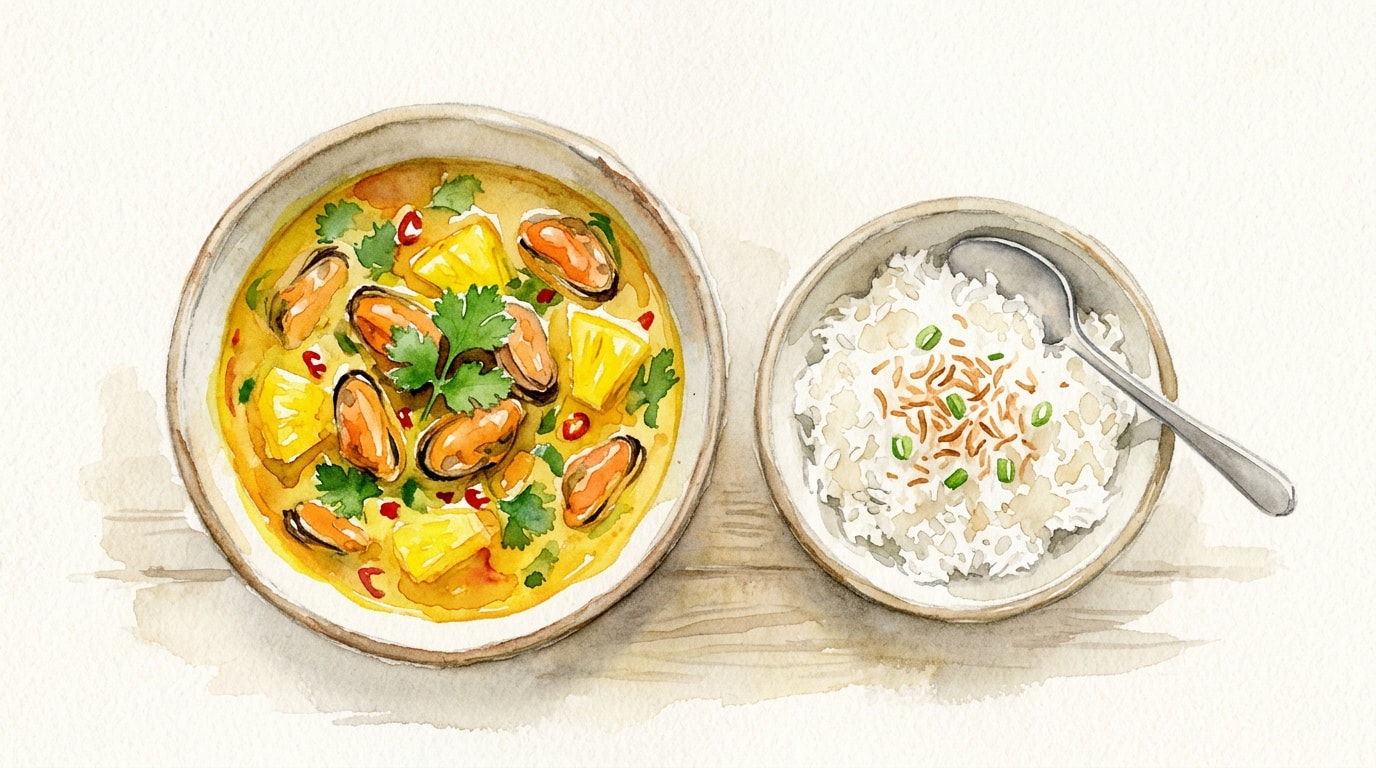
Remove the curry from the heat immediately to prevent the mussels from becoming tough. Discard any mussels that remain completely closed. Fluff the rested coconut rice with a fork and discard the pandan leaf. Serve the curry in shallow bowls over the rice, garnishing with fresh cilantro and a squeeze of lime juice.
Chef's Notes
- When cleaning the mussels, pull the beard firmly down toward the hinge of the shell rather than the opening; this helps ensure you do not tear the delicate meat inside.
- Frying the spice paste until the oil separates, a technique known in Malay cooking as 'pecah minyak', is crucial. It cooks out the raw flavor of the shallots and lemongrass, deeply concentrating their essential oils.
- Fresh pineapple works significantly better than canned for this dish. Its natural bromelain enzymes slightly tenderize the seafood, and its bright, tart acidity effectively cuts through the richness of the coconut milk.
- Always taste your curry liquid before adding the mussels. The exact saltiness of fish sauce and the sweetness of pineapple vary widely, so adjust the palm sugar and fish sauce to strike a perfect sweet, sour, and salty harmony.
Storage
Refrigerator: 2 days — Remove mussels from their shells before storing to save space and prevent the shells from breaking down in the acidic sauce.
Reheating: Gently reheat on the stovetop over low heat until just warmed through; boiling will overcook the mussels. Add a splash of water if the sauce has thickened too much.