Equipment
* optional
Ingredients
Tuna
- 400 g tuna belly fillets, room temperature
Lemon-Olive Oil Sauce
- 45 ml extra virgin olive oil
- 30 ml lemon juice, freshly squeezed
- 10 g fresh flat-leaf parsley, finely chopped
- 4 g flaky sea salt
- 2 g black pepper, freshly cracked
Nutrition (per serving)
Method
In a small mixing bowl, aggressively whisk 30ml of the extra virgin olive oil with the lemon juice and chopped parsley until temporarily emulsified. Season with half of the flaky sea salt and black pepper.
Preheat your grill or grill pan over high heat until it reaches approximately 260 degrees Celsius (500 degrees Fahrenheit). The high heat is critical for searing the outside quickly without overcooking the delicate interior.
Thoroughly pat the tuna belly fillets completely dry with paper towels. Use a pastry brush or your fingers to lightly coat the fish with the remaining 15ml of olive oil, then season generously with the remaining salt and pepper.
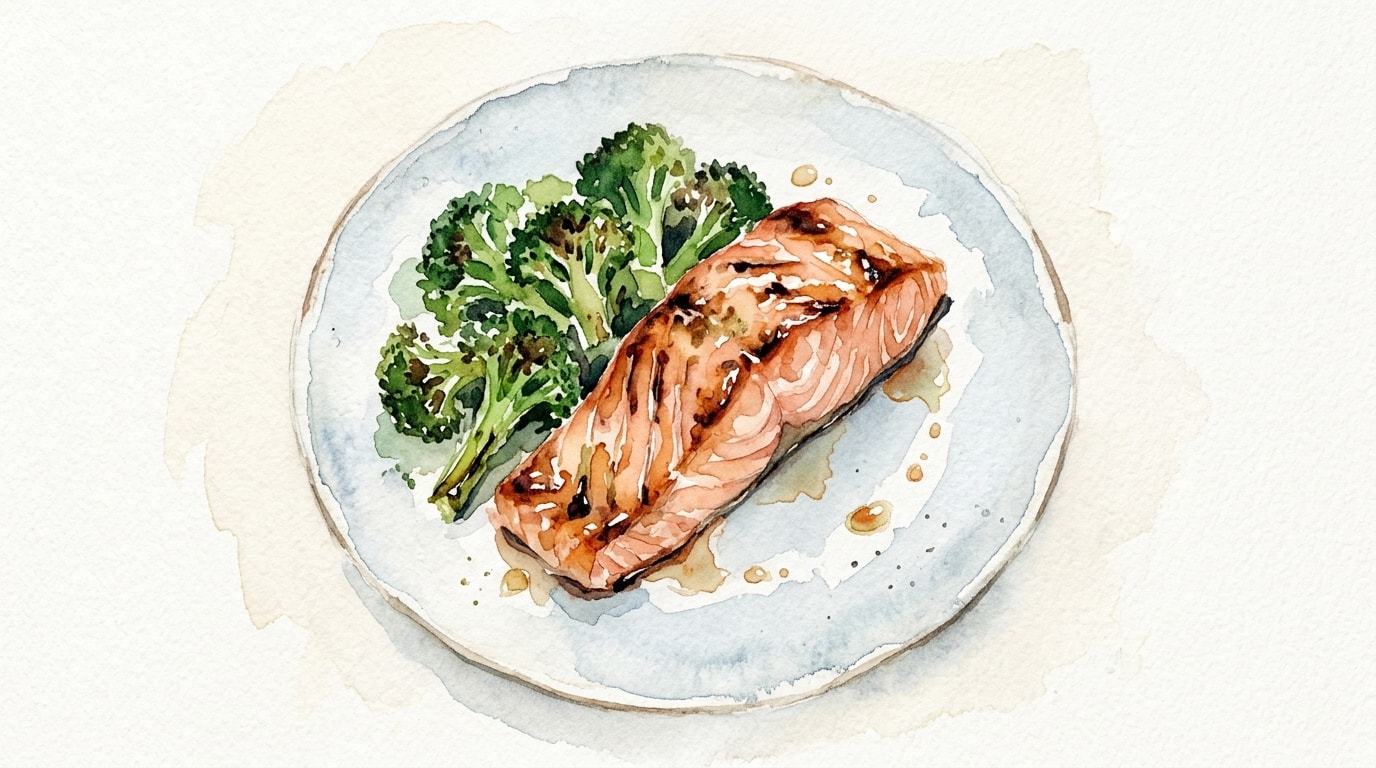
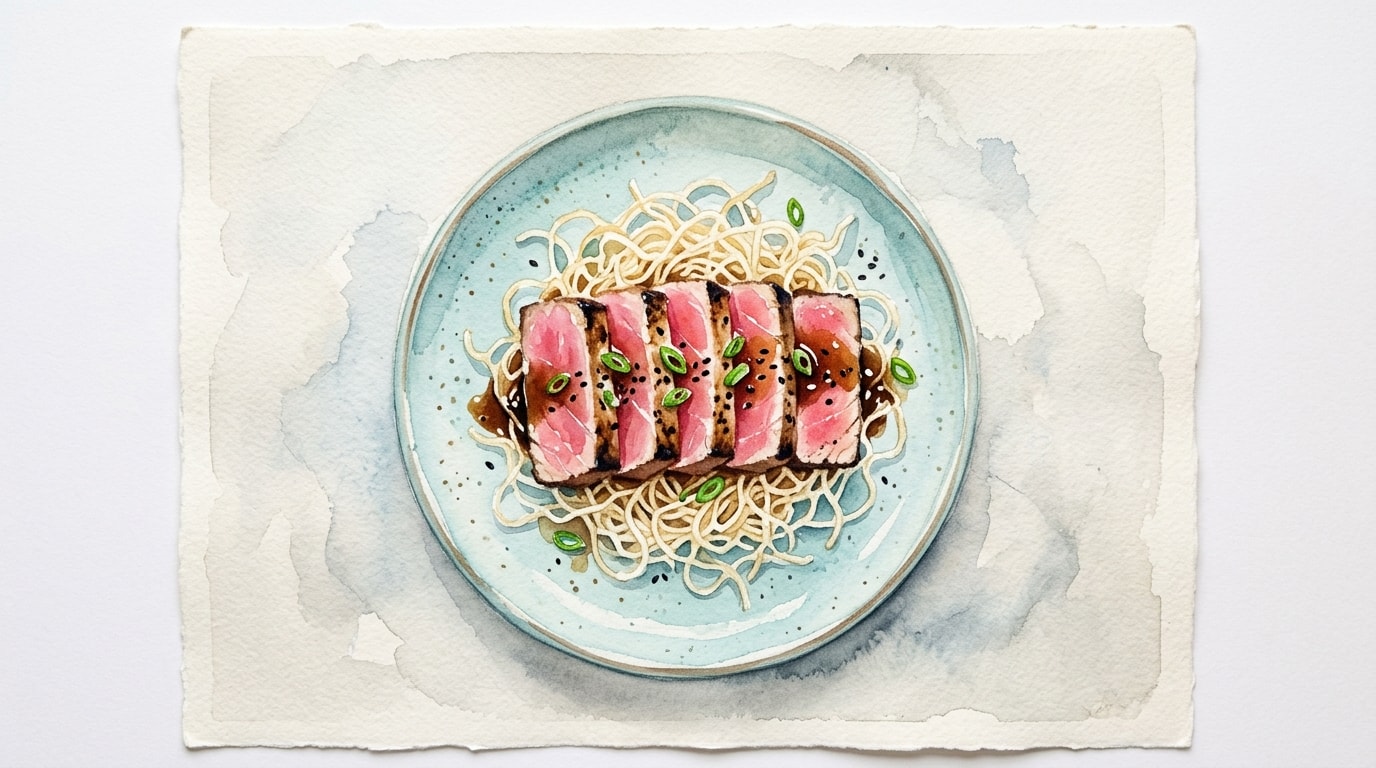
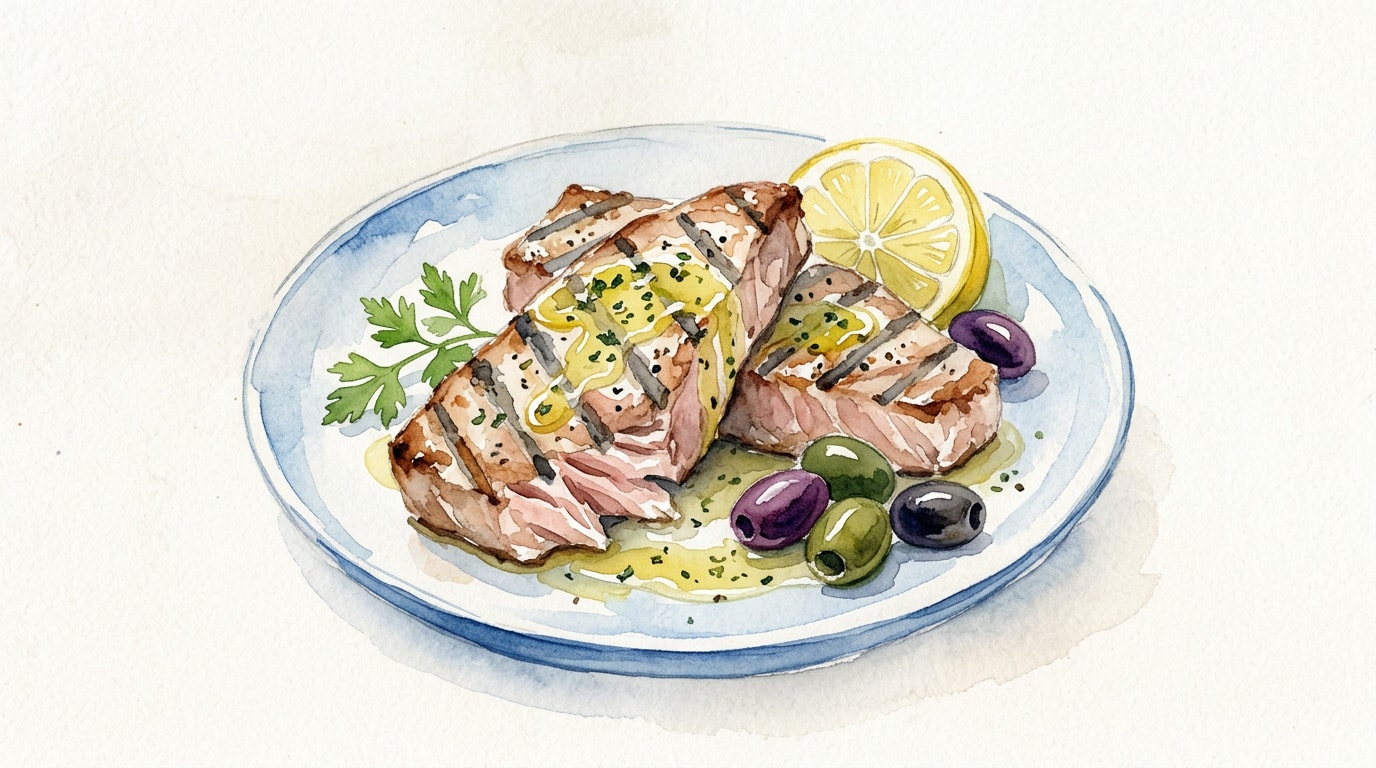
Place the tuna fillets onto the hot grill. Sear undisturbed for 1.5 to 2 minutes until distinct grill marks form. Flip carefully with a fish spatula and sear for an additional 1 to 1.5 minutes for medium-rare. The internal temperature should read 46 degrees Celsius (115 degrees Fahrenheit).
Transfer the tuna belly to a cutting board or warm platter and let it rest for 2 to 3 minutes to allow the intensely rich fats to settle.
Give the lemon-olive oil sauce one final whisk to re-emulsify it, then spoon it generously over the rested tuna belly steaks. Serve immediately.
Chef's Notes
- Tuna belly, often recognized as toro in Japanese cuisine or ventresca in Italian, contains significantly more intramuscular fat than standard tuna steaks, making it exceptionally buttery and forgiving to high-heat applications.
- For the best emulsion in your sauce, ensure the lemon juice and olive oil are at room temperature before whisking. The mechanical action breaks the oil into microscopic droplets that suspend in the lemon juice.
- If you prefer your fish well-done, tuna belly is not the ideal cut. Cooking it past medium will melt away its prized fat reserves, resulting in an expensive, dry piece of fish. Swap for a standard tuna steak or swordfish if well-done is required.
- A light hand with the olive oil on the fish itself prevents dangerous flare-ups on an outdoor grill, which can deposit an unpleasant, acrid soot on the delicate meat.
Storage
Refrigerator: 2 days — Store in an airtight container. Best eaten fresh as reheating will dry out the fish.
Reheating: If necessary, gently warm in a skillet over very low heat just until room temperature, or flake cold over a salad.