Equipment
Ingredients
Rabbit & Aromatics
- 1200 g whole rabbit, cut into 8 bone-in pieces
- 100 g pancetta, diced
- 30 ml olive oil
- 1 yellow onion, finely diced
- 1 carrot, finely diced
- 1 celery, finely diced
- 3 garlic, minced
Braising Liquid
- 240 ml dry white wine
- 500 ml chicken stock, warm
- 30 g tomato paste
- 2 fresh rosemary, whole sprigs
- 4 fresh thyme, whole sprigs
- 2 bay leaf, dried or fresh
Pasta & Finishing
- 400 g fresh pappardelle
- 50 g parmigiano-reggiano, freshly grated
- 30 g unsalted butter, cold, cubed
- kosher salt
- black pepper, freshly cracked
Nutrition (per serving)
Method
Pat the rabbit pieces completely dry with paper towels and season generously on all sides with kosher salt and freshly cracked black pepper.
Place the Dutch oven over medium heat. Add the diced pancetta and cook until the fat renders and the meat is crisp, about 5-7 minutes. Use a slotted spoon to remove the pancetta and set it aside, leaving the rendered fat in the pot.
Add the olive oil to the pancetta fat. Working in batches to avoid crowding, sear the rabbit pieces until deeply golden brown on all sides, about 4-5 minutes per side. Transfer the browned rabbit to a plate.
Lower the heat to medium-low. Add the finely diced onion, carrot, and celery (soffritto) to the Dutch oven. Sauté until the vegetables are very soft and translucent, scraping up any browned bits from the rabbit, about 8-10 minutes.
Add the minced garlic and tomato paste to the vegetables. Cook, stirring constantly, until the tomato paste darkens to a brick red color and becomes highly aromatic, about 2 minutes.
Pour in the white wine to deglaze the pot. Turn the heat to medium-high and simmer vigorously, scraping the bottom of the pot with a wooden spoon, until the wine has reduced by half, about 4-5 minutes.
Return the rabbit, along with any rested juices, and the cooked pancetta to the pot. Nestle in the rosemary, thyme, and bay leaves. Pour in the warm chicken stock until it comes about two-thirds of the way up the rabbit pieces.
Bring the liquid to a gentle simmer, cover with a tight-fitting lid, and reduce the heat to low. Braise gently at around 90°C/195°F for 1.5 hours, or until the rabbit meat falls effortlessly away from the bone.
Carefully transfer the tender rabbit pieces to a clean cutting board to cool slightly. Pick the meat from the bones, discarding the bones and any cartilage. Shred the meat into bite-sized pieces.
While picking the meat, skim excess fat from the surface of the braising liquid. Remove and discard the herb stems and bay leaves. Simmer the remaining liquid over medium-high heat until slightly thickened into a cohesive sauce, about 10 minutes. Return the shredded meat to the sauce and keep warm.
Bring a large pot of heavily salted water to a rolling boil at 100°C/212°F. Drop in the fresh pappardelle and cook until just al dente, usually 2-3 minutes. Drain the pasta using a colander, reserving 120ml of the starchy pasta water.
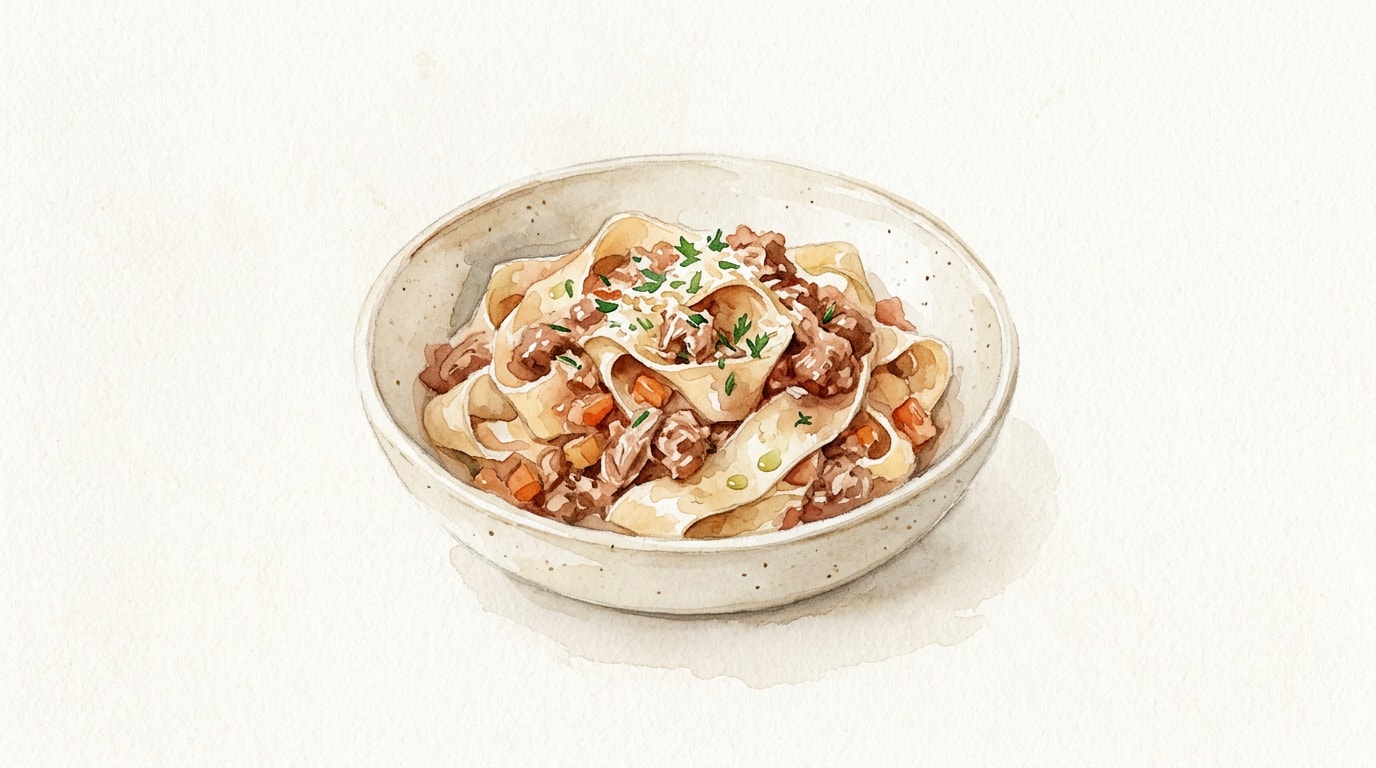
Transfer the cooked pappardelle directly into the Dutch oven with the hot rabbit ragù. Add the cold cubed butter and a splash of the reserved pasta water. Toss vigorously over medium heat for 1 minute until the sauce emulsifies and beautifully glazes the pasta.
Serve immediately in warmed bowls. Garnish with freshly grated Parmigiano-Reggiano and a final twist of black pepper.
Chef's Notes
- Rabbit is extremely lean; relying on the rendered pancetta fat to sear the meat provides essential flavor and prevents drying out.
- Do not skip browning the rabbit. The Maillard reaction on the meat's surface, combined with the fond left in the pan, is the foundation of the ragù's deep flavor.
- Fresh egg pasta acts like a sponge. Pull the pappardelle slightly before you think it's perfectly done, as it will continue to cook and absorb the sauce during the final tossing phase.
- The internal temperature of braised rabbit should exceed 90°C/195°F to allow the tough collagen network to break down into rich gelatin.
- A properly made Italian ragù is a meat sauce lightly bound with tomato, not a tomato sauce with meat in it. Resist the urge to add crushed tomatoes; the tomato paste is enough.
Storage
Refrigerator: 3 days — Store the sauce separately from the pasta if possible to prevent the pasta from becoming mushy.
Freezer: 3 months — Freeze the rabbit ragù only. Do not freeze the cooked fresh pasta.
Reheating: Reheat the ragù gently in a saucepan over medium-low heat until warmed through, then toss with freshly cooked pappardelle.