Equipment
Ingredients
Curry Base & Aromatics
- 15 ml coconut oil
- 50 g red curry paste
- 3 g ground coriander
- 2 g ground cumin
Protein
- 500 g boneless skinless chicken thighs, cut into bite-sized pieces
Liquids & Flavorings
- 400 ml full-fat coconut milk, unshaken, cream separated from water if possible
- 15 ml fish sauce
- 15 g palm sugar, finely chopped
- 4 makrut lime leaves, center vein removed and leaves roughly torn
Garnish
- 40 g roasted unsalted peanuts, crushed or roughly chopped
Nutrition (per serving)
Method
Heat the coconut oil in a wok or large heavy-bottomed skillet over medium heat. Add the red curry paste, ground coriander, and ground cumin. Sauté continuously until the spices are highly fragrant and slightly darkened, about 2 minutes.
Scoop out about 60ml of the thickest cream from the top of the coconut milk and add it to the wok. Stir vigorously into the curry paste until the liquid reduces and red oil begins to separate and rise to the surface. This technique fries the paste properly.
Add the prepared chicken pieces to the wok. Toss thoroughly to coat the chicken entirely in the fragrant curry oil and paste. Cook until the exterior of the chicken loses its raw pink color.
Pour in the remaining coconut milk, fish sauce, and palm sugar. Drop in the torn makrut lime leaves. Stir to combine and bring the liquid to a gentle boil.
Reduce the heat to medium-low to maintain a gentle simmer. Cook uncovered until the sauce thickens slightly and the chicken is fully cooked and tender, registering an internal temperature of 74°C/165°F. Stir occasionally to prevent sticking.
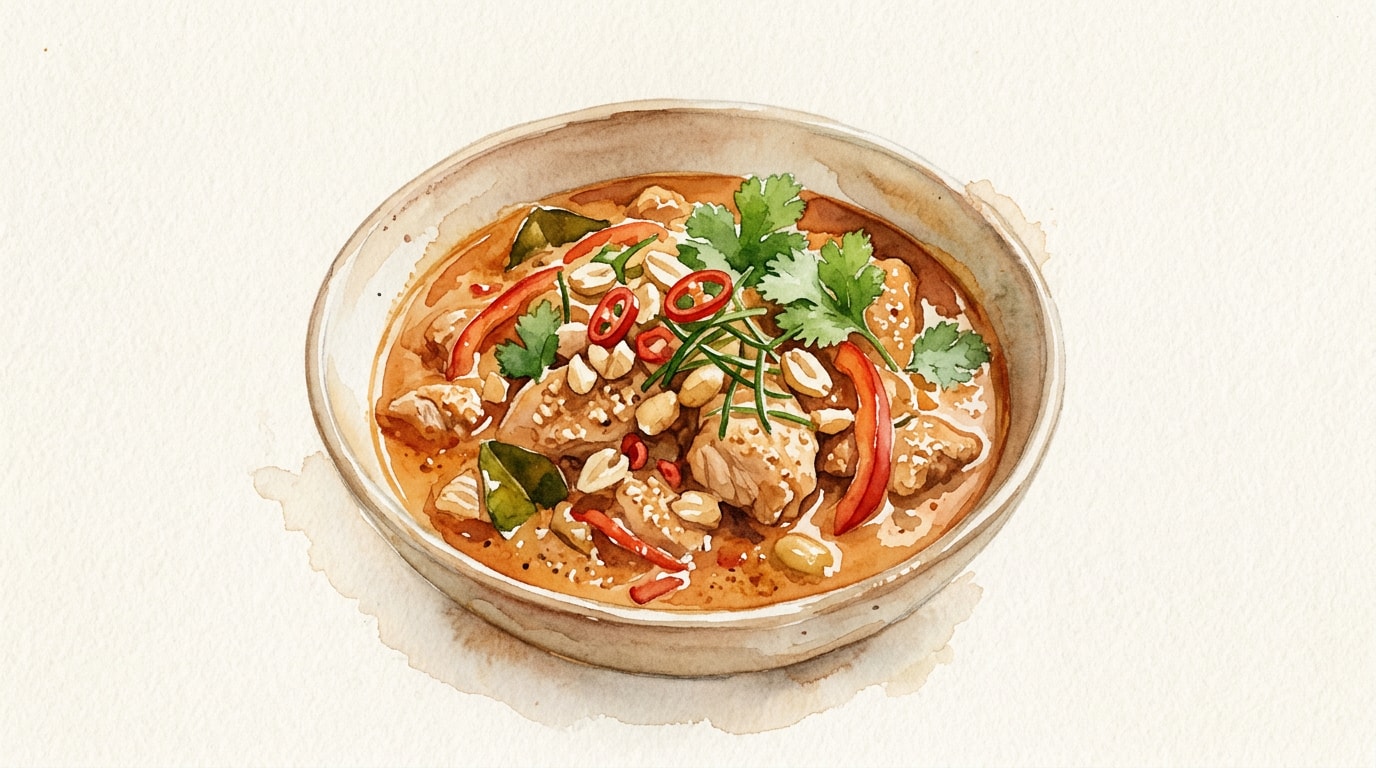
Remove the wok from the heat. Stir in half of the crushed peanuts so they infuse into the sauce. Transfer the curry to a serving bowl and garnish with the remaining crushed peanuts before serving with steamed rice.
Chef's Notes
- Cracking the coconut cream is a fundamental Thai technique. Heating the thick cream until the oil separates allows you to properly fry the curry paste, unlocking depths of flavor that simply boiling cannot achieve.
- Tearing makrut lime leaves rather than cutting them with a knife bursts the cell walls, releasing their aromatic citrus oils much more effectively into the broth.
- Always use a quality full-fat coconut milk rather than 'lite' versions. The fat content is critical for achieving a velvety mouthfeel and balancing the potent spices.
- If substituting chicken breast for thighs, cut the pieces slightly larger and monitor the simmer time closely to prevent the leaner meat from drying out.
Storage
Refrigerator: 4 days — Flavors deepen overnight, making for excellent leftovers.
Freezer: 2 months — Coconut milk may separate slightly upon thawing. Stir well when reheating.
Reheating: Reheat gently in a saucepan over medium-low heat until warmed through. Avoid a rapid boil to prevent the coconut emulsion from breaking further.