Equipment
Ingredients
Sea Bass
- 2 sea bass fillets, skin-on, pin bones removed
- 3 g kosher salt
- 1 g black pepper, freshly ground
- 15 ml olive oil, refined for high heat
Asparagus
- 300 g asparagus, woody ends trimmed
- 15 g unsalted butter
Honey Gastrique
- 1 shallot, finely minced
- 30 g honey
- 30 ml sherry vinegar
- 60 ml fish stock
- 15 g unsalted butter, cold, cubed
Nutrition (per serving)
Method
Thoroughly pat the sea bass fillets dry with paper towels. Score the skin diagonally in three places to prevent curling, then season both sides with kosher salt and black pepper. Wash hands immediately after handling the raw fish to prevent cross-contamination.
Bring a medium saucepan of heavily salted water to a rolling boil. Prepare an ice bath in a mixing bowl. Drop the trimmed asparagus into the boiling water for 2 minutes, then immediately transfer to the ice bath to halt cooking. Drain and pat dry.
Heat olive oil in a stainless steel skillet over medium-high heat until shimmering. Place the sea bass skin-side down, pressing gently with a fish spatula for 10 seconds to ensure full pan contact. Cook undisturbed until the skin is deeply golden and crispy. Flip carefully and cook until the internal temperature reaches 63C or 145F.
Transfer the cooked sea bass to a warm plate to rest. Do not wipe out the skillet; the browned bits remaining are essential for the sauce.
In the same skillet, melt the first portion of unsalted butter over medium heat. Add the blanched asparagus and toss quickly to warm through and coat in the butter.
Remove the asparagus to the serving plates. Reduce the skillet heat to medium-low. Add the minced shallot and sweat until translucent. Pour in the honey and let it bubble slightly, then immediately pour in the sherry vinegar to deglaze the pan, scraping the bottom to release the savory fond.
Pour the fish stock into the skillet with the vinegar and honey mixture. Increase the heat to medium-high and let the liquid boil rapidly, reducing the volume by half.
Remove the skillet completely from the heat. Drop in the cold, cubed unsalted butter and continuously swirl the pan in a circular motion until the butter fully melts and thickens the liquid into a glossy, emulsified sauce.
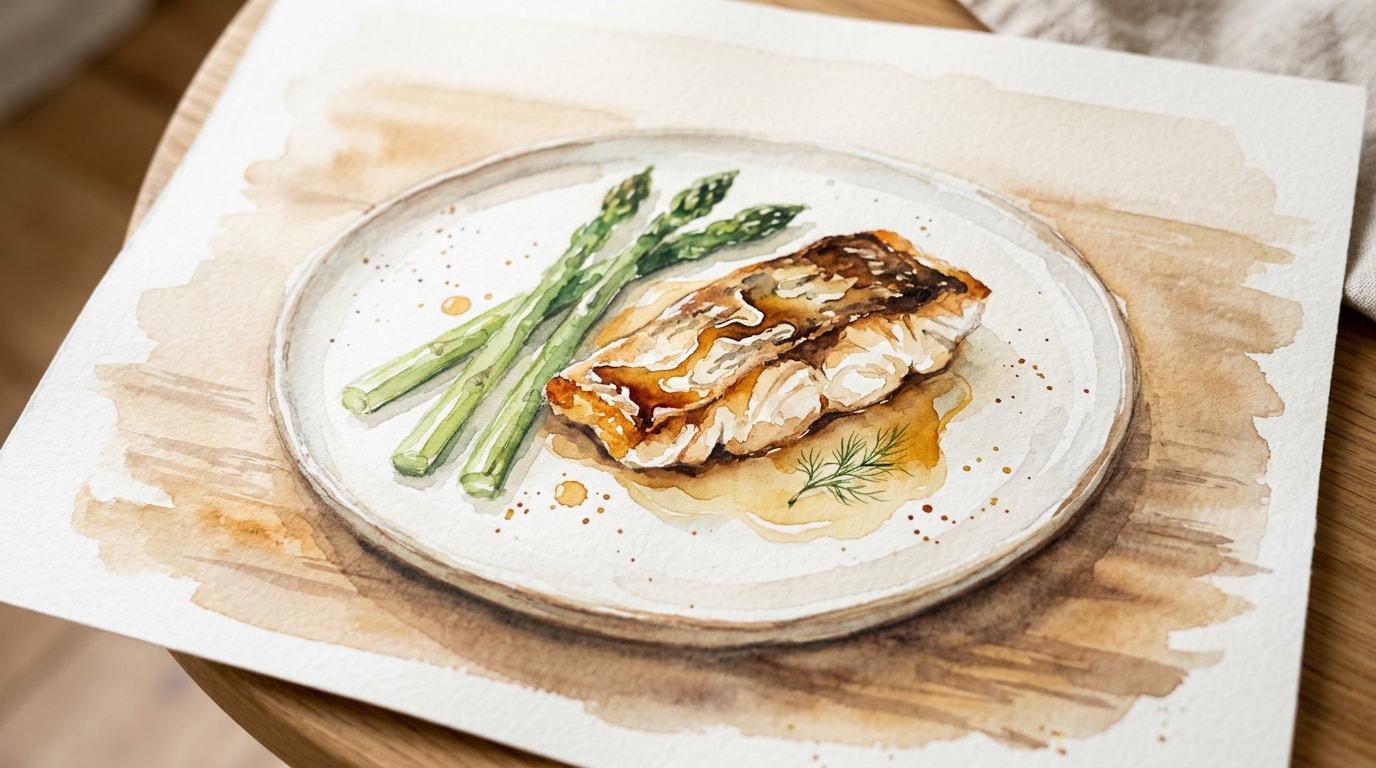
Arrange the warm asparagus neatly on the serving plates. Gently place the rested sea bass on top of the spears, skin-side up. Spoon the warm honey gastrique elegantly around the plate and lightly over the edges of the fish.
Chef's Notes
- Moisture is the enemy of a crisp sear. Use the back of a knife to scrape any residual moisture off the fish skin before patting dry with paper towels.
- A classic gastrique requires a careful balance of sweet and sour. Taste your sauce before plating; if it leans too sweet, add a few drops of vinegar. If it is too sharp, a tiny pinch of salt or extra dot of butter will mellow the acidity.
- When blanching green vegetables like asparagus, heavily salting the water not only seasons the produce but helps preserve the vivid green chlorophyll during cooking.
Storage
Refrigerator: 24 hours — Best eaten fresh; fish skin will lose crispness in the refrigerator.