Equipment
Ingredients
Seafood
- 400 g scallops, dry-packed, side muscle removed
- 300 g langoustine tails, shelled and cleaned
- 300 g prawns, raw, peeled, deveined
Pasta & Sauce
- 400 g linguine pasta, dry
- 30 ml olive oil, extra virgin
- 100 g unsalted butter, cold and cubed
- 4 garlic, minced
- 1 shallot, finely diced
- 120 ml dry white wine, pinot grigio or sauvignon blanc
- 1 lemon, zested and juiced
- 15 g fresh flat-leaf parsley, finely chopped
- kosher salt
- black pepper, freshly cracked
Nutrition (per serving)
Method
Bring a large pot of generously salted water to a rolling boil. Add the linguine and cook until al dente, about 9 to 10 minutes. Reserve 100ml of starchy pasta water before draining.
Thoroughly pat the scallops, langoustine tails, and prawns dry with paper towels. Season all the seafood lightly on both sides with kosher salt and freshly cracked black pepper.
Heat the olive oil in a large stainless steel skillet over high heat until it begins to shimmer and lightly smoke. Carefully add the scallops and langoustines, ensuring they do not touch. Sear undisturbed for 1.5 to 2 minutes per side until a deep golden-brown crust forms, checking for an internal temperature of 54°C/130°F for the scallops. Remove from the pan and set aside on a warm plate.
Lower the skillet heat to medium. Add 15g of the cold cubed butter to the pan. Once melted, add the finely diced shallot, minced garlic, and the raw prawns. Sauté for about 2 minutes, stirring frequently with tongs, until the prawns just begin to curl and turn pink.
Pour the dry white wine into the skillet to deglaze, scraping up any delicious browned bits (fond) from the bottom of the pan. Allow the wine to briskly simmer until the liquid is reduced by half.
Reduce the heat to the lowest possible setting. Stir in the freshly squeezed lemon juice. Working quickly, use a whisk to vigorously beat in the remaining 85g of cold cubed butter, adding a few cubes at a time, until the sauce becomes opaque, glossy, and beautifully emulsified.
Transfer the drained linguine directly into the skillet along with the chopped fresh parsley. Toss everything together vigorously with tongs, adding splashes of the reserved pasta water as needed to loosen the sauce until it perfectly clings to the noodles.
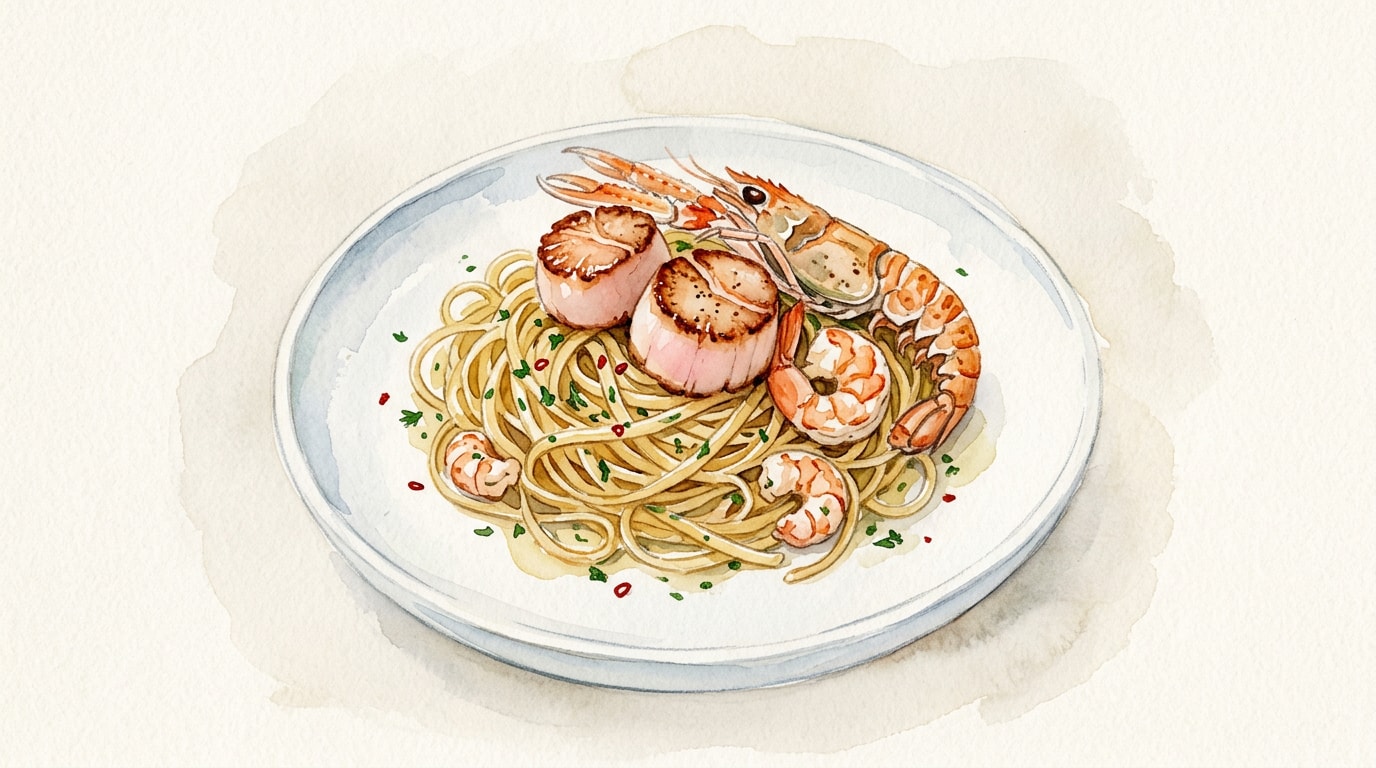
Divide the saucy prawn linguine among warm serving bowls. Arrange the seared scallops and langoustine tails over the top of each portion. Garnish with a final scattering of fresh lemon zest and serve immediately.
Chef's Notes
- Always seek out 'dry' scallops. 'Wet' scallops are soaked in a phosphate solution that forces them to retain water, making them impossible to sear properly and negatively impacting their flavor.
- The reserved pasta water is the secret weapon in this dish. Its starches act as a binder, marrying the butter sauce to the linguine rather than letting it pool at the bottom of the bowl.
- Langoustines cook extremely fast. Keep a close eye on them to prevent the delicate tail meat from turning rubbery.
- If raw langoustines are difficult to source, you can substitute them with high-quality sweet spot prawns or small lobster tails cut into bite-sized medallions.
Storage
Refrigerator: 2 days — Store in an airtight container. Seafood texture degrades quickly; best consumed fresh.
Reheating: Reheat very gently on the stovetop over low heat with a splash of water to revive the emulsion.