Equipment
* optional
Ingredients
Halibut
- 300 g halibut fillet, cut into two 150g portions, skinless
- 15 ml olive oil, room temperature
- 15 g unsalted butter, room temperature
- sea salt
- white pepper
Spring Vegetable Sauce
- 60 g fava beans, removed from outer pods
- 50 g sugar snap peas, strings removed, sliced on a bias
- 50 g baby asparagus tips, trimmed to 5cm lengths
- 150 ml fish stock, warm
- 30 g unsalted butter, cold, cut into small cubes
- 10 g fresh black truffle, gently brushed clean
Nutrition (per serving)
Method
Fill a mixing bowl with ice and cold water to create an ice bath. Bring a medium saucepan of heavily salted water to a rolling boil.
Drop the podded fava beans into the boiling water for 1 minute. Use a slotted spoon to transfer them immediately to the ice bath. Once cool, gently pinch the skins to pop out the bright green inner beans. Discard the skins.
In the same boiling water, blanch the baby asparagus tips and sliced sugar snap peas for 1 minute until their color turns vibrant green. Transfer to the ice bath to halt the cooking process, then drain all vegetables thoroughly.
Thoroughly pat the halibut fillets dry with paper towels. Season both sides generously with sea salt and white pepper.
Heat the olive oil in a skillet over medium-high heat until it shimmers. Carefully place the halibut fillets in the pan and sear undisturbed for 3 minutes to develop a golden crust.
Flip the fillets, reduce the heat to medium-low, and add the 15g of room temperature butter. As the butter foams, tilt the pan and continuously baste the fish with the hot butter for 2 to 3 minutes until the center turns opaque and registers 54 C or 130 F.
Transfer the halibut to a warm plate and allow it to rest. Discard the fat from the skillet and wipe it clean.
In the cleaned skillet or a separate saucepan, bring the fish stock to a gentle simmer. Remove from direct heat.
Whisk the 30g of cold, cubed butter into the warm stock, a few pieces at a time. Continue whisking constantly until the mixture becomes a slightly thickened, glossy, and emulsified broth.
Fold the blanched fava beans, sugar snap peas, and asparagus tips into the warm butter sauce. Swirl the pan gently over low heat for 1 minute just to warm the vegetables through without overcooking them.
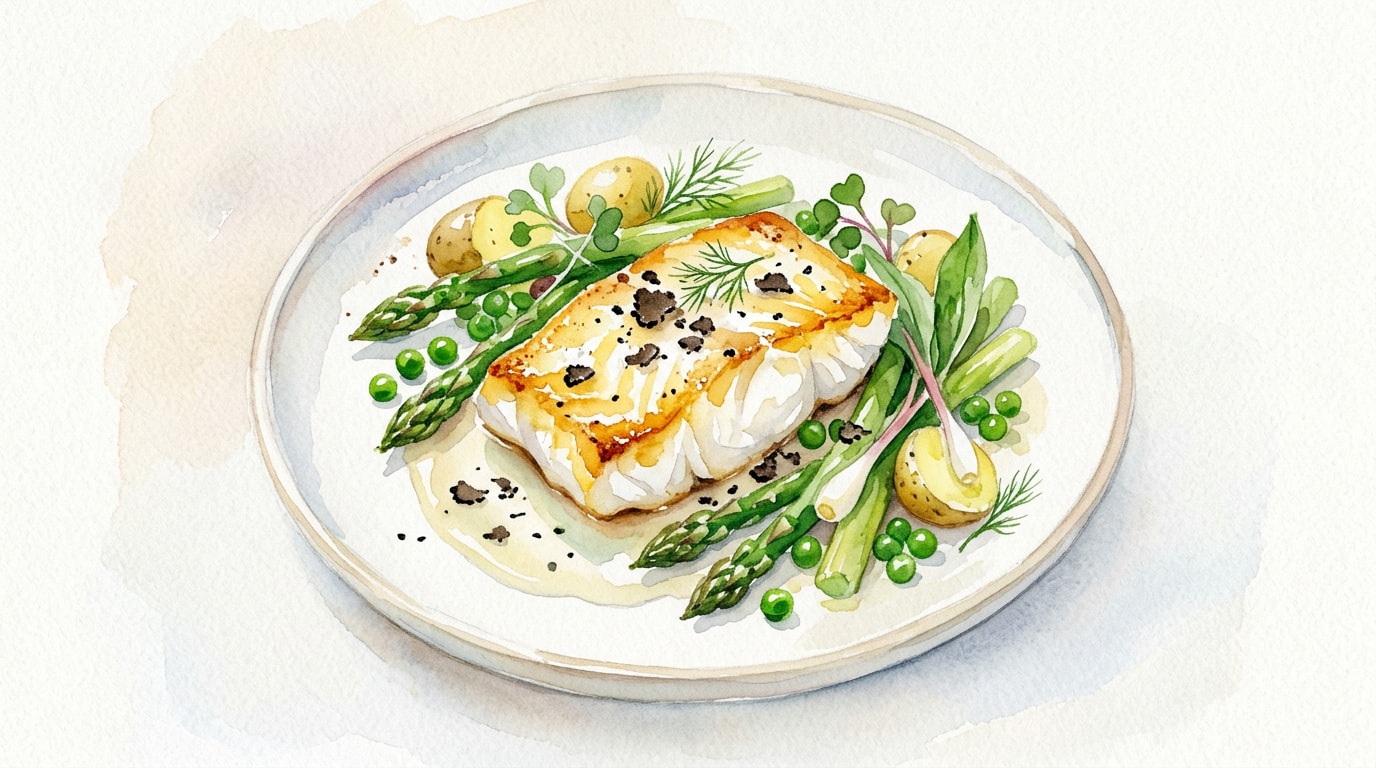
Divide the warm vegetables and the buttery broth between two shallow serving bowls. Gently place a rested halibut fillet in the center of each bowl.
Using a truffle slicer or microplane, shave the fresh black truffle generously over the hot fish and vegetables immediately before serving. The ambient heat will activate the truffle aroma.
Chef's Notes
- Double-podding fava beans is crucial for an elegant dining experience; the outer skin is fibrous and carries a slightly bitter edge that detracts from the delicate fish.
- White pepper is preferred in the seasoning phase to maintain the pristine white appearance of the halibut fillet, whereas black pepper would leave visible specks.
- When basting the fish, tilt the pan towards you and use a wide spoon to continuously scoop the foaming butter over the thickest part of the fillet. This gentle, indirect heat yields a perfectly moist center.
- Do not shave the truffle until the plates are literally hitting the table. Truffle relies on the steam from the warm broth to carry its volatile aromatic compounds to the diner.
Storage
Refrigerator: 2 days — Store the fish and sauce separately. Vegetables will lose their vibrant color upon reheating.
Reheating: Reheat the broth and vegetables gently on the stovetop over low heat. Reheat the fish in a 150C oven until just warmed through to prevent overcooking.