Equipment
Ingredients
Duck and Preparation
- 2 duck breast, patted very dry
- 6 g sea salt
- 2 g black pepper, freshly ground
Poached Apples
- 2 sweet-tart apples, peeled, cored, and cut into wedges
- 250 ml water
- 50 g granulated sugar
- 1 star anise, whole
- 1 cinnamon stick
Wilted Spinach
- 250 g baby spinach, washed and dried thoroughly
- 1 shallot, finely minced
- 1 garlic, smashed and peeled
Pan Sauce
- 30 ml apple cider vinegar
- 150 ml duck broth
- 2 g fresh thyme, sprigs
- 30 g unsalted butter, cut into cubes, ice cold
Nutrition (per serving)
Method
Using a very sharp chef's knife, lightly score the skin of the duck breasts in a tight crosshatch pattern, spacing the cuts about 1 centimeter apart. Take care to cut only through the fat, not into the red meat underneath.
Season the duck breasts generously on both sides with sea salt and freshly ground black pepper. Set aside at room temperature while preparing the apples.
In a small saucepan, combine the water, granulated sugar, star anise, and cinnamon stick. Bring the mixture to a lively simmer over medium-high heat until the sugar completely dissolves.
Add the apple wedges to the simmering syrup. Reduce the heat to medium-low and poach gently until the apples are tender but still hold their shape, about 10 minutes. Remove from heat and let them cool slightly in the liquid.
Place the seasoned duck breasts skin-side down in a cold, heavy skillet. Turn the heat to low. As the fat begins to render and pool in the pan, gradually increase the heat to medium. Cook until the skin is deep golden brown and exceptionally crisp, which takes about 12 to 15 minutes.
Flip the duck breasts and cook on the flesh side until the internal temperature reaches 57°C or 135°F for medium-rare, approximately 3 to 5 minutes.
Transfer the duck breasts to a clean cutting board to rest. Leaving the meat undisturbed allows the juices to redistribute and ensures a tender final dish.
While the duck rests, carefully pour off all but 15ml (about 1 tablespoon) of the rendered duck fat from the skillet. Return to medium heat and add the minced shallot and smashed garlic. Cook briefly until aromatic and softened.
Add the baby spinach to the skillet. Toss continuously with tongs until the leaves are bright green and just wilted. Remove the spinach and garlic clove from the pan, transferring the spinach to a warm plate. Cover loosely with foil to keep warm.
Return the empty skillet to medium-high heat. Pour in the apple cider vinegar to deglaze the pan, scraping up any browned bits from the bottom. Let the vinegar reduce until almost entirely evaporated.
Pour the duck broth into the skillet and add the thyme sprigs. Boil the mixture rapidly until the liquid is reduced by half and has a slightly syrupy consistency.
Remove the skillet from the heat. Discard the thyme sprigs. Vigorously whisk the ice-cold butter cubes into the reduced sauce, one at a time, until the sauce is glossy, emulsified, and coats the back of a spoon.
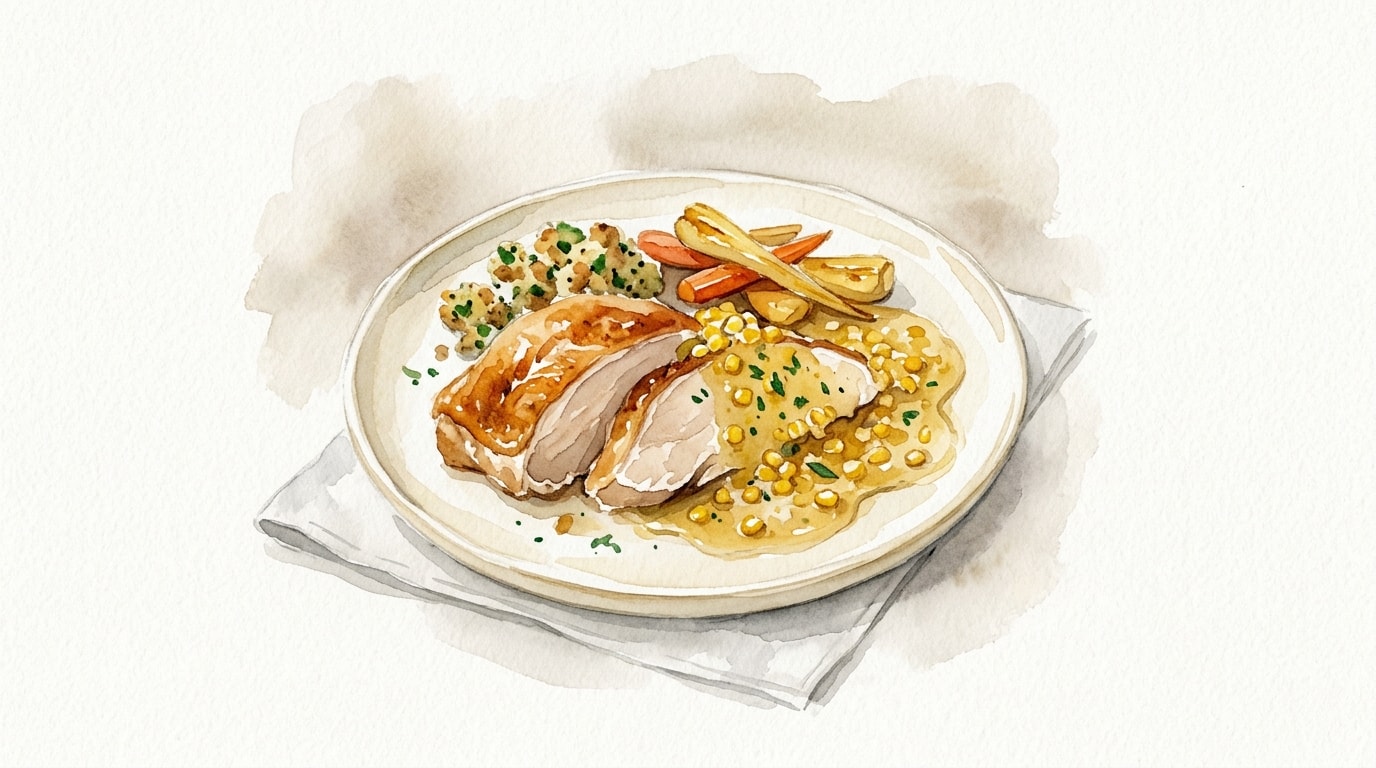
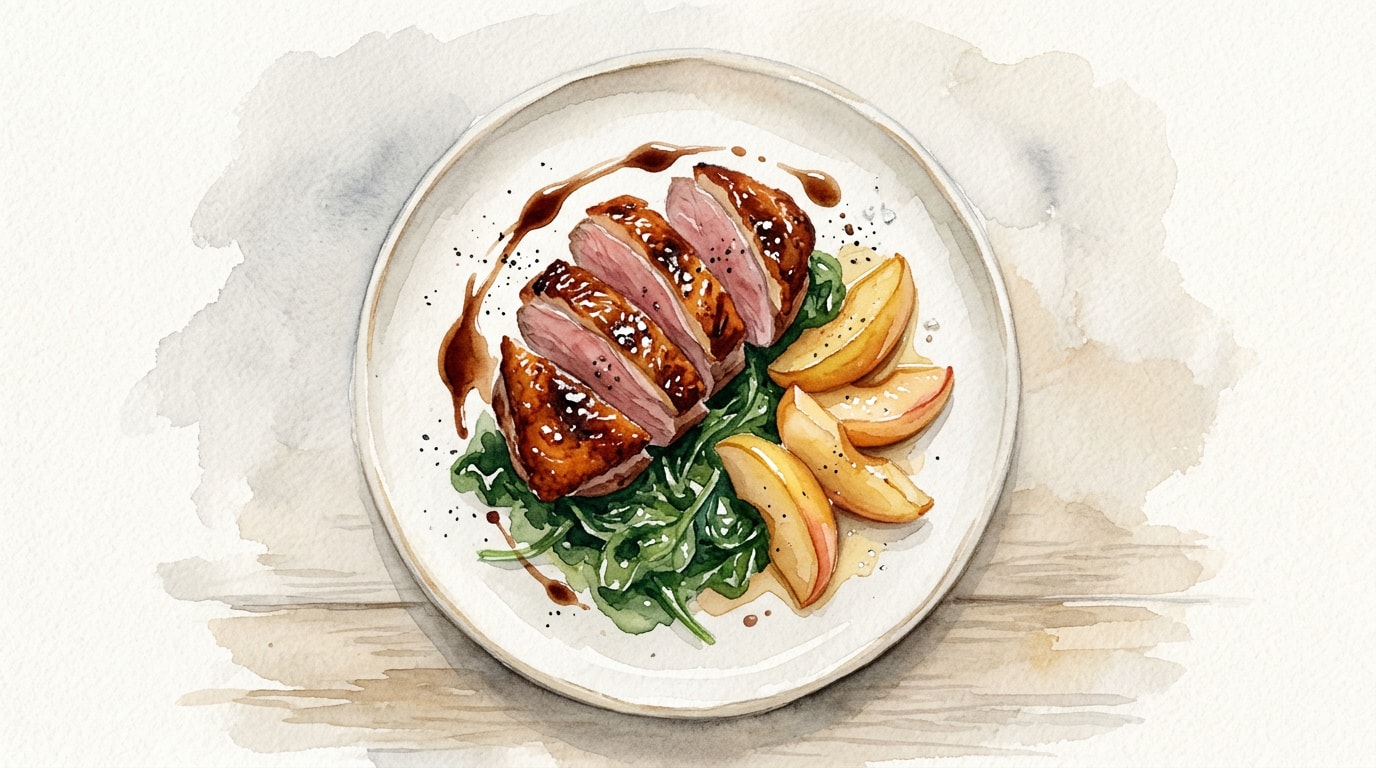
Slice the rested duck breasts crosswise into neat medallions. Arrange the wilted spinach on warm serving plates, top with the sliced duck and poached apple wedges, and spoon the rich pan sauce generously over the meat.
Chef's Notes
- Scoring the duck skin without piercing the flesh is crucial; it provides escape channels for the melting fat, yielding a perfectly crispy exterior while protecting the meat from drying out.
- Starting the duck breast in a cold pan is the non-negotiable secret to this dish. It allows the thick, insulating layer of fat to render slowly and thoroughly before the meat itself begins to cook.
- Saving the excess rendered duck fat is highly recommended. Strain it through a fine-mesh sieve and keep it refrigerated. It is a spectacular medium for roasting potatoes, searing steaks, or making confit.
- For a silken, glossy pan sauce, ensure the butter whisked in at the end is ice cold. This classical French technique (monter au beurre) suspends the butterfat in the liquid, thickening the sauce without breaking.
Storage
Refrigerator: 3 days — Store components separately. Spinach will lose texture and color upon reheating.
Reheating: Reheat duck gently in a warm oven. Reheat sauce in a small saucepan over low heat, whisking constantly to prevent the butter emulsion from splitting.