Equipment
Ingredients
Main
- 400 g duck breast, patted dry
- 6 g kosher salt
- 2 g black pepper, freshly cracked
Aromatics
- 2 garlic, smashed
- 2 fresh thyme, whole sprigs
Nutrition (per serving)
Method
Remove duck breasts from packaging and pat completely dry with paper towels. Using a sharp knife, score the skin in a tight crosshatch pattern at 1-centimeter intervals, being very careful to cut only through the skin and fat, not into the red flesh.
Season both sides of the duck breasts generously with kosher salt and freshly cracked black pepper.
Place the duck breasts skin-side down in a cold, dry heavy-bottomed skillet. Turn the heat to medium-low and cook undisturbed to slowly render the fat, about 12 to 15 minutes, until the skin becomes uniformly deep golden brown and crispy.
Carefully pour off the excess rendered duck fat from the skillet, leaving just enough to coat the bottom of the pan. Reserve the poured-off fat in a heat-proof container for future cooking.
Flip the duck breasts to the flesh side. Add the smashed garlic cloves and thyme sprigs to the skillet. Cook for another 3 to 5 minutes, occasionally spooning the pan juices over the meat, until an instant-read thermometer inserted into the thickest part registers 54 degrees Celsius (130 degrees Fahrenheit) for medium-rare.
Transfer the cooked duck breasts to a clean cutting board, placing them skin-side up. Let them rest undisturbed for 10 minutes to allow the juices to redistribute and the residual heat to finish cooking.
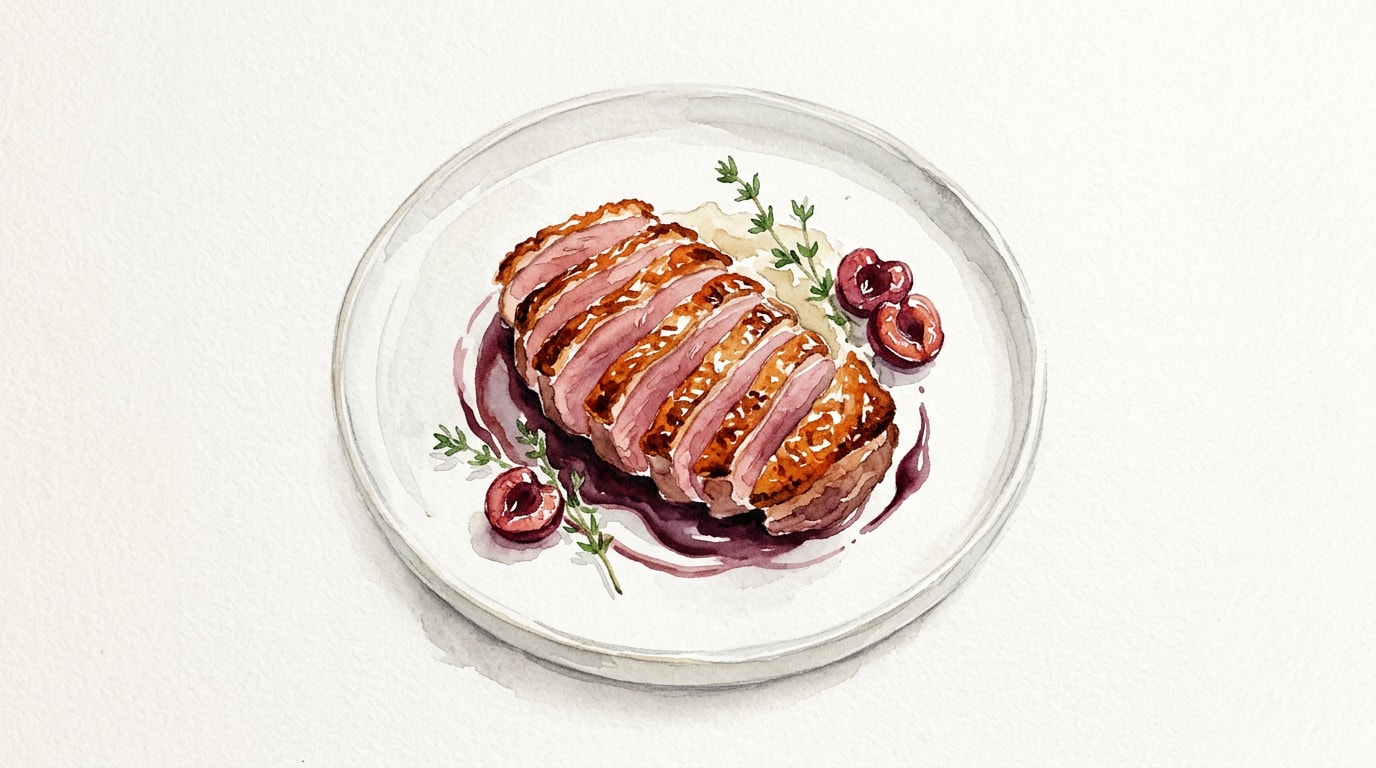
Slice the rested duck breasts crosswise into 1-centimeter thick slices and serve immediately, ensuring the crispy skin remains intact on each slice.
Chef's Notes
- The cold-pan method is non-negotiable for duck breasts. It allows the thick layer of subcutaneous fat to slowly melt away before the meat overcooks.
- Save the liquid gold! The rendered duck fat poured off during cooking is incredible for roasting potatoes, searing steaks, or sautéing vegetables.
- Scoring the skin increases the surface area, giving the fat more avenues to escape and resulting in a much crispier finish.
- Duck breast is considered red meat and should ideally be served medium-rare. Cooking past medium will severely compromise its delicate texture.
Storage
Refrigerator: 3 days — Skin will lose crispness in the refrigerator.
Freezer: 1 month — Not recommended as freezing severely degrades the meat texture and ruins the crispy skin.
Reheating: Reheat gently in a dry skillet, skin-side down over low heat, to recrisp the skin without overcooking the meat.