Equipment
Ingredients
Duck
- 400 g duck breasts, patted dry
- 6 g kosher salt, coarse
- 2 g black pepper, freshly ground
Caramelized Onions & Apples
- 30 g unsalted butter
- 300 g yellow onion, thinly sliced
- 250 g dessert apple, peeled, cored, and sliced into wedges
- 2 g fresh thyme, leaves picked
Plum-Orange Sauce
- 250 g red plums, pitted and roughly chopped
- 100 ml orange juice, freshly squeezed
- 5 g orange zest, finely grated
- 60 ml port wine
- 150 ml chicken stock, unsalted or low sodium
- 15 g honey
- 20 g unsalted butter, cold, cut into small cubes
Nutrition (per serving)
Method
Using a sharp Chef's knife, score the skin of the duck breasts in a crosshatch pattern, spacing the cuts about 1 centimeter apart. Be careful not to cut into the flesh. Season generously with kosher salt and black pepper on both sides. Wash hands and cutting board thoroughly after handling raw poultry.
In a saucepan over medium heat, combine the chopped plums, orange juice, orange zest, port wine, chicken stock, and honey. Bring to a gentle boil, then reduce heat and simmer until the plums break down completely and the liquid is reduced by half.
While the sauce simmers, melt 30 grams of butter in a cast iron skillet over medium heat. Add the sliced onions and a pinch of salt. Cook, stirring occasionally, until they are very soft and deep golden brown.
Add the sliced apples and fresh thyme to the caramelized onions. Toss to combine and cook until the apples are tender but still hold their shape. Transfer the mixture to a covered dish to keep warm and wipe the skillet completely clean.
Place the seasoned duck breasts skin-side down in the cold cast iron skillet. Turn the heat to medium-low. Slowly render the fat, pouring off excess liquid fat into a heatproof bowl as it accumulates. Continue cooking until the skin is deeply browned, crisp, and very thin.
Flip the duck breasts to the flesh side and increase the heat to medium. Cook until a meat thermometer inserted into the thickest part registers 57 degrees Celsius (135 degrees Fahrenheit) for medium-rare, or up to 74 degrees Celsius (165 degrees Fahrenheit) if fully cooked poultry is required for safety.
Transfer the duck breasts to a clean cutting board to rest. Do not slice them immediately, or the juices will run out and leave the meat dry.
While the duck rests, pour the reduced plum mixture through a fine mesh sieve into a clean bowl, pressing on the solids to extract all liquid. Discard the solids. Return the strained sauce to the saucepan over low heat and vigorously whisk in the cold butter cubes until the sauce is glossy and slightly thickened.
Slice the rested duck breasts across the grain into 1-centimeter thick medallions.
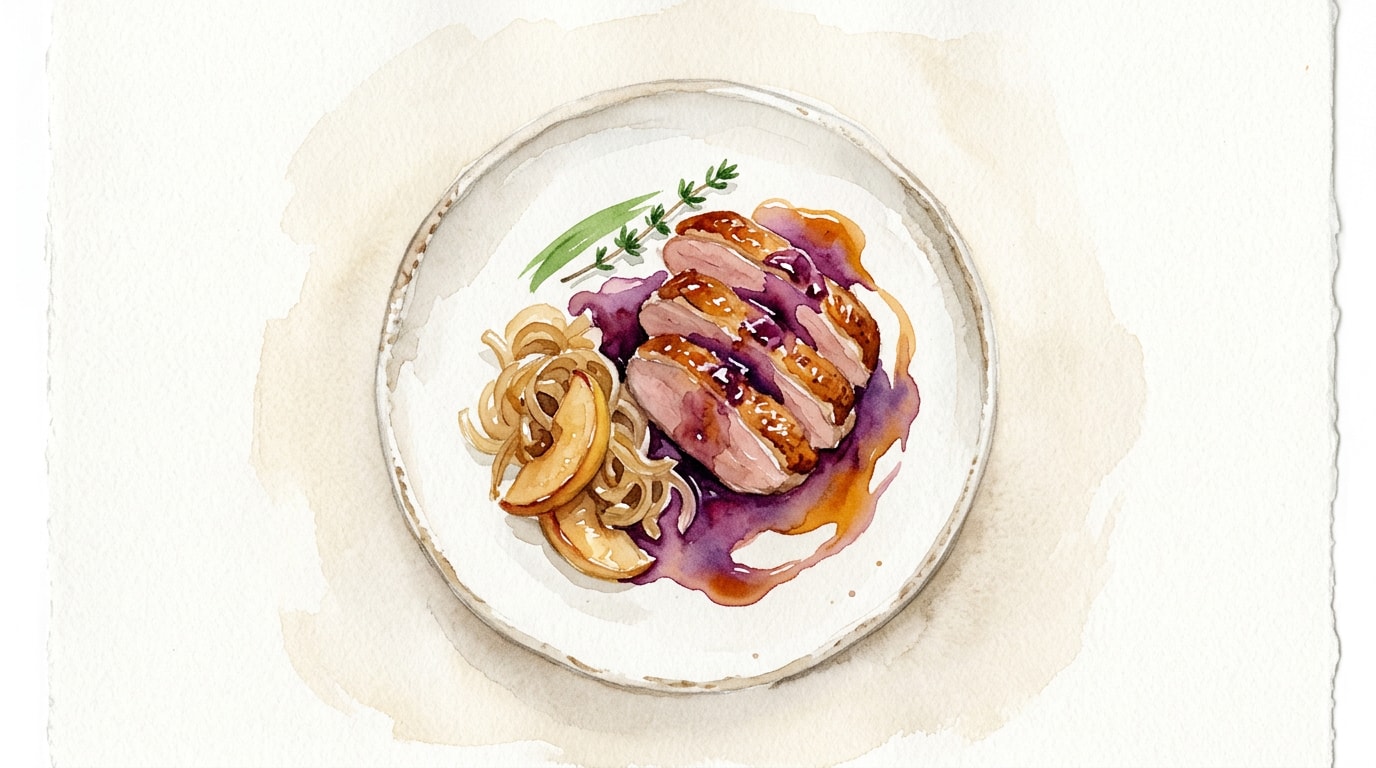
Spoon the warm caramelized onion and apple mixture onto plates. Fan the sliced duck breast over the top, and generously drizzle the glossy plum-orange sauce over the meat.
Chef's Notes
- Scoring the duck skin increases the surface area, allowing the insulating layer of fat to render out effectively. Avoid piercing the flesh underneath, as this will cause juices to escape during the sear.
- Starting the duck in a cold pan is non-negotiable. Placing it in a hot pan will immediately sear the exterior and trap the fat inside, leaving a chewy, unrendered layer of skin.
- Save the rendered liquid gold duck fat from the skillet. Strain it through a fine mesh sieve and keep it in the refrigerator; it is extraordinary for roasting potatoes or root vegetables later in the week.
- Plums vary wildly in their water and sugar content. Adjust the sauce reduction time and sweetness by tasting frequently. Add a splash of orange juice if it gets too thick, or an extra pinch of sugar if the plums are particularly tart.
Storage
Refrigerator: 3 days — Store duck and sauce in separate airtight containers. Skin will lose its crispness.
Freezer: 1 month — Duck breast does not freeze well after cooking, but the sauce can be frozen.
Reheating: Reheat duck gently in a warm oven (150C/300F) until just warmed through. Reheat sauce on the stovetop over low heat.