Equipment
Ingredients
Chicken
- 600 g chicken breast fillets, boneless, skinless, pounded to even thickness
- 5 g kosher salt
- 2 g black pepper, freshly ground
- 30 ml olive oil
Tomato and Spinach Sauce
- 100 g yellow onion, finely diced
- 3 garlic, minced
- 120 ml chicken broth, low-sodium
- 400 g crushed tomatoes, canned
- 2 g dried oregano
- 100 g baby spinach, washed and dried
- 15 ml lemon juice, freshly squeezed
Nutrition (per serving)
Method
Pat the chicken breasts completely dry with paper towels. Season both sides evenly with kosher salt and black pepper.
Heat olive oil in the skillet over medium-high heat until shimmering. Add the chicken breasts and cook without moving for 5 to 6 minutes to develop a crust.
Flip the chicken breasts and cook for an additional 4 to 6 minutes, until the internal temperature reaches 74°C/165°F at the thickest part. Transfer the chicken to a plate and cover loosely to keep warm.
Reduce heat to medium. In the same skillet, add the diced onion and saute for 3 minutes until softened. Add the minced garlic and oregano, cooking for 30 seconds until fragrant.
Pour in the chicken broth to deglaze the pan, scraping up any browned bits from the bottom. Simmer for 1 to 2 minutes until the liquid reduces by half.
Stir in the crushed tomatoes. Bring to a gentle simmer and cook for 5 minutes, allowing the flavors to meld and the sauce to thicken slightly. Taste and adjust seasoning with salt and pepper.
Fold the baby spinach into the simmering tomato sauce. Cook for 1 to 2 minutes just until the spinach is completely wilted.
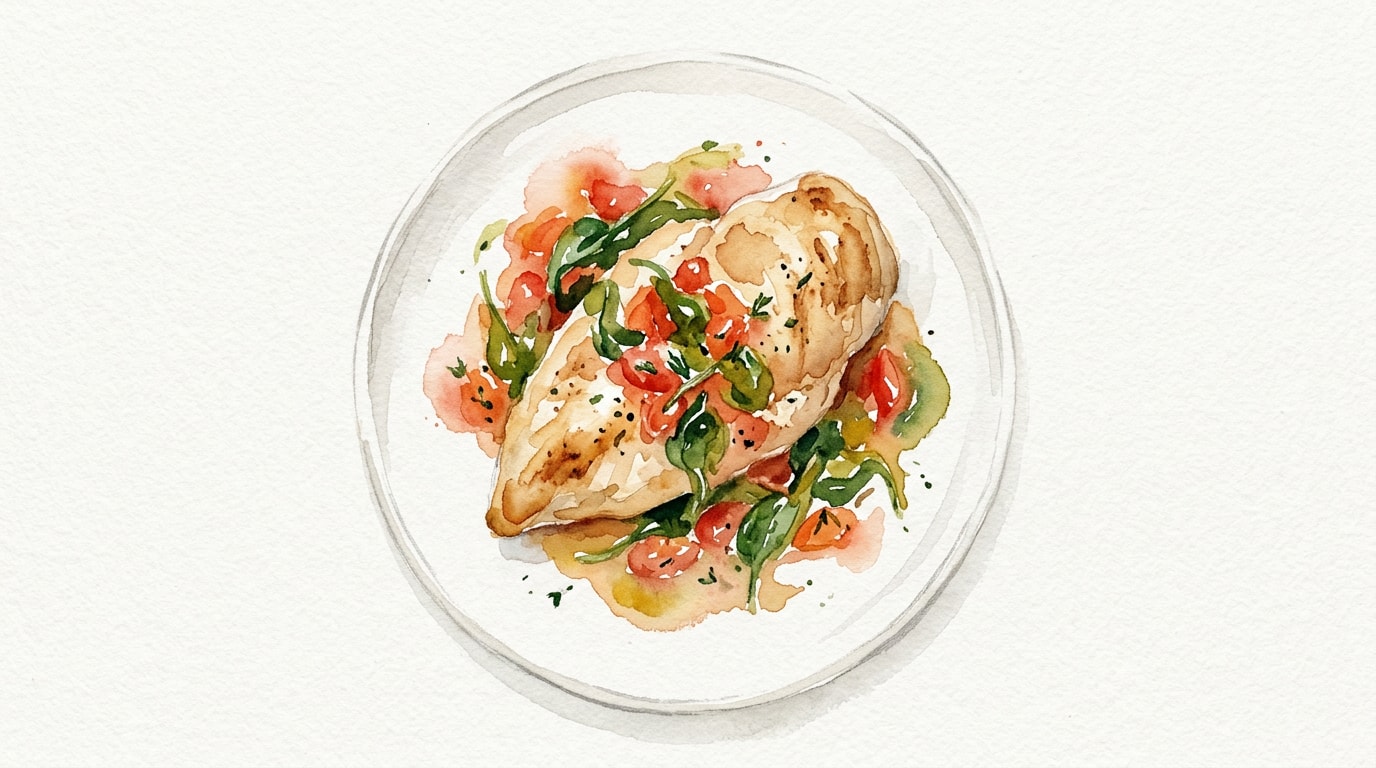
Return the resting chicken and any accumulated juices on the plate to the skillet. Nestle them into the sauce and simmer for 1 minute to reheat. Finish with lemon juice if desired.
Chef's Notes
- Pounding the chicken breasts to an even thickness is crucial for lean cuts, ensuring the thinner tail end does not dry out while waiting for the thicker bulb to cook through.
- Resting the meat is a step often skipped in home cooking. Transferring the chicken to a plate while you build the sauce allows the muscle fibers to relax, locking in the juices.
- A splash of acidity at the very end, such as fresh lemon juice, cuts through the richness of the tomato reduction and lifts the earthy profile of the spinach.
- Always incorporate the resting juices back into your sauce. This liquid contains gelatin and intense flavor compounds that enhance the mouthfeel of your pan sauce.
Storage
Refrigerator: 3 days — Store in an airtight container. The sauce will thicken upon cooling.
Freezer: 1 month — Freezing is possible, though the spinach texture will degrade slightly when thawed.
Reheating: Gently reheat on the stove over medium-low heat with a splash of water until warmed through.