Equipment
* optional
Ingredients
Pork Chops
- 500 g bone-in pork chops, thick-cut, room temperature
- 6 g kosher salt, fine
- 2 g black pepper, freshly ground
- 15 ml olive oil
Pan Sauce
- 150 g red seedless grapes, left whole
- 40 g shallot, finely chopped
- 10 g garlic, minced
- 2 g fresh thyme, picked from stems
- 60 ml dry white wine
- 120 ml chicken stock, low sodium
- 10 g dijon mustard
- 15 g unsalted butter, cold, cubed
Nutrition (per serving)
Method
Thoroughly pat the pork chops dry with paper towels. Season both sides generously with the measured kosher salt and black pepper.
Heat the olive oil in a large skillet over medium-high heat until shimmering. Carefully add the pork chops and sear without moving them for 4 to 5 minutes to develop a deep golden crust.
Flip the pork chops and cook for another 3 to 5 minutes until a meat thermometer inserted into the thickest part reads 60 degrees C or 140 degrees F. The temperature will continue to rise to the safe 63 degrees C or 145 degrees F as it rests.
Transfer the pork chops to a plate, tent loosely with foil, and let them rest while you prepare the sauce.
Reduce the heat under the skillet to medium. Add the whole grapes and cook, tossing occasionally with tongs, until their skins begin to blister and burst, about 3 minutes.
Add the finely chopped shallots, minced garlic, and fresh thyme to the skillet with the grapes. Cook, stirring constantly with a wooden spoon, until the aromatics soften and become fragrant, about 1 minute.
Pour in the dry white wine to deglaze the pan. Scrape up any browned bits from the bottom with your wooden spoon and let the wine reduce by half, about 2 minutes.
Stir in the chicken stock and Dijon mustard. Simmer until the sauce thickens enough to lightly coat the back of a spoon, about 3 to 4 minutes.
Remove the skillet from the heat. Stir in the cold, cubed butter and any resting juices accumulated on the pork chop plate until the sauce is glossy and perfectly emulsified.
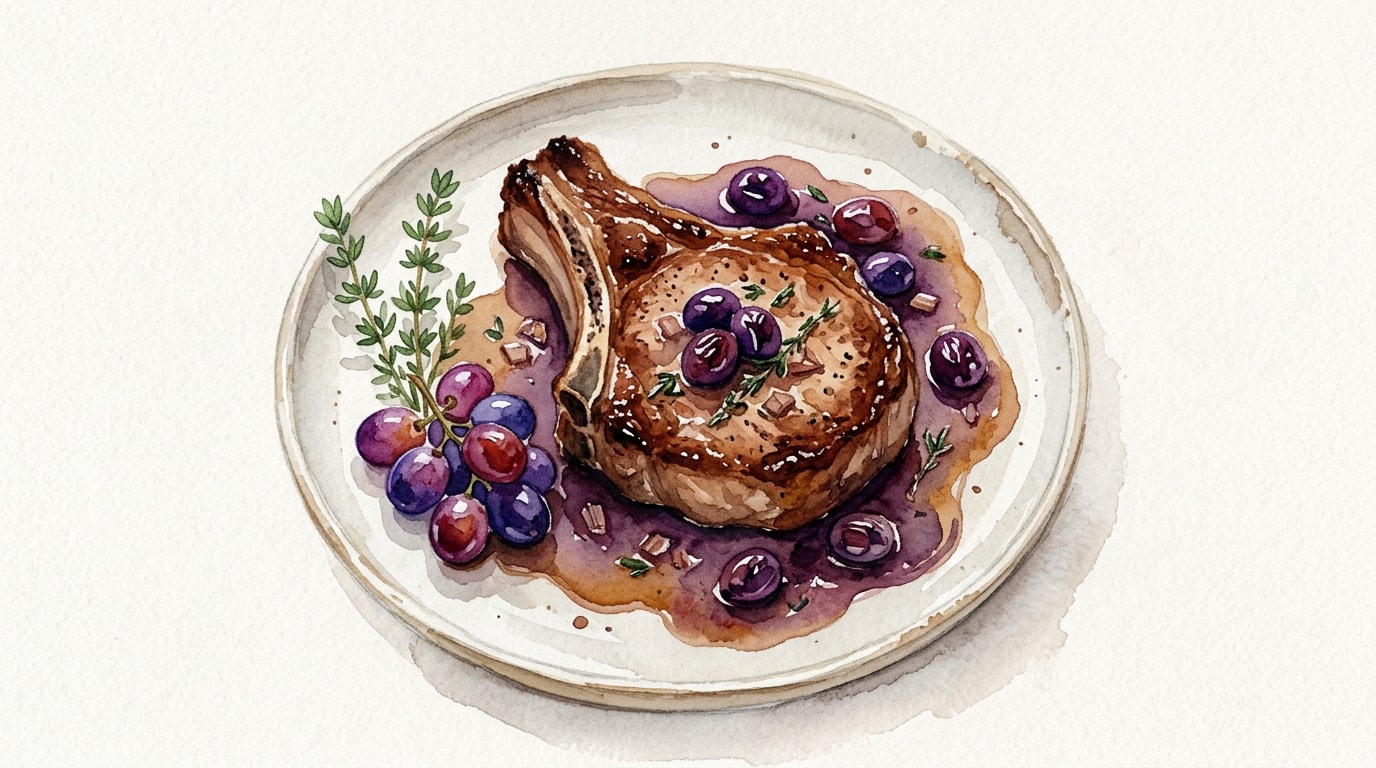
Plate the rested pork chops and spoon the blistered grape and mustard pan sauce generously over the top. Serve immediately.
Chef's Notes
- Patting the pork chops completely dry is critical. Surface moisture creates steam in the pan, which prevents the meat from developing a deeply savory, brown crust.
- Using cold butter at the end of the pan sauce is essential for a stable emulsion. If the butter is warm or the heat is still on, the sauce will break and appear greasy.
- Do not skip resting the pork. Resting allows the muscle fibers to relax and redistribute juices throughout the cut, keeping the meat succulent.
- If your grapes are particularly tart, a tiny pinch of sugar added during the reduction phase can wonderfully balance the bright acidity of the wine and mustard.
Storage
Refrigerator: 3 days — Store sauce and pork separately if possible; reheat gently so the sauce does not split.
Reheating: Reheat gently in a skillet over medium-low heat with a splash of chicken stock until warmed through.