Equipment
Ingredients
Squab Prep
- 2 whole squab, dressed and cleaned
- 6 g kosher salt
- 2 g black pepper, freshly ground
- 15 ml neutral cooking oil
Mushroom and Pear Ragout
- 200 g wild mushrooms, torn or roughly chopped
- 150 g bosc pear, peeled, cored, and diced into 1cm cubes
- 40 g shallot, finely minced
- 5 g garlic, smashed
- 2 fresh thyme
- 60 ml port wine
- 150 ml chicken stock, warm
- 30 g unsalted butter, cold, cut into small cubes
Nutrition (per serving)
Method
Pat the squab breasts and legs completely dry with paper towels. Lightly score the skin of the breasts in a crosshatch pattern, being careful not to cut into the meat. Season all pieces generously with salt and black pepper.
Prepare the ragout ingredients: tear the wild mushrooms into bite-sized pieces, dice the Bosc pear, and mince the shallot. Set aside on the cutting board.
Heat a small saucepan over medium-high heat with a splash of oil. Add the mushrooms and cook undisturbed until deeply browned, about 4 minutes. Add the diced pear and minced shallot, stirring until softened.
Pour the port wine into the saucepan with the mushroom and pear mixture. Let it reduce until syrupy. Pour in the chicken stock and add 1 sprig of thyme. Reduce heat to low and simmer gently until the liquid coats the back of a spoon.
While the ragout simmers, heat the neutral oil in a cast iron skillet over medium heat. Place the squab legs in the pan and sear until deeply browned. Legs require more cooking time than breasts to become tender.
Push the legs to the edges of the skillet. Place the squab breasts skin-side down in the center. Sear undisturbed until the skin is rendered and crispy. Flip the breasts, add the smashed garlic, remaining thyme sprig, and half of the cold butter. Baste the breasts continuously with the foaming butter until they reach an internal temperature of 54 C / 130 F for traditional medium-rare. Note: Government safety guidelines recommend heating all poultry to 74 C / 165 F.
Remove the squab breasts and legs from the skillet and transfer to a clean cutting board. Let them rest uncovered. The internal temperature will carry over to 57 C / 135 F for perfect medium-rare.
Remove the simmering ragout from the heat. Stir in the remaining cold cubed butter vigorously to mount the sauce, creating a glossy emulsion. Discard the thyme sprig.
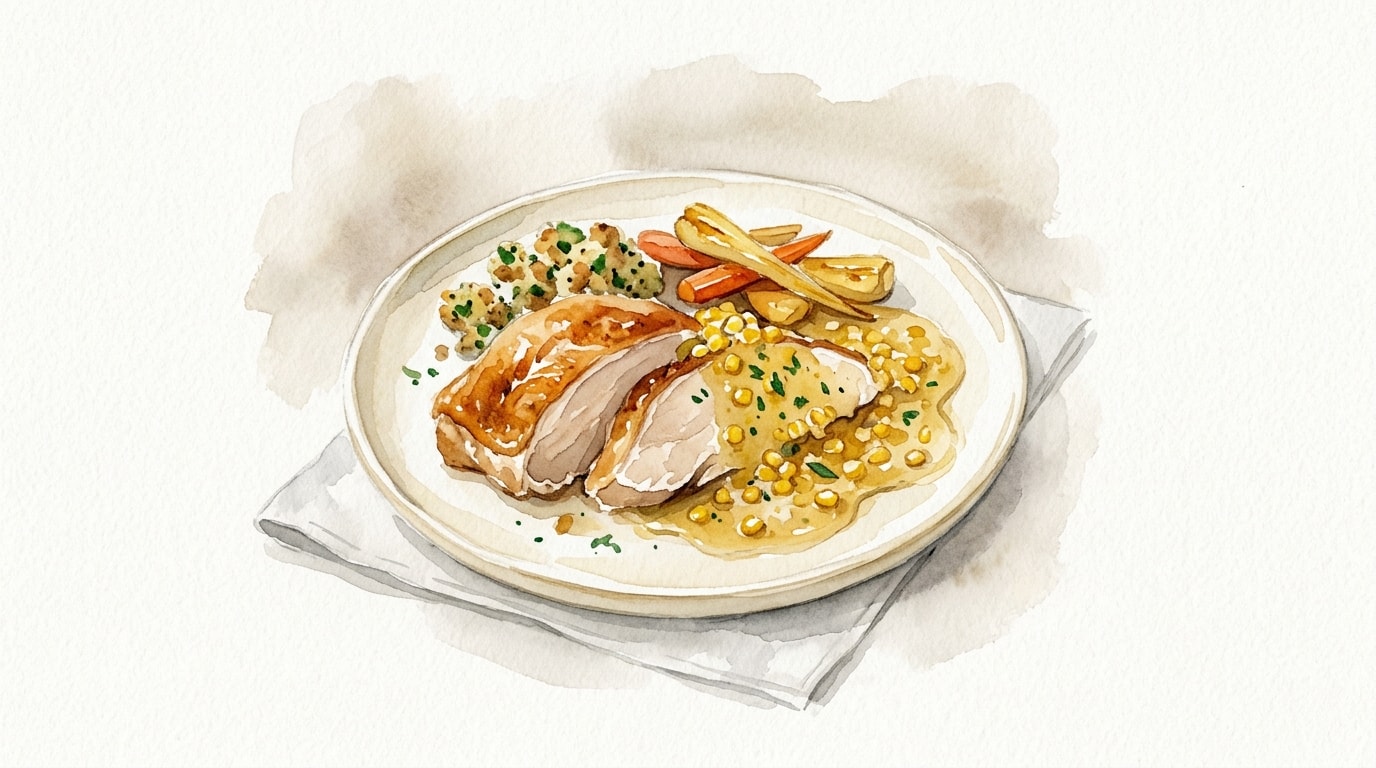
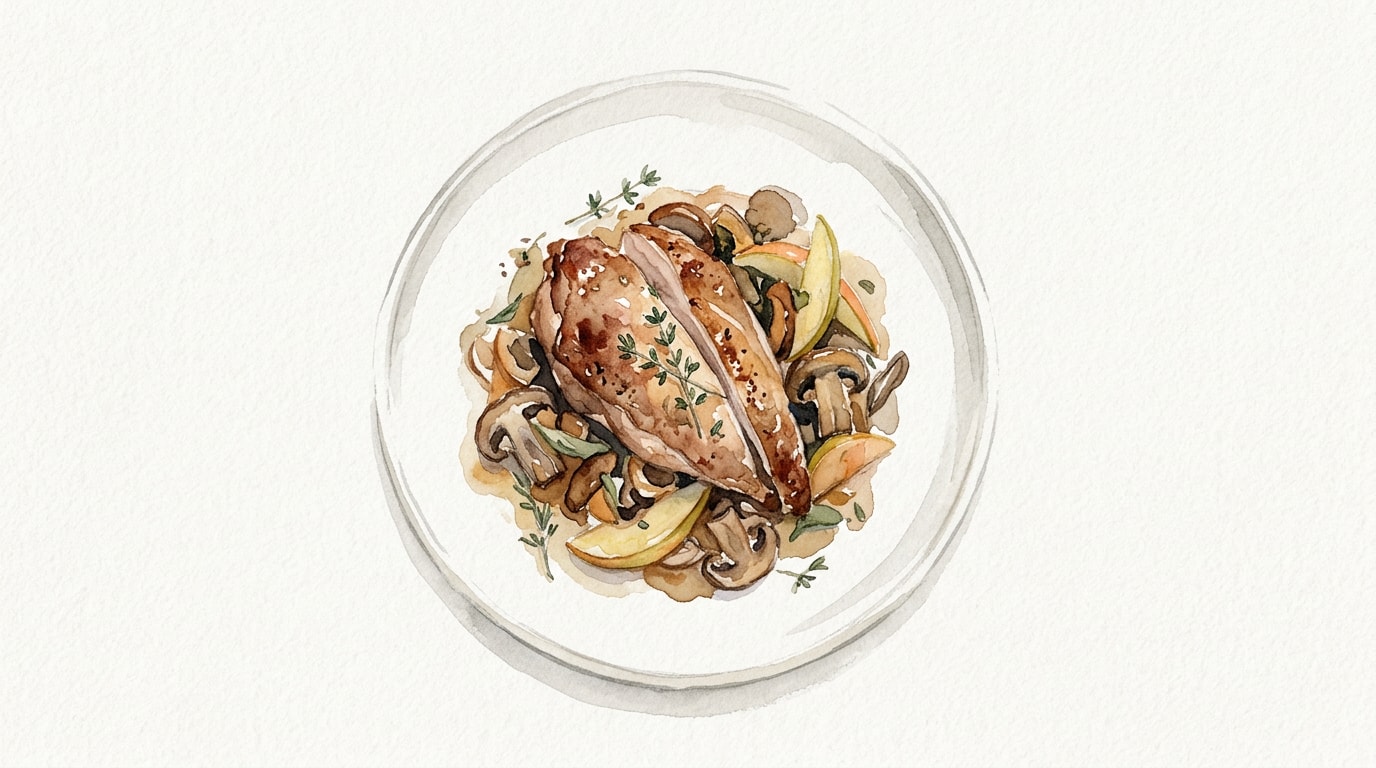
Slice each rested squab breast lengthwise in half. Spoon a generous bed of the mushroom and pear ragout onto the center of two warmed plates. Arrange the sliced breast and a whole leg over the ragout. Drizzle with any resting juices.
Chef's Notes
- Squab breasts cook remarkably fast due to their low fat content and small size. Never walk away from the pan while searing.
- Bosc or Anjou pears are highly recommended as they maintain their structure when cooked. Bartlett pears contain too much water and will turn to mush in the ragout.
- Do not discard the squab carcasses if you break the birds down yourself. Roast them and simmer with mirepoix for a dark, rich squab stock to use in future sauces.
- Searing the legs well before starting the breasts ensures the dark meat, which contains more connective tissue, becomes tender while keeping the delicate breast meat medium-rare.
- Scoring the skin not only helps render out the thin layer of subcutaneous fat, but also prevents the breast from curling up in the hot skillet.
Storage
Refrigerator: 3 days — Store ragout and squab in separate airtight containers.
Reheating: Gently warm the ragout in a saucepan over low heat. Serve squab slightly chilled or room temperature, or flash-sear for 30 seconds per side, to avoid overcooking the breast meat.