Equipment
Ingredients
Duck
- 2 duck breast, skin-on
- 5 g kosher salt
- 2 g black pepper, freshly ground
Spicy Cherry Gastrique
- 30 g sugar
- 60 ml red wine vinegar
- 120 ml chicken stock
- 150 g sweet cherries, pitted and halved
- 5 g ginger, freshly grated
- ½ g cayenne pepper, ground
- 15 g unsalted butter, cold, cut into cubes
Nutrition (per serving)
Method
Using a sharp knife, score the skin of the duck breasts in a crosshatch pattern, spacing the cuts about 1 centimeter apart. Be careful to cut only through the fat and not into the meat.
Pat the duck breasts completely dry with a paper towel. Generously season both sides with kosher salt and black pepper.
Place the duck breasts skin-side down in a cold skillet. Place the skillet over low-medium heat and cook slowly to render the fat until the skin is deeply golden and crisp, about 12 to 15 minutes.
Periodically drain the excess rendered duck fat from the pan into a heat-safe container to ensure the skin fries rather than boils.
Flip the duck breasts to the meat side and increase the heat to medium. Cook for an additional 3 to 5 minutes until the internal temperature reaches 54°C / 130°F for medium-rare.
Transfer the duck breasts to a cutting board and let them rest for 10 minutes. The internal temperature will rise to about 57°C / 135°F while resting.
While the duck rests, place the sugar in a small saucepan over medium heat. Let it melt and cook until it turns a light amber color.
Carefully pour the red wine vinegar into the saucepan to deglaze. The mixture will bubble vigorously and the sugar may seize, but keep stirring over heat until the hardened caramel dissolves back into the liquid.
Add the chicken stock, halved cherries, grated ginger, and cayenne pepper to the saucepan. Simmer until the cherries are soft and the liquid has reduced to a syrupy consistency that coats the back of a spoon.
Remove the saucepan from the heat and immediately whisk in the cold, cubed butter until the sauce is fully emulsified, glossy, and smooth.
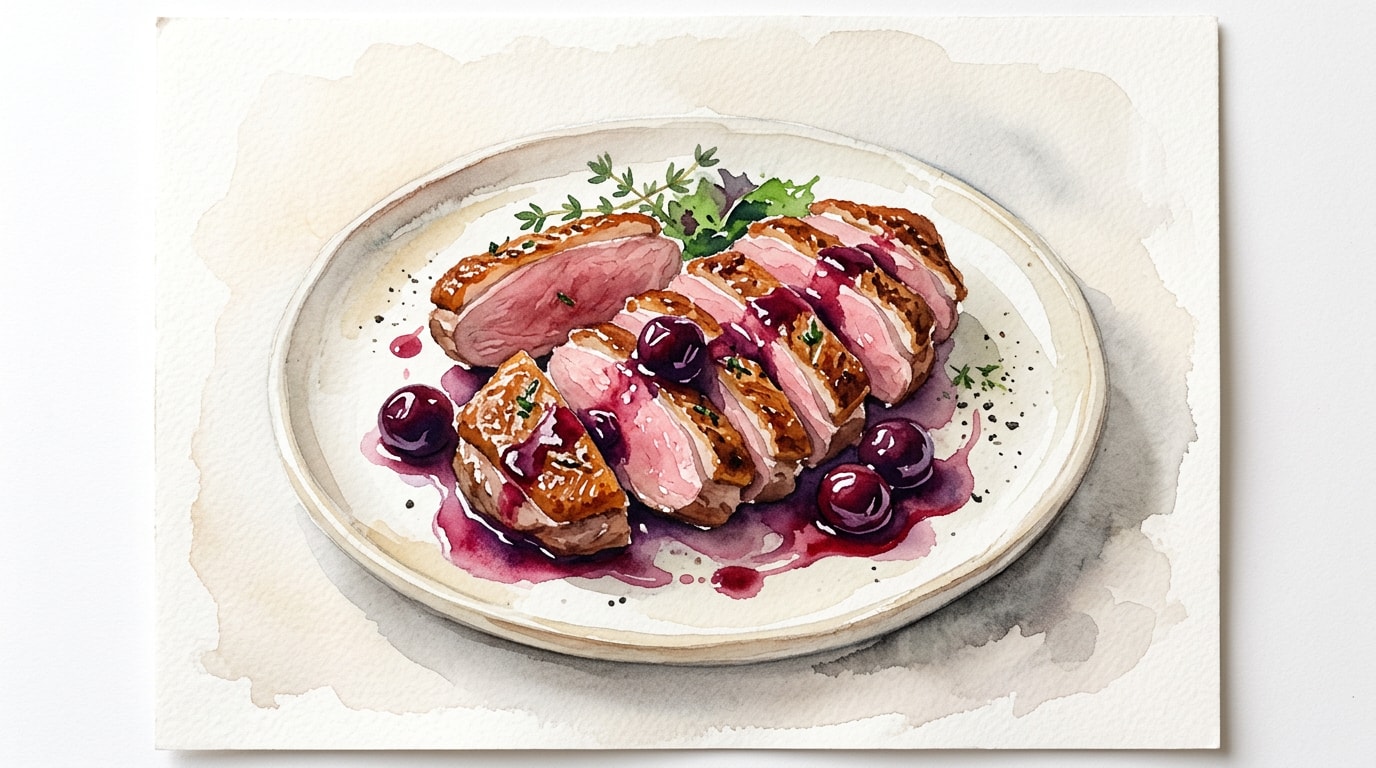
Slice the rested duck breasts crosswise into even, thick pieces.
Fan the sliced duck breast onto warm serving plates and spoon the sweet-sour cherry gastrique generously over the top.
Chef's Notes
- Starting a duck breast in a cold pan is a non-negotiable technique; it gives the thick subcutaneous layer of fat the necessary time to slowly melt away, resulting in a perfectly thin, crisp skin.
- Save the rendered liquid gold (duck fat) in a jar in your refrigerator. It is one of the best cooking fats available and is exceptional for roasting potatoes or searing root vegetables later in the week.
- A gastrique relies on the balance between sweet (caramelized sugar) and sour (vinegar). The addition of ginger and cayenne here lifts the classic flavor profile, cutting through the intense richness of the duck.
- Do not skip mounting the sauce with cold butter (monter au beurre) off the heat. This classic French technique gives the sauce its signature glossy sheen and luxurious mouthfeel without splitting.
Storage
Refrigerator: 3 days — Store duck and sauce in separate airtight containers.
Reheating: Reheat duck gently in a skillet over low heat until just warm to avoid overcooking. Reheat sauce separately in a small pan, whisking well.