Equipment
Ingredients
Salmon
- 300 g salmon fillet, skin-on, pin bones removed
- 15 ml olive oil
- 15 g unsalted butter
- 3 g sea salt
- 1 g black pepper, freshly ground
Tarragon Cream Sauce
- 1 shallot, finely minced
- 60 ml dry white wine
- 120 ml heavy cream, room temperature
- 5 g dijon mustard
- 5 g fresh tarragon, finely chopped
- 10 ml lemon juice, freshly squeezed
Vegetables
- 150 g asparagus, woody ends trimmed
- 150 g broccolini, ends trimmed, thick stalks halved lengthwise
- 2000 ml water
- 15 g sea salt
Nutrition (per serving)
Method
Bring a large saucepan of the blanching water and 15g sea salt to a rapid boil over high heat. Prepare a mixing bowl filled with cold water and ice cubes nearby.
Submerge the asparagus and broccolini into the boiling water and blanch for 2 to 3 minutes until vivid green and tender-crisp. Use a slotted spoon to transfer the vegetables immediately to the ice bath to halt cooking. Drain well and set aside.
Thoroughly pat the salmon fillets dry with paper towels, paying special attention to the skin. Season generously with sea salt and freshly ground black pepper on all sides.
Heat olive oil in a large skillet over medium-high heat until shimmering. Carefully place the salmon fillets skin-side down. Press firmly on each fillet with a fish spatula for 10 seconds to prevent curling. Cook undisturbed for 4 to 5 minutes.
Flip the salmon, lower the heat slightly, and add the unsalted butter to the pan. Cook for another 1 to 2 minutes. For medium-rare, aim for an internal temperature of 52 degrees Celsius (125 degrees Fahrenheit). For fully cooked, aim for 63 degrees Celsius (145 degrees Fahrenheit). Remove salmon to a warm plate to rest.
Reduce pan heat to medium-low. Add the minced shallots to the residual cooking fat and cook for 1 minute until softened. Pour in the dry white wine, using a spatula to scrape up any browned bits from the bottom of the pan. Simmer until the wine has reduced by half.
Whisk the heavy cream and Dijon mustard into the pan. Simmer gently for 2 to 3 minutes until the sauce coats the back of a spoon. Remove the skillet from the heat.
Stir the chopped fresh tarragon and lemon juice into the cream sauce. Taste and adjust the seasoning with additional salt and pepper if needed.
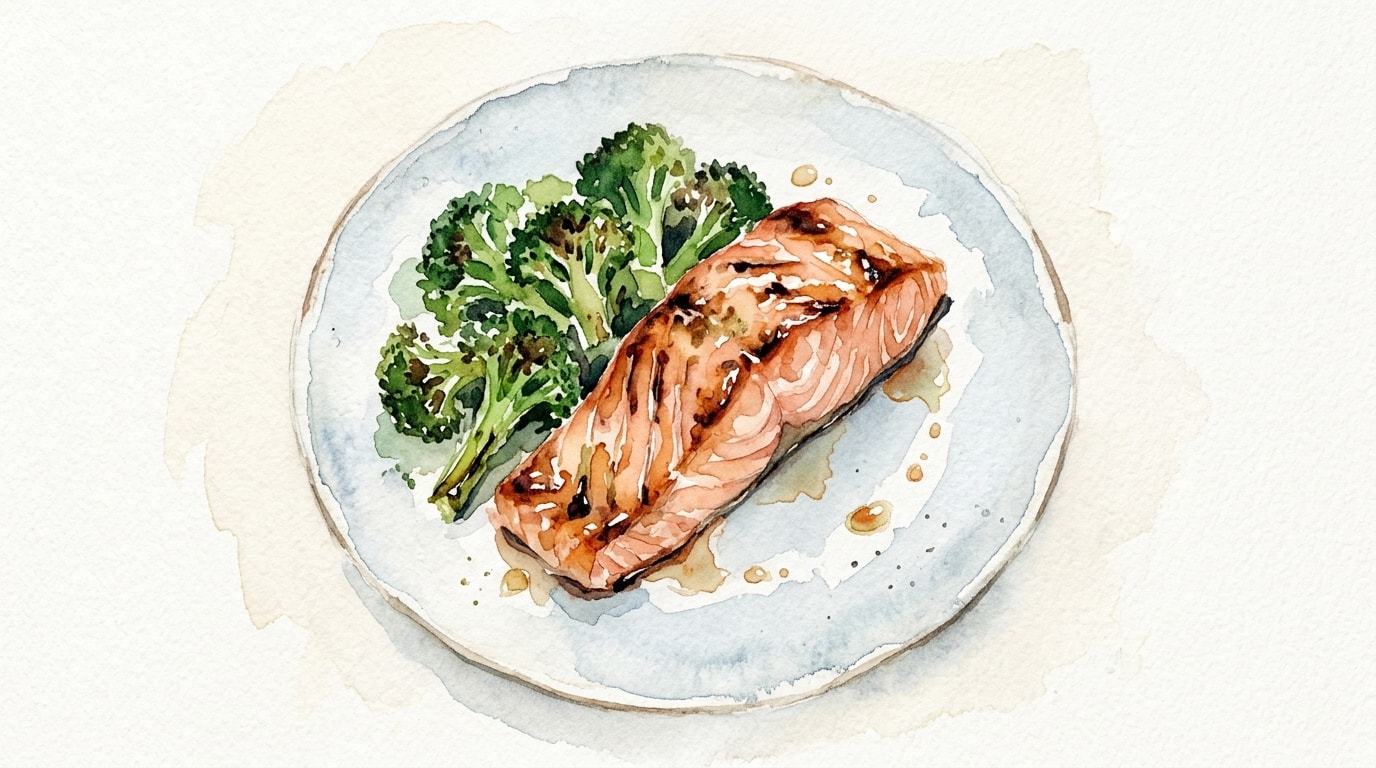
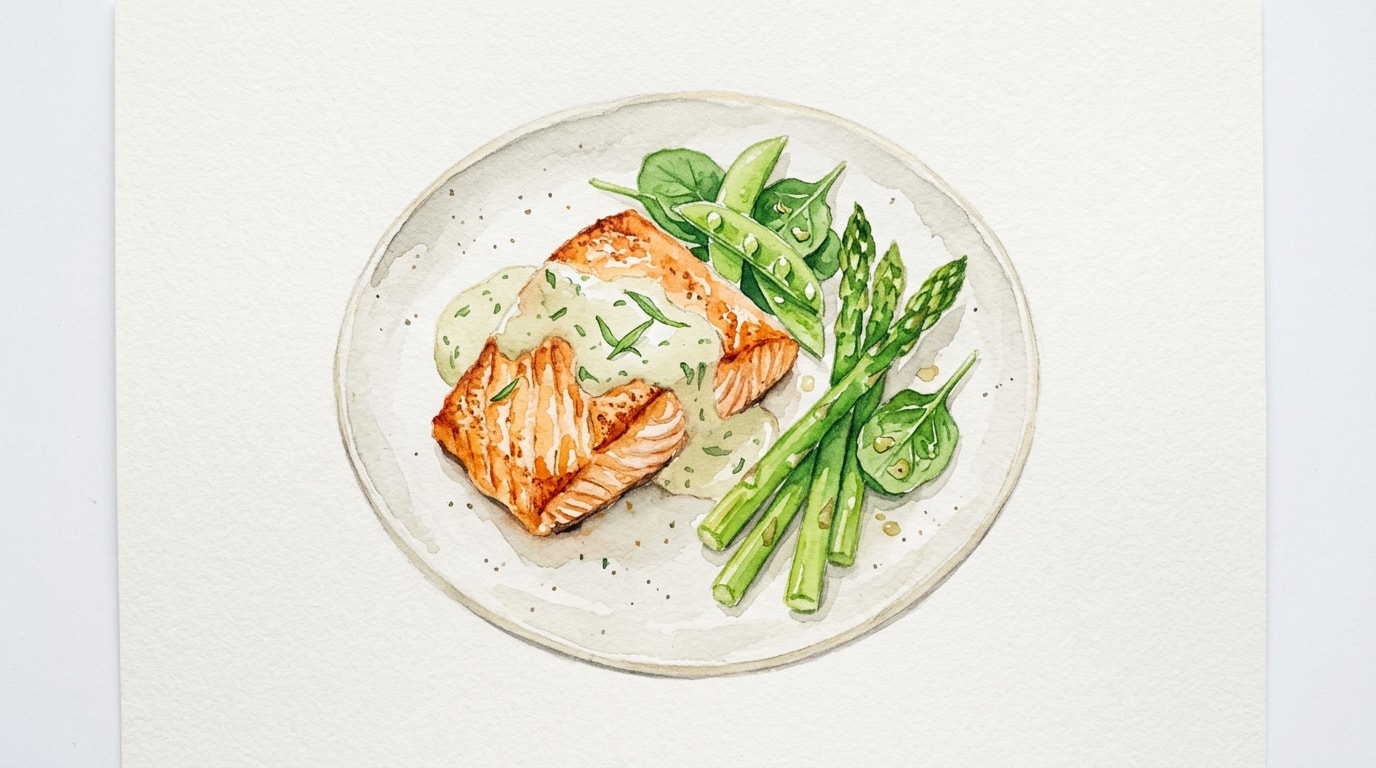
Divide the blanched vegetables between two plates. Top each vegetable bed with a resting salmon fillet. Spoon the warm tarragon cream sauce generously over the fish and vegetables, serving immediately.
Chef's Notes
- Thoroughly drying the salmon skin is the single most important step for achieving a restaurant-quality sear. Moisture creates steam, which prevents a crisp crust.
- Pressing the salmon flat with a spatula for the first few seconds of cooking prevents the skin from shrinking rapidly and causing the fillet to curl up.
- Carryover cooking will raise the internal temperature of the salmon by a few degrees while it rests, so pull it from the pan just before it reaches your target temperature.
- Using heavy cream rather than light cream or half-and-half significantly reduces the risk of the sauce curdling when the lemon juice and wine are introduced.
Storage
Refrigerator: 2 days — Store the cream sauce and cooked fish in separate airtight containers to maintain fish texture.
Reheating: Reheat fish gently in a low oven. Warm sauce on the stovetop over low heat without boiling to prevent splitting. Do not microwave.