Equipment
Ingredients
Duck
- 400 g duck breasts, patted very dry, skin on
- 5 g kosher salt
- 2 g black pepper, freshly ground
Calvados Apple Sauce
- 200 g tart apples, peeled, cored, and cut into wedges
- 50 g shallots, finely minced
- 60 ml calvados
- 150 ml unsalted chicken stock
- 30 g unsalted butter, cold and cubed
- 2 g fresh thyme, leaves stripped from stems
Nutrition (per serving)
Method
Using a very sharp knife, lightly score the skin of the duck breasts in a crosshatch diamond pattern, being careful to only cut through the fat and not pierce the flesh below.
Season both the skin and flesh sides of the duck breasts generously with the kosher salt and freshly ground black pepper.
Place the duck breasts skin-side down in a completely cold skillet. Turn the heat to medium-low and cook undisturbed to slowly render the fat until the skin becomes deep golden brown and crispy.
Flip the duck breasts to the flesh side. Increase the heat slightly to medium and cook until the internal temperature reaches 54 degrees Celsius / 130 degrees Fahrenheit for a traditional medium-rare finish. Health agencies recommend cooking all poultry to 74 degrees Celsius / 165 degrees Fahrenheit, though duck breast is traditionally served pink.
Remove the duck breasts from the skillet and transfer to a warm plate or cutting board. Tent loosely with foil and allow the meat to rest while you prepare the sauce.
Carefully pour off all but approximately 30ml (two tablespoons) of the rendered duck fat from the skillet. Add the apple wedges and minced shallots. Cook over medium heat until the apples begin to caramelize and soften.
Remove the pan from the heat source completely. Pour in the Calvados to deglaze, scraping up any browned bits from the bottom of the pan. If using a gas stove, be extremely cautious of flare-ups. Return to heat and cook until the liquid has almost entirely evaporated.
Pour the chicken stock into the pan with the apples. Bring to a rapid simmer and allow the liquid to reduce by half until it slightly thickens and coats the back of a spoon.
Remove the skillet from the heat. Add the cold cubed butter and fresh thyme leaves. Swirl the pan gently or whisk continuously until the butter melts completely and emulsifies into a glossy, velvety sauce.
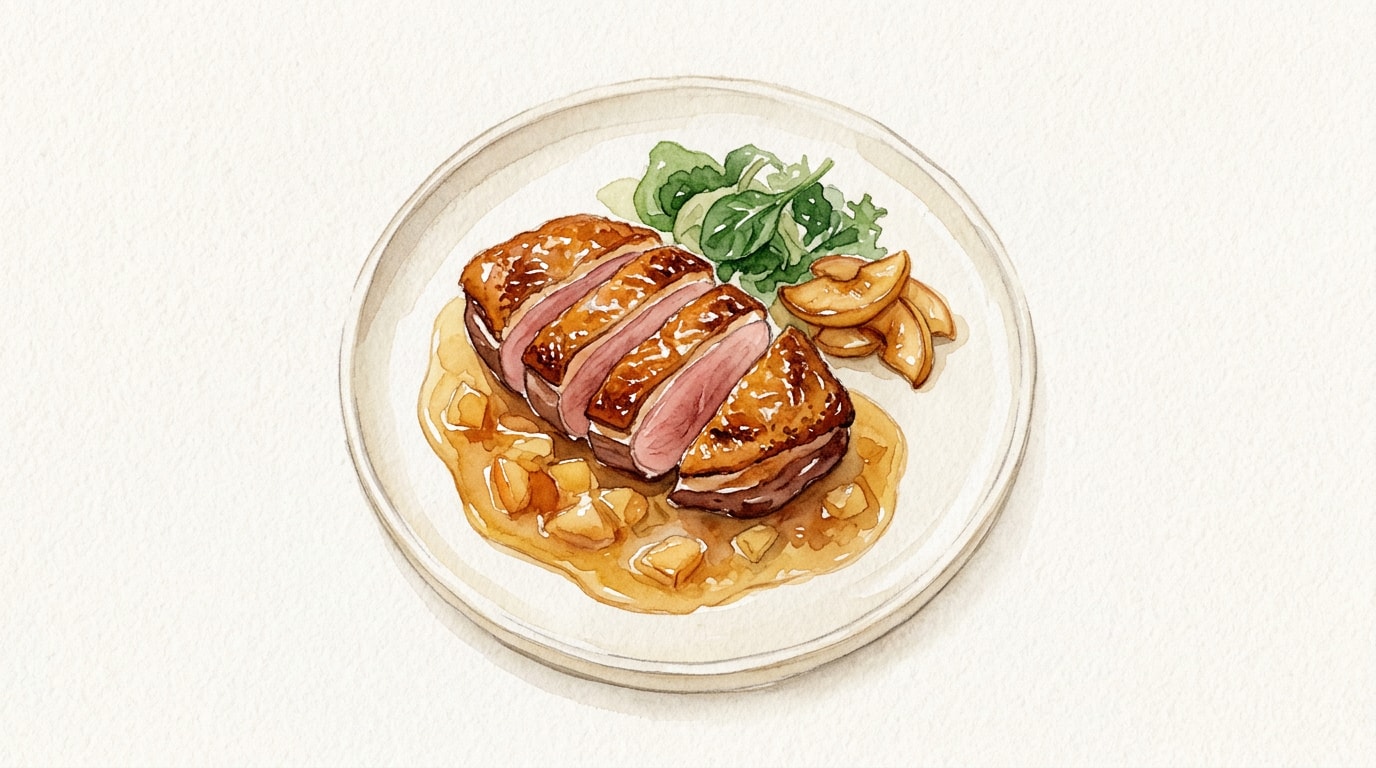
Slice the rested duck breasts crosswise into thick medallions. Fan the slices out on a warm plate and spoon the hot Calvados apple sauce generously over the top and alongside the meat.
Chef's Notes
- Retain the excess rendered duck fat that you pour off in step 6. Strain it into a clean jar and store it in your refrigerator; it is culinary gold for roasting potatoes or searing root vegetables.
- When scoring the duck skin, ensure the meat is completely cold straight from the refrigerator. The firm fat will cut cleanly, whereas room temperature fat will tear under the knife.
- Never skip resting the meat. Duck breast behaves much like a good steak; resting allows the muscle fibers to relax and reabsorb juices that would otherwise bleed out onto your cutting board.
- When deglazing with Calvados, taking the pan off the heat is a vital safety step. Alcohol vapors can ignite easily if they drift down to an open gas flame. If a flambé does occur, remain calm, remove from the burner, and let the alcohol burn itself out.
Storage
Refrigerator: 3 days — Store sauce and duck in separate airtight containers.
Reheating: Reheat duck gently in a skillet over low heat until warmed through to preserve skin texture. Reheat sauce separately, adding a splash of water if it has separated.