Equipment
Ingredients
Base Grains and Lentils
- 150 g short-grain rice, dry
- 100 g toor dal, dry
Vegetables
- 100 g shallots, peeled and halved
- 150 g tomatoes, roughly chopped
- 100 g carrots, diced into 2cm cubes
- 100 g green beans, cut into 3cm pieces
Broth and Seasonings
- 800 ml water
- 30 g tamarind paste
- 25 g sambar powder, ground
- 3 g turmeric powder, ground
- 10 g salt
Tempering (Tadka)
- 30 g ghee, divided
- 3 g mustard seeds, whole black
- 15 fresh curry leaves
- 2 dried red chilies, whole
- 1 g asafoetida, powder
Nutrition (per serving)
Method
Place the rice and toor dal in a fine mesh sieve. Rinse thoroughly under cold running water until the water runs clear. Drain well and set aside.
Heat 15g of ghee in a pressure cooker over medium heat, approximately 175°C/350°F. Add the halved shallots and chopped tomatoes, sautéing until the shallots turn translucent and the tomatoes begin to break down.
Add the diced carrots, green beans, sambar powder, turmeric, and salt to the cooker. Stir continuously for one minute to lightly toast the spices and coat the vegetables.
Pour in the rinsed rice, dal, tamarind paste, and water. Stir well, scraping the bottom of the pot to ensure no spices are stuck, which could cause burning.
Secure the lid on the pressure cooker. Cook on high pressure for 15 minutes. If using a standard pot, bring to a boil, reduce to a low simmer, cover tightly, and cook for 35 to 40 minutes.
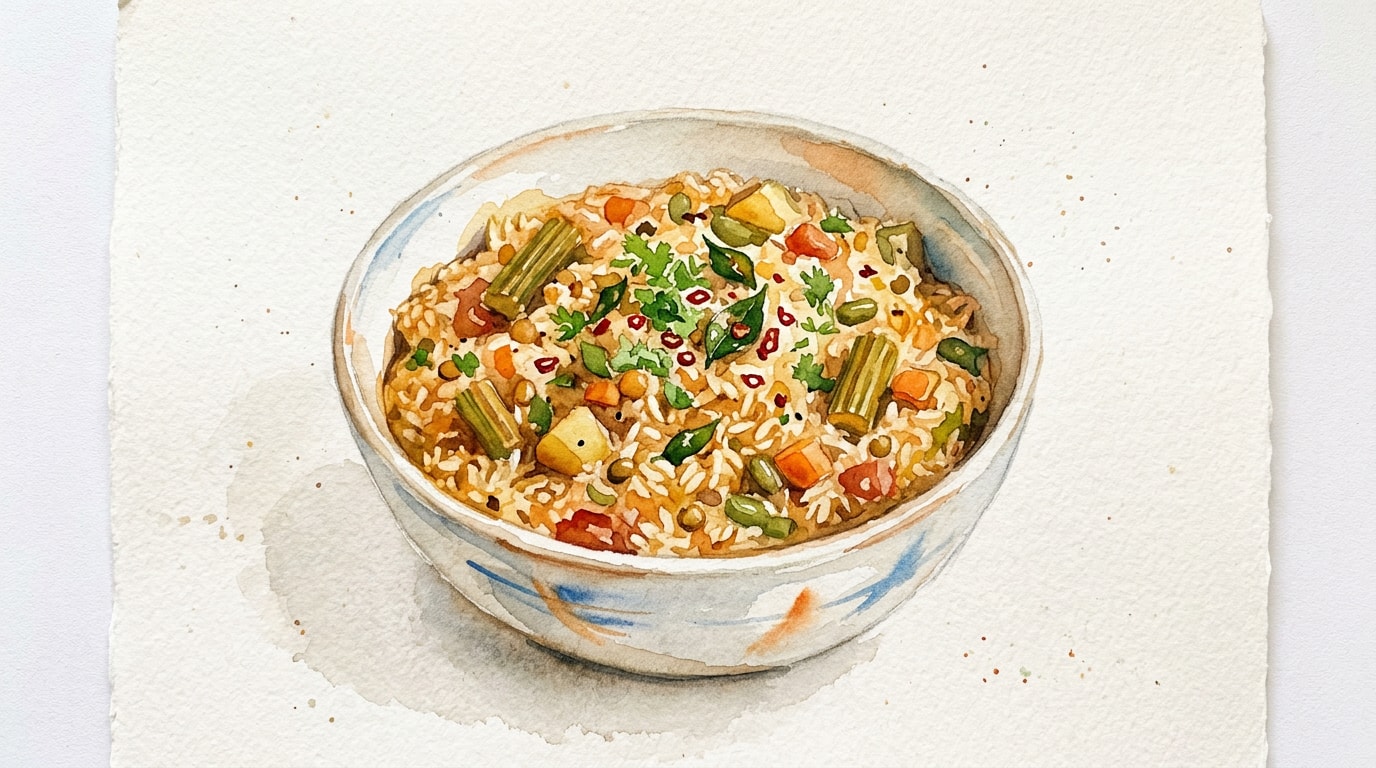
Allow the pressure to release naturally for 10 minutes, then carefully open the lid. Stir the mixture vigorously with a sturdy spoon to lightly mash the rice and lentils together. The consistency should be soft, wet, and porridge-like.
In a small frying pan, prepare the tempering. Heat the remaining 15g of ghee over medium-high heat, around 190°C/375°F. Add the mustard seeds. The moment they begin to pop, immediately add the dried red chilies, curry leaves, and asafoetida. Swirl the pan for 15 to 30 seconds until the leaves crackle, then remove from heat.
Pour the hot tempering directly over the mashed sambar rice. Stir thoroughly to distribute the flavored ghee throughout the dish. Serve immediately while piping hot.
Chef's Notes
- For the best texture, use a short or medium-grain rice like Sona Masoori. Long-grain varieties like Basmati are too fragrant and do not break down into the necessary creamy consistency.
- The texture of Sambar Sadam should be flowing and porridge-like, never separate and fluffy like a pilaf. Do not be afraid to overcook the grains; the magic lies in the amalgamation of starches.
- Using freshly roasted and ground sambar powder dramatically elevates the flavor, though a high-quality store-bought blend works wonderfully for an easy weeknight meal.
- Ghee provides the most authentic, nutty flavor for the tempering, but substituting with coconut oil or a neutral vegetable oil makes this dish completely plant-based.
Storage
Refrigerator: 4 days — Store in an airtight container. The mixture will thicken significantly as it cools.
Freezer: 1 month — Freeze in individual portions. Texture may become slightly mushier upon thawing, but flavor remains excellent.
Reheating: Reheat on the stovetop over low heat, adding 50-100ml of hot water to loosen the rice back to a porridge-like consistency.