Equipment
Ingredients
Aromatics and Base
- 15 ml olive oil
- 15 g unsalted butter
- yellow onion, finely diced
- garlic, minced
Sauce and Pasta
- 30 g tomato paste
- 250 g orzo pasta
- 600 ml vegetable broth, warm
- 400 g crushed tomatoes
Finishing and Garnish
- 60 ml heavy cream, room temperature
- 50 g vegetarian parmesan cheese, finely grated
- 10 g fresh basil, torn
- g salt
- g black pepper
- 1 g red pepper flakes
Nutrition (per serving)
Method
Place a large Dutch oven over medium heat and warm the olive oil and butter together until the butter melts and begins to bubble slightly.
Add the finely diced yellow onion to the pot and cook until translucent and softened.
Stir the minced garlic and optional red pepper flakes into the onions, cooking constantly until very fragrant.
Add the tomato paste to the pot. Stir constantly, pressing the paste into the bottom of the pan to cook out the raw flavor until it darkens to a deep rust color.
Pour the dry orzo pasta into the pot, stirring well to coat every grain in the tomato and aromatics mixture. Cook briefly to gently toast the pasta.
Pour in the warm vegetable broth, using a wooden spoon to scrape up any browned bits from the bottom of the pot, then stir in the crushed tomatoes.
Increase the heat slightly to bring the mixture to a gentle bubble, aiming for around 90°C/195°F.
Reduce the heat to low and simmer uncovered. Stir thoroughly every few minutes, being sure to scrape the bottom of the pot, until the pasta is al dente and the liquid has reduced into a thick sauce.
Remove the Dutch oven entirely from the heat source and let the pasta rest undisturbed.
Vigorously stir in the heavy cream and grated vegetarian parmesan cheese until the cheese is completely melted and the sauce turns glossy and velvety.
Taste the dish and season with salt and freshly ground black pepper as needed.
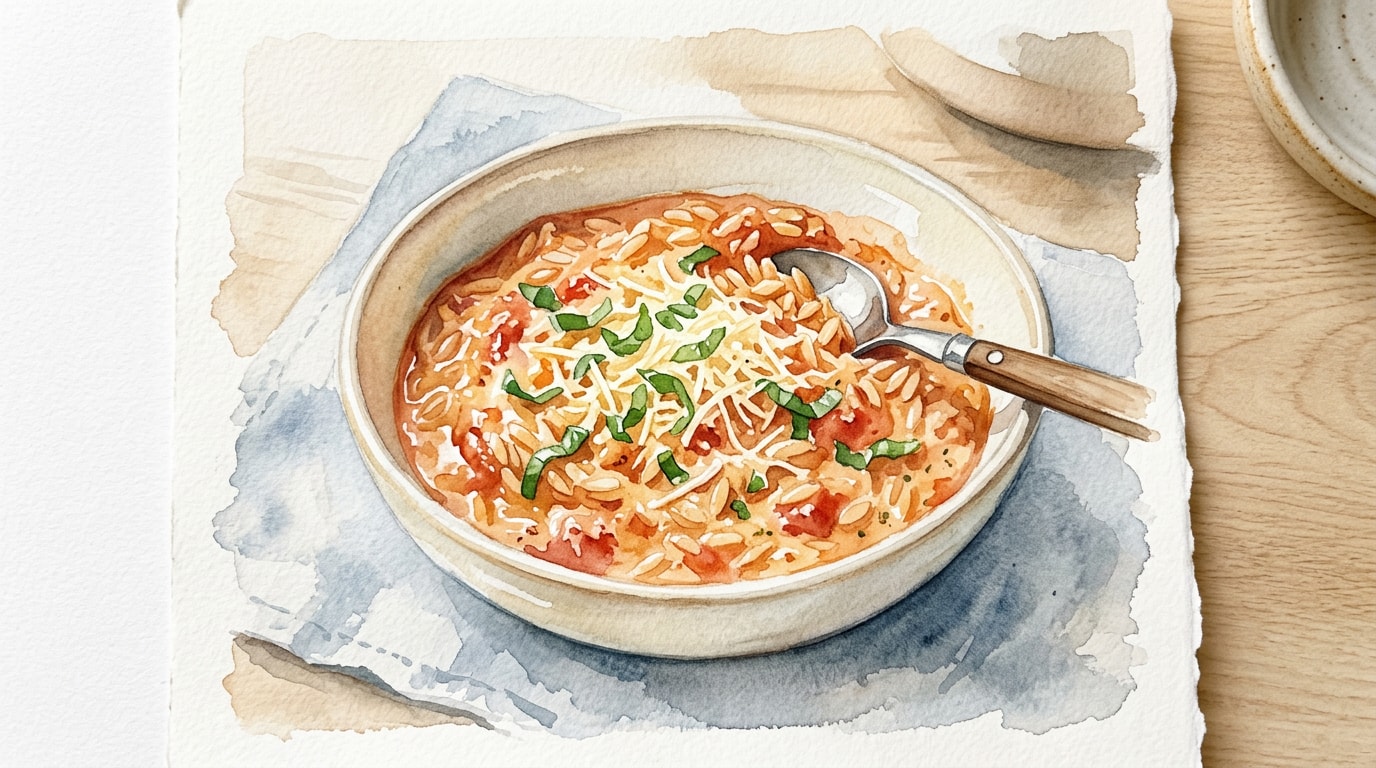
Divide the creamy orzo into bowls and garnish with fresh torn basil before serving warm.
Chef's Notes
- Toasting the tomato paste (a technique known as pincage) is a non-negotiable step. It cooks out the sharp, raw metallic flavor of the canned paste and deepens the umami profile dramatically.
- Frequent stirring is the secret to this dish. Similar to making traditional risotto, the mechanical agitation rubs the grains of orzo together, releasing surface starches into the liquid to naturally thicken the sauce.
- Always remove your pot from the heat before adding the parmesan and cream. The residual heat of the pasta is more than enough to melt the cheese, and keeping it off a direct flame prevents the dairy from breaking or turning grainy.
- If the pasta reaches al dente before the liquid has reduced enough, simply increase the heat slightly for the final minute while stirring constantly to evaporate the excess moisture.
Storage
Refrigerator: 3 days — Sauce will thicken significantly as it cools. Add a generous splash of water or vegetable broth when reheating to restore the creamy consistency.
Freezer: 1 month — Freezing is possible but not ideal, as the texture of the orzo may become slightly mushy upon thawing.
Reheating: Reheat gently on the stovetop over low heat, adding a splash of water or broth and stirring continuously until warmed through.