Equipment
Ingredients
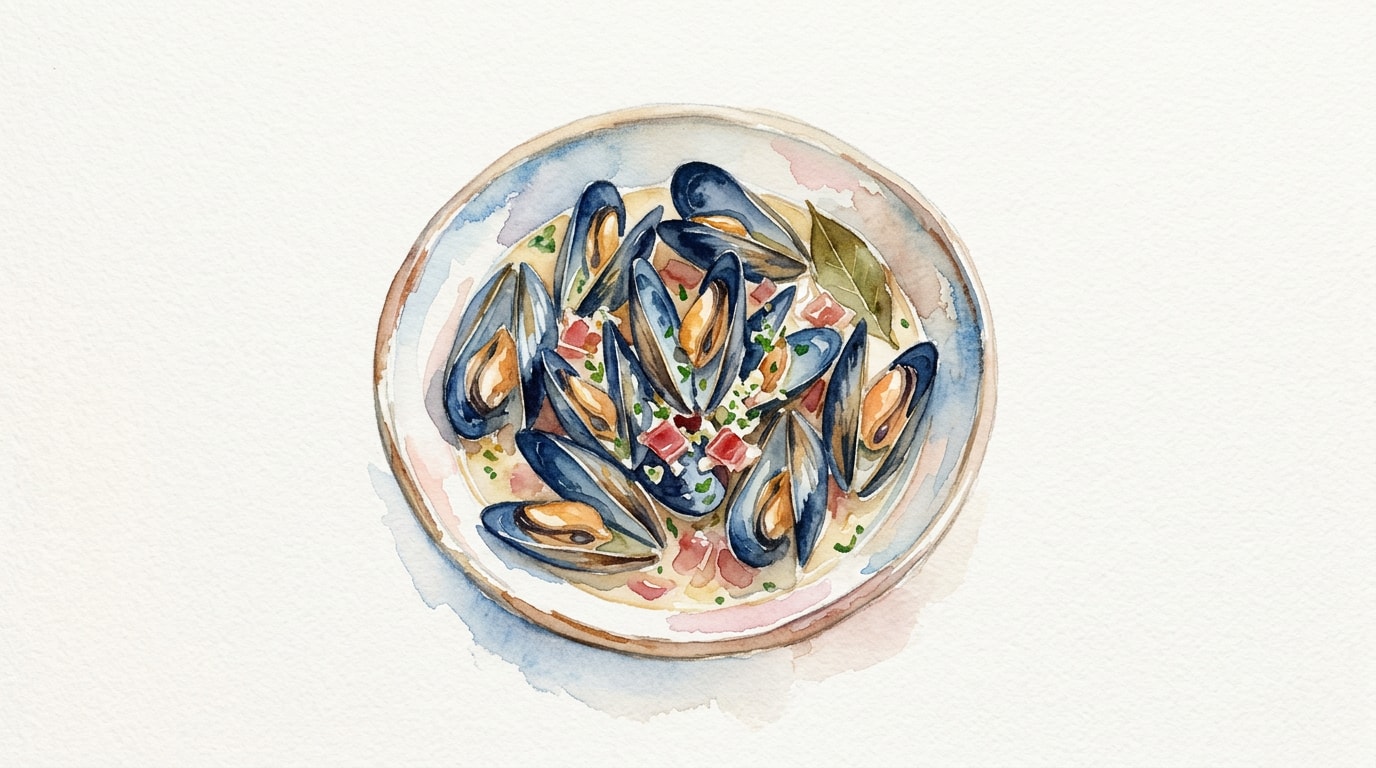
Mussels
- 1200 g fresh mussels, scrubbed and debearded
Aromatics & Base
- 15 ml olive oil
- 100 g bayonne ham, diced
- 15 g unsalted butter
- 2 shallots, finely chopped
- 3 garlic, minced
- 200 ml dry white wine
Herbs & Seasoning
- 2 g fresh thyme, leaves only
- 1 g black pepper, freshly ground
- 15 g fresh parsley, roughly chopped
Nutrition (per serving)
Method
Inspect the cleaned mussels. Discard any with cracked shells or those that remain open when tapped lightly against the counter.
Heat the olive oil in a large pot or Dutch oven over medium heat. Add the diced Bayonne ham and cook until the fat renders and the edges turn crispy.
Add the butter to the pot. Once melted, stir in the finely chopped shallots and minced garlic. Cook until the aromatics are softened and fragrant.
Pour in the dry white wine and add the fresh thyme and black pepper. Bring the liquid to a rapid boil at 100°C/212°F to begin reducing the alcohol.
Add the prepared mussels to the boiling broth. Cover immediately with a tight-fitting lid and let steam, shaking the pot occasionally, until the mussels open.
Remove the pot from the heat. Carefully discard any mussels that remained closed during steaming. Gently fold in the fresh chopped parsley.
Transfer the mussels and the broth to large, warm serving bowls. Serve immediately.
Chef's Notes
- Bayonne ham adds a distinct, slightly sweet and salty depth to the dish. If unavailable, Prosciutto di Parma, jamon serrano, or even pancetta make excellent substitutes.
- Always discard mussels that are chipped, broken, or remain open after a firm tap before cooking. Bivalve food safety relies heavily on cooking them alive.
- Use a high-quality, dry white wine like a Sauvignon Blanc or Muscadet. The rule of thumb is to only cook with wine you would gladly pour into a glass to drink alongside the meal.
- For an extra layer of richness, stir a small splash of heavy cream or crème fraîche into the broth right after removing the pot from the heat.
Storage
Refrigerator: 1 day — Remove meat from shells before storing in broth to save space and maintain texture.
Reheating: Gently warm on the stove over low heat until just heated through; do not boil or the mussels will become rubbery.