Equipment
Ingredients
Lamb Stew Base
- 800 g boneless lamb shoulder, trimmed of excess hard fat and cut into 4cm cubes
- 30 ml olive oil
- 1 yellow onion, finely diced
- 4 garlic, minced
- 500 ml lamb stock
Warming Spices
- 5 g ground cumin
- 5 g ground coriander
- 5 g sweet paprika
- 3 g ground ginger
- 2 g ground cinnamon
- ⅛ g saffron threads, crumbled
- 2 g black pepper, freshly ground
Flavor Enhancers & Finish
- 1 preserved lemon, pulp removed, rind finely chopped
- 100 g green olives, pitted
- 15 g fresh cilantro, roughly chopped
Aromatic Rice
- 300 g basmati rice, rinsed until water runs clear
- 450 ml water
- 15 ml olive oil
- 2 g ground turmeric
- 4 g kosher salt
Nutrition (per serving)
Method
Pat the lamb shoulder cubes dry with a paper towel and toss them thoroughly with the ground cumin, coriander, paprika, ginger, cinnamon, crumbled saffron, and black pepper until completely coated.
Heat the olive oil in a Dutch oven over medium-high heat. Working in batches to avoid crowding, brown the seasoned lamb on all sides. Transfer the browned lamb to a plate.
Lower the heat to medium. Add the diced onion to the residual lamb fat and spices in the pot. Cook until softened and translucent, scraping up any browned bits from the bottom. Add the minced garlic and cook for one additional minute.
Return the browned lamb and any accumulated juices to the pot. Pour in the lamb stock. Bring the liquid to a gentle boil, then immediately reduce the heat to the lowest setting. Cover tightly and simmer gently for 1.5 to 2 hours. Ensure the internal temperature of the meat safely exceeds 74°C/165°F and ideally reaches 90°C/195°F for collagen breakdown.
About 25 minutes before the lamb is finished, prepare the aromatic rice. In a medium saucepan, combine the rinsed basmati rice, water, olive oil, turmeric, and salt. Bring to a boil over medium-high heat.
Once boiling, immediately reduce the heat to low, cover the saucepan with a tight-fitting lid, and simmer undisturbed for 15 minutes. Remove from heat and let rest, covered, for 5 minutes before fluffing with a fork.
Remove the lid from the Dutch oven. Gently stir in the chopped preserved lemon rind and pitted green olives. Simmer uncovered for 10 minutes to allow the flavors to meld and the sauce to thicken slightly.
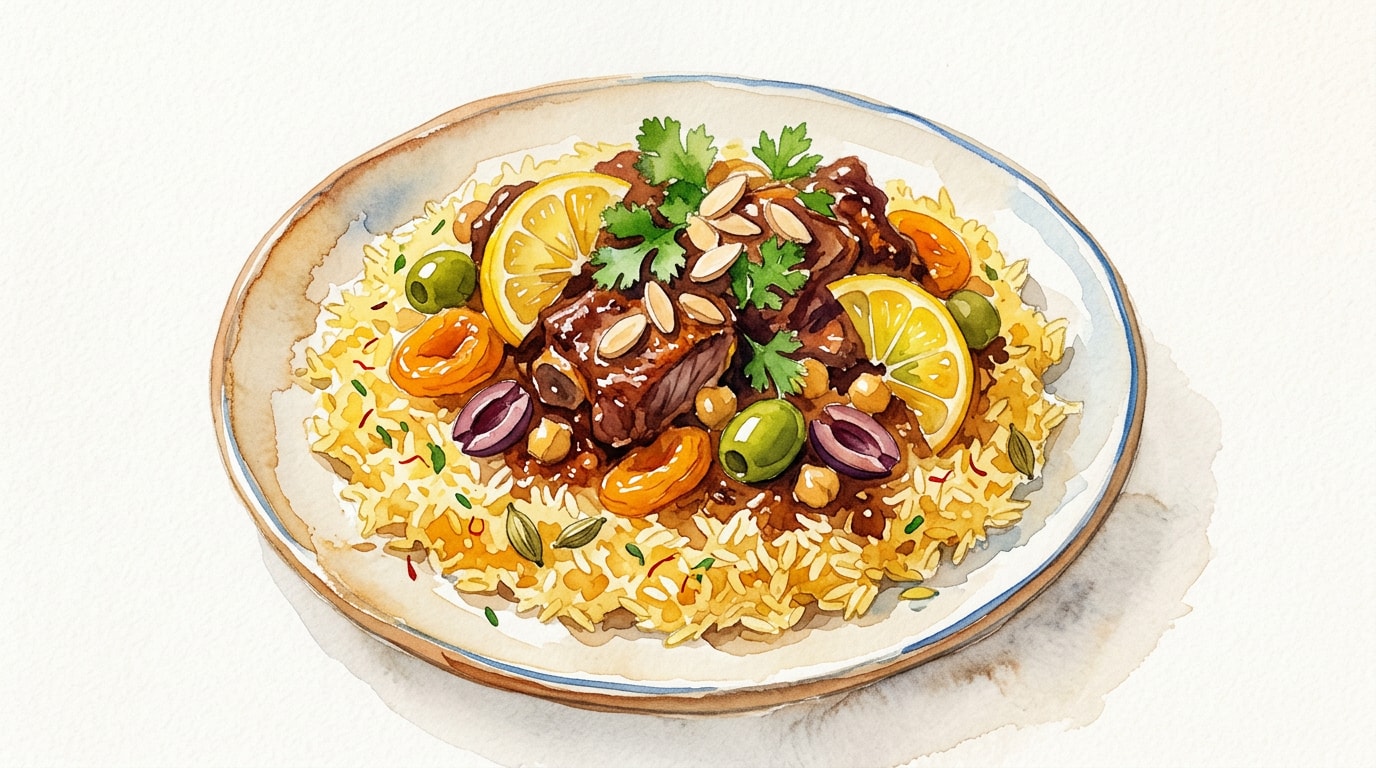
Divide the golden aromatic rice among warm, shallow bowls. Spoon the lamb tagine generously over the rice, ensuring each portion receives an equal amount of olives and rich sauce. Garnish with freshly chopped cilantro.
Chef's Notes
- Preserved lemons bring a unique fermented citrus flavor and significant saltiness. Only use the rind, as the pulp can be unpleasantly bitter, and avoid adding any extra salt to the stew until the final taste test.
- While the lamb is perfectly safe to eat at 74°C or 165°F, cuts from the shoulder are full of collagen. They will remain tough until stewed for a longer period, ideally reaching an internal temperature of 90°C or 195°F, where the collagen melts into tender gelatin.
- If you have a traditional clay tagine, ensure you use a heat diffuser on your stovetop to prevent the clay from cracking under direct heat, and keep the flame incredibly low.
- Browning the meat in batches is crucial. If you crowd the pan, the meat will steam in its own juices rather than developing the deep, caramelized crust that builds foundational flavor.
Storage
Refrigerator: 4 days — Store the lamb stew and rice in separate airtight containers.
Freezer: 3 months — The lamb tagine freezes beautifully. Do not freeze the rice, as its texture degrades; make fresh rice when serving.
Reheating: Reheat the stew gently in a saucepan over low heat until simmering and heated through. Microwave rice with a splash of water.