Equipment
Ingredients
Proteins and Carbs
- 300 g salmon fillet, skin-on, divided into two equal portions
- 180 g soba noodles, dry
Produce
- 150 g shiitake mushrooms, stems removed, thinly sliced
- 100 g green peas, fresh or frozen
- 2 garlic, minced
- 15 g fresh ginger, peeled and grated
- 2 green onions, thinly sliced, white and green parts separated
Broth and Seasonings
- 800 ml dashi stock
- 50 g white miso paste
- 30 ml soy sauce
- 15 ml mirin
- 15 ml sesame oil
- 5 g toasted sesame seeds
Nutrition (per serving)
Method
Bring a large saucepan of water to a boil. Add the soba noodles and cook according to package directions, usually 4 to 5 minutes. Drain and rinse thoroughly under cold water to remove excess starch. Divide between two large serving bowls.
Heat a non-stick frying pan over medium-high heat. Pat the salmon fillets completely dry and rub with 5ml of the sesame oil. Place skin-side down in the pan and sear for 4 minutes until crisp. Flip and cook for an additional 2 to 3 minutes until the internal temperature reaches 63 degrees Celsius or 145 degrees Fahrenheit. Remove from pan and let rest.
In the large saucepan, heat the remaining 10ml of sesame oil over medium heat. Add the minced garlic, grated ginger, and the white parts of the green onions. Sauté for 1 minute until fragrant.
Add the sliced shiitake mushrooms to the saucepan. Sauté for 3 to 4 minutes until they begin to soften and release their moisture. Pour in the dashi stock, soy sauce, and mirin. Bring to a gentle simmer.
Stir the green peas into the simmering broth and cook for 2 minutes until bright green and tender. Remove the saucepan from the heat completely.
Place the white miso paste in a small mixing bowl. Ladle about 60ml of the hot broth into the bowl and whisk vigorously until the miso is completely dissolved and perfectly smooth. Stir the miso slurry back into the main saucepan.
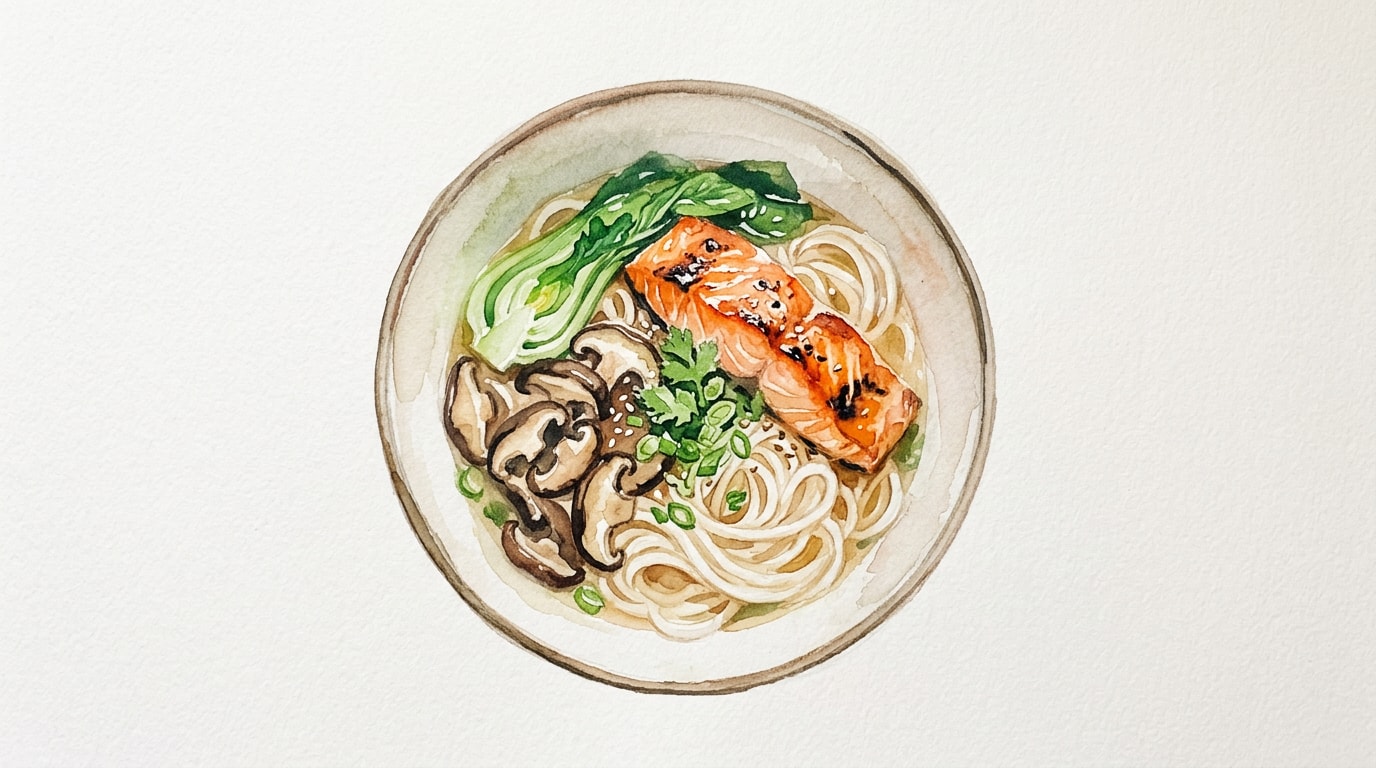
Ladle the hot broth, mushrooms, and peas over the prepared noodles in the serving bowls. Carefully top each bowl with a rested salmon fillet. Garnish with the remaining green parts of the green onions and toasted sesame seeds. Serve immediately.
Chef's Notes
- When selecting miso, white miso (shiro miso) offers a sweeter, milder flavor perfectly suited for seafood. For a more robust bowl, you can use red miso (aka miso) but reduce the quantity slightly as it is saltier.
- Rinsing soba noodles is a crucial step in Japanese cooking. Unlike Italian pasta where starch is desirable for sauce adherence, soba starch creates a gummy texture in clear broths.
- For the crispiest salmon skin, use the back of a knife to scrape any residual moisture off the skin side before patting it dry with a paper towel.
- If using frozen peas, there is no need to thaw them first. Add them directly to the hot broth to retain their snappy texture and bright color.
Storage
Refrigerator: 3 days — Store broth, noodles, and salmon in separate airtight containers to prevent noodles from becoming soggy.
Freezer: 1 month — Broth and salmon can be frozen. Do not freeze cooked noodles or peas as their texture will degrade.
Reheating: Reheat broth on the stove until simmering. Gently warm salmon separately in a pan or microwave. Pour hot broth over cold noodles to warm them through.