Equipment
Ingredients
Seafood
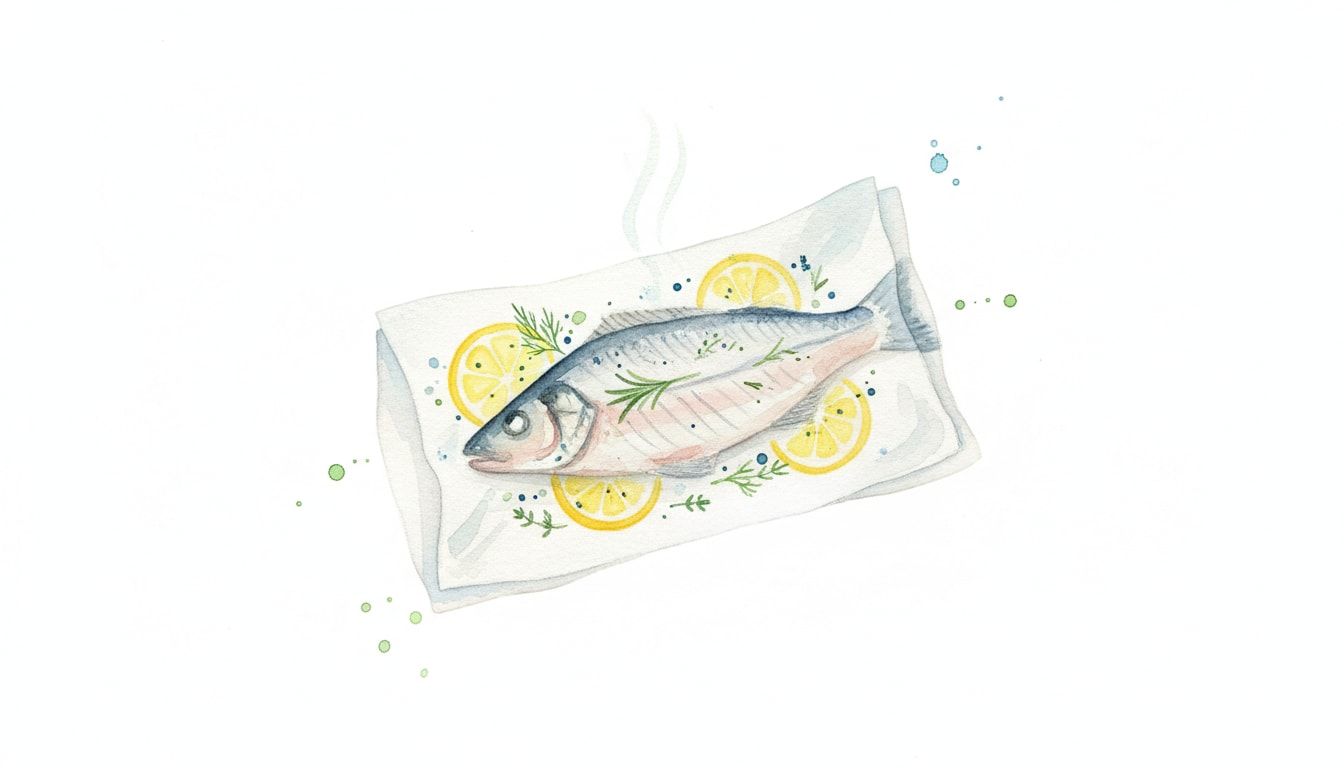
- 4 sea bream fillets, skin-on, pin bones removed
Pasta & Liquids
- 400 g dry linguine
- 120 ml dry white wine
- 60 ml extra virgin olive oil
Aromatics & Produce
- 250 g cherry tomatoes, halved
- 3 garlic, thinly sliced
- 80 g kalamata olives, pitted and halved
- 30 g capers, rinsed and drained
- 2 g red pepper flakes
- 15 g fresh parsley, finely chopped
- 10 g fresh basil, torn
- 1 lemon, zested and juiced
Nutrition (per serving)
Method
Pat the sea bream fillets completely dry with paper towels. Score the skin side of each fillet lightly with a sharp knife in 3 diagonal lines, ensuring you do not cut deep into the flesh. Season both sides with salt.
Heat 30ml of the olive oil in a large wide skillet over medium-high heat until shimmering. Carefully place the fillets skin-side down. Press down gently with a fish spatula for the first 10 seconds to keep them flat. Cook for 3-4 minutes until the skin is golden and crispy, then flip and cook for 1 minute until the internal temperature reaches 63°C/145°F. Remove fish to a plate.
Bring a large pot of generously salted water to a rolling boil at 100°C/212°F. Add the linguine and cook for 1 minute less than the package instructions for al dente. Reserve at least 250ml of the starchy pasta cooking water before draining.
While the pasta boils, lower the heat under the skillet to medium. Add the remaining 30ml of olive oil, sliced garlic, and red pepper flakes. Cook for 1 minute until fragrant but not browned.
Add the halved cherry tomatoes to the skillet. Cook for 3-4 minutes until they begin to soften and burst, releasing their juices.
Pour in the white wine to deglaze the pan, scraping up any browned bits from the fish and garlic. Let it reduce by half, which will take about 2 minutes.
Stir in the Kalamata olives and rinsed capers, simmering gently to meld the flavors together.
Transfer the undercooked linguine directly into the skillet. Pour in 120ml of the reserved hot pasta water. Toss vigorously over medium-high heat until the starchy water and olive oil combine into a glossy, emulsified sauce that coats the noodles.
Remove the pan from the heat. Flake two of the cooked sea bream fillets into large chunks and fold them gently into the pasta along with the fresh parsley, torn basil, lemon juice, and lemon zest.
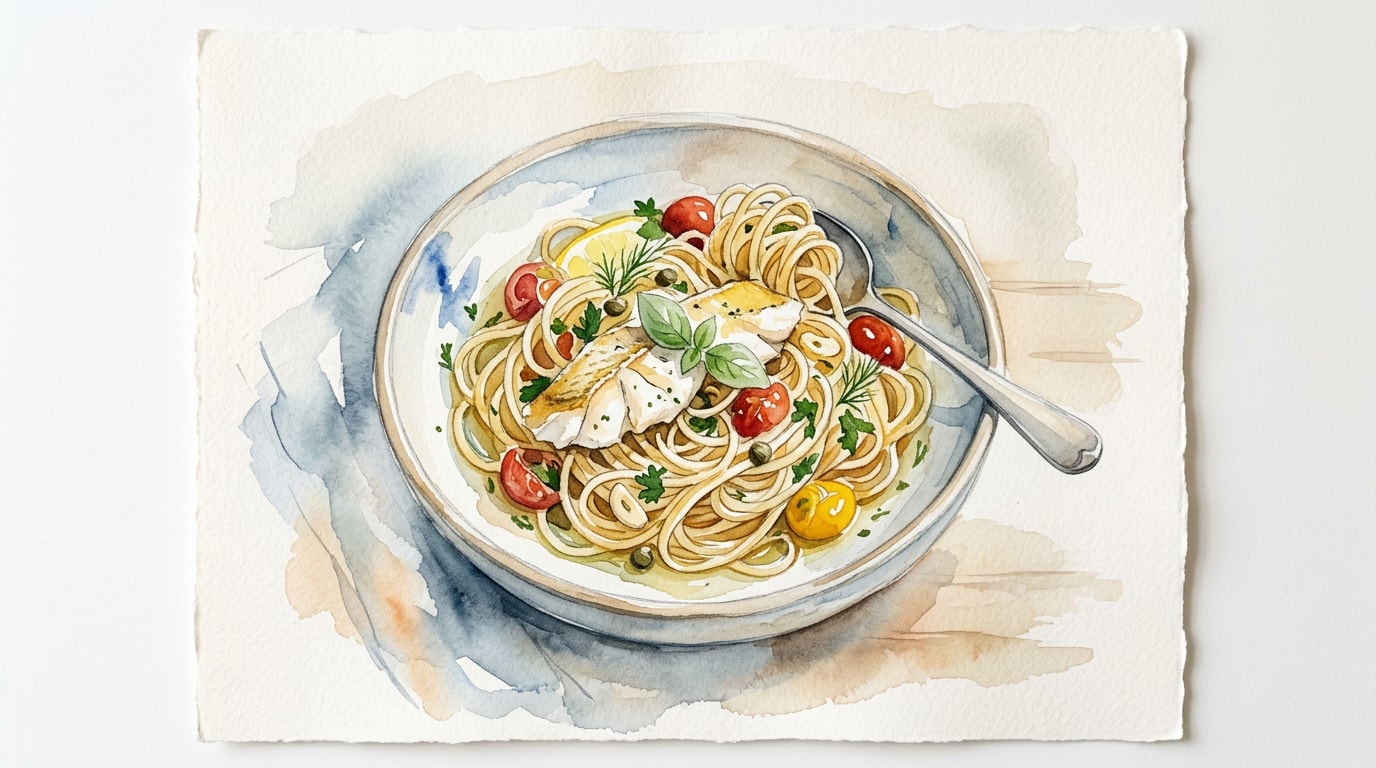
Divide the pasta among four warm shallow bowls. Top each portion with a half of the remaining intact sea bream fillets, presenting them skin-side up to showcase the crispy sear. Serve immediately.
Chef's Notes
- Searing the sea bream skin-side down for 80 percent of the total cooking time ensures incredibly crispy skin while gently cooking the delicate flesh from the bottom up, preventing dryness.
- Rinsing capers is essential, especially if they are salt-packed. This controls the dish's overall sodium level and allows the natural brininess of the olives and sweetness of the fish to shine.
- Reserved starchy pasta water is the secret ingredient in this dairy-free dish. The starch acts as a binder, transforming olive oil, tomato juices, and wine into a surprisingly creamy, cohesive pan sauce.
- Always add delicate herbs like fresh basil entirely off the heat. Their volatile aromatic oils dissipate quickly when boiled, so gentle residual heat maximizes their fragrance.
Storage
Refrigerator: 2 days — Store fish and pasta together in an airtight container. Seafood degrades quickly in quality.
Reheating: Reheat gently in a skillet over medium-low heat with a 30ml splash of water to re-emulsify the sauce.