Equipment
Ingredients
Meat
- 800 g boneless lamb shoulder, trimmed of excess fat and cut into 4cm cubes
Produce
- 1 yellow onion, finely chopped
- 4 garlic, minced
- 400 g waxy potatoes, peeled and cut into 3cm cubes
- 1 fresh rosemary
Pantry & Liquids
- 30 ml olive oil
- 150 ml dry red wine
- 400 g crushed tomatoes
- 500 ml beef stock
- 400 g canned lima beans, drained and rinsed
- 1 dried bay leaf
- fine sea salt
- black pepper
Nutrition (per serving)
Method
Pat the diced lamb shoulder dry with paper towels to ensure a good sear. Season generously on all sides with salt and black pepper.
Heat the olive oil in the Dutch oven over medium-high heat. Working in batches to avoid crowding the pan, sear the lamb cubes until a deep brown crust forms on all sides. Remove the browned lamb to a plate and set aside.
Reduce the heat to medium. Add the chopped onion to the residual lamb fat in the pot and saute until softened and translucent, about 5 minutes. Stir in the minced garlic and cook for 1 additional minute until fragrant.
Pour the red wine into the pot to deglaze. Use a wooden spoon to enthusiastically scrape up all the browned bits (fond) stuck to the bottom of the pot. Allow the wine to simmer and reduce by half.
Return the seared lamb and any accumulated resting juices to the pot. Pour in the crushed tomatoes and beef stock. Add the fresh rosemary sprig and dried bay leaf. Bring the liquid to a rolling boil (100°C/212°F), then immediately reduce the heat to the lowest setting. Cover tightly with a lid and simmer gently for 1 hour and 30 minutes. The meat will easily surpass the food-safe internal temperature of 74°C/165°F during this long braise.
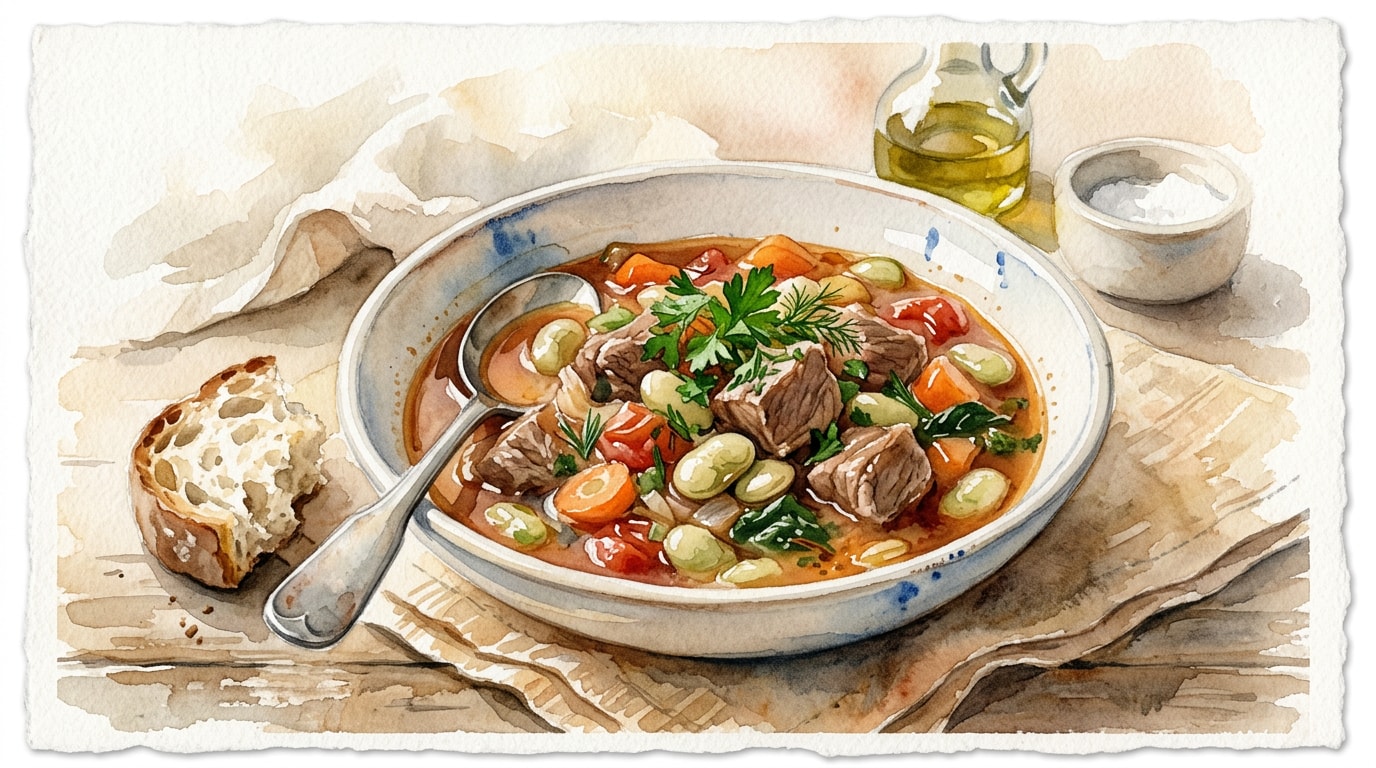
Remove the lid and stir in the cubed potatoes and drained lima beans. Replace the lid and continue to simmer for an additional 30 minutes, or until the lamb is fork-tender and the potatoes offer no resistance when pierced with a knife.
Turn off the heat. Carefully retrieve and discard the rosemary stem and bay leaf. Taste the broth and adjust the salt and pepper to your preference. Allow the stew to rest off the heat for 10 minutes to let the bubbling subside and the liquids thicken slightly before serving.
Chef's Notes
- Using lamb shoulder is essential for this stew. Unlike leaner cuts, the shoulder's high collagen content melts into gelatin during a slow braise, naturally thickening the sauce and ensuring a melt-in-your-mouth texture.
- Waxy potatoes (like Yukon Gold) are strongly preferred over starchy varieties (like Russets). Waxy potatoes hold their shape beautifully during the long simmering process without dissolving into mush.
- Mashing a small handful of the cooked lima beans against the side of the pot at the end of cooking is a traditional, gluten-free trick to naturally thicken the stew's gravy while adding an incredibly creamy texture.
- Like most braises, this stew tastes significantly better on the second day. Cooling and refrigerating the stew overnight allows the flavors of the rosemary, red wine, and savory lamb to deeply meld.
Storage
Refrigerator: 4 days — Flavors deepen and improve significantly after resting overnight.
Freezer: 3 months — Potatoes may soften slightly upon thawing. Freeze in airtight containers.
Reheating: Simmer gently on the stovetop over low heat until heated through, adding a splash of water or stock if the gravy has become too thick.