Equipment
Ingredients
Aromatics and Broth
- 30 ml olive oil
- 150 g yellow onion, finely diced
- 15 g garlic, minced
- 3 g smoked paprika
- ½ g saffron threads, crushed
- 150 ml dry white wine
- 400 ml seafood stock
Vegetables and Legumes
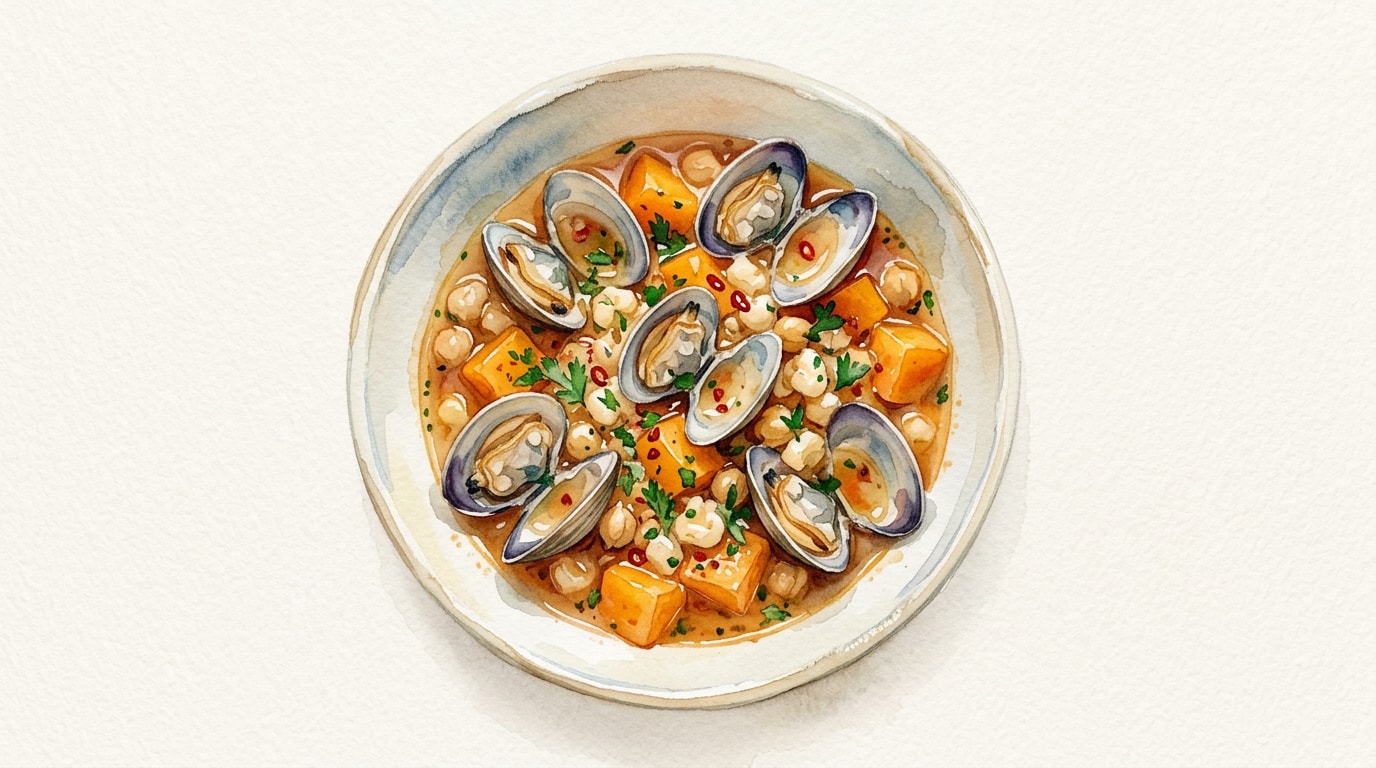
- 400 g butternut squash, peeled and cut into 1.5cm dice
- 400 g white hominy, canned, drained and thoroughly rinsed
- 200 g lima beans, frozen or fresh shelled
Seafood and Garnish
- 1000 g littleneck clams, live, scrubbed and purged of sand
- 10 g fresh flat-leaf parsley, finely chopped
- 15 ml lemon juice, freshly squeezed
- kosher salt
- black pepper
Nutrition (per serving)
Method
Using a Chef's knife, prepare all vegetables. Heat the olive oil in a large Dutch oven over medium heat. Add the diced yellow onion and sauté, stirring frequently with a wooden spoon, until softened and translucent.
Add the minced garlic, smoked paprika, and crushed saffron threads to the Dutch oven. Toast the spices briefly until highly fragrant.
Pour in the dry white wine to deglaze the pot, scraping up any browned bits from the bottom. Allow the wine to reduce by half.
Add the seafood stock, diced butternut squash, rinsed hominy, and lima beans. Stir to combine. Bring the liquid to a gentle boil at 100 degrees Celsius (212 degrees Fahrenheit), then reduce the heat to maintain a steady simmer. Cook until the squash is just tender but still holds its shape.
Nestle the scrubbed live clams into the simmering broth. Cover the Dutch oven tightly with a lid and steam until the clams have opened wide and reached an internal temperature of at least 63 degrees Celsius (145 degrees Fahrenheit) for food safety.
Remove the pot from the heat. Discard any clams that remain tightly closed. Stir in the freshly squeezed lemon juice and garnish generously with chopped parsley. Season with kosher salt and black pepper to taste, keeping in mind the natural saltiness of the clams.
Chef's Notes
- Purging clams is essential. I recommend soaking them in cold, heavily salted water with a pinch of cornmeal for 30 minutes; the cornmeal irritates their stomachs, prompting them to expel sand more effectively.
- Saffron responds best to a little heat. By lightly toasting it in the oil before adding liquid, you unlock fat-soluble flavor compounds that simply boiling the threads would leave behind.
- Canned hominy is fully cooked, but adding it early in the simmering process allows it to absorb the saffron-infused broth while naturally releasing starches that give the ragout a luxurious body.
Storage
Refrigerator: 2 days — Store in an airtight container. The squash and hominy will absorb more broth over time.
Reheating: Gently reheat on the stovetop over low heat until the broth reaches 74 degrees Celsius. Do not boil, or the clams will toughen.