Equipment
* optional
Ingredients
Beef Tenderloin
- 1200 g center-cut beef tenderloin, trimmed of silverskin
- 18 g kosher salt
- 5 g black pepper, freshly ground, coarse
- 30 ml avocado oil
- 45 g unsalted butter, room temperature
- 10 g fresh thyme, whole sprigs
- 3 garlic, crushed
Creamy Horseradish Sauce
- 120 g sour cream, full fat
- 60 g mayonnaise
- 45 g prepared horseradish, drained of excess liquid
- 10 g dijon mustard
- 5 g fresh chives, finely minced
- 15 ml lemon juice, freshly squeezed
- 2 g kosher salt
Nutrition (per serving)
Method
Tie the beef tenderloin with butcher's twine every 5 centimeters to ensure even thickness. Pat the meat completely dry with paper towels, then rub evenly with kosher salt and coarse black pepper. Let it sit at room temperature for 1 hour. Wash hands and sanitize all surfaces that contacted raw meat.
In a mixing bowl, combine the sour cream, mayonnaise, drained prepared horseradish, Dijon mustard, minced chives, lemon juice, and salt. Whisk until perfectly smooth. Cover and refrigerate to allow flavors to meld.
Preheat your oven to 220C (425F). Place a wire rack inside your roasting pan.
Heat the avocado oil in a large cast-iron skillet over high heat until just beginning to smoke. Add the tenderloin and sear without moving for 2 to 3 minutes per side, rotating until a deep mahogany crust forms on all sides.
During the final minute of searing, add the butter, crushed garlic cloves, and fresh thyme sprigs to the skillet. Tilt the pan slightly and use a spoon to baste the foaming butter continuously over the beef.
Transfer the seared tenderloin to the prepared roasting pan. Roast in the 220C (425F) oven until an instant-read thermometer inserted into the thickest part registers 52C (125F) for medium-rare, approximately 15 to 20 minutes. Note: The USDA recommends cooking raw beef to an internal temperature of 63C (145F) for maximum food safety.
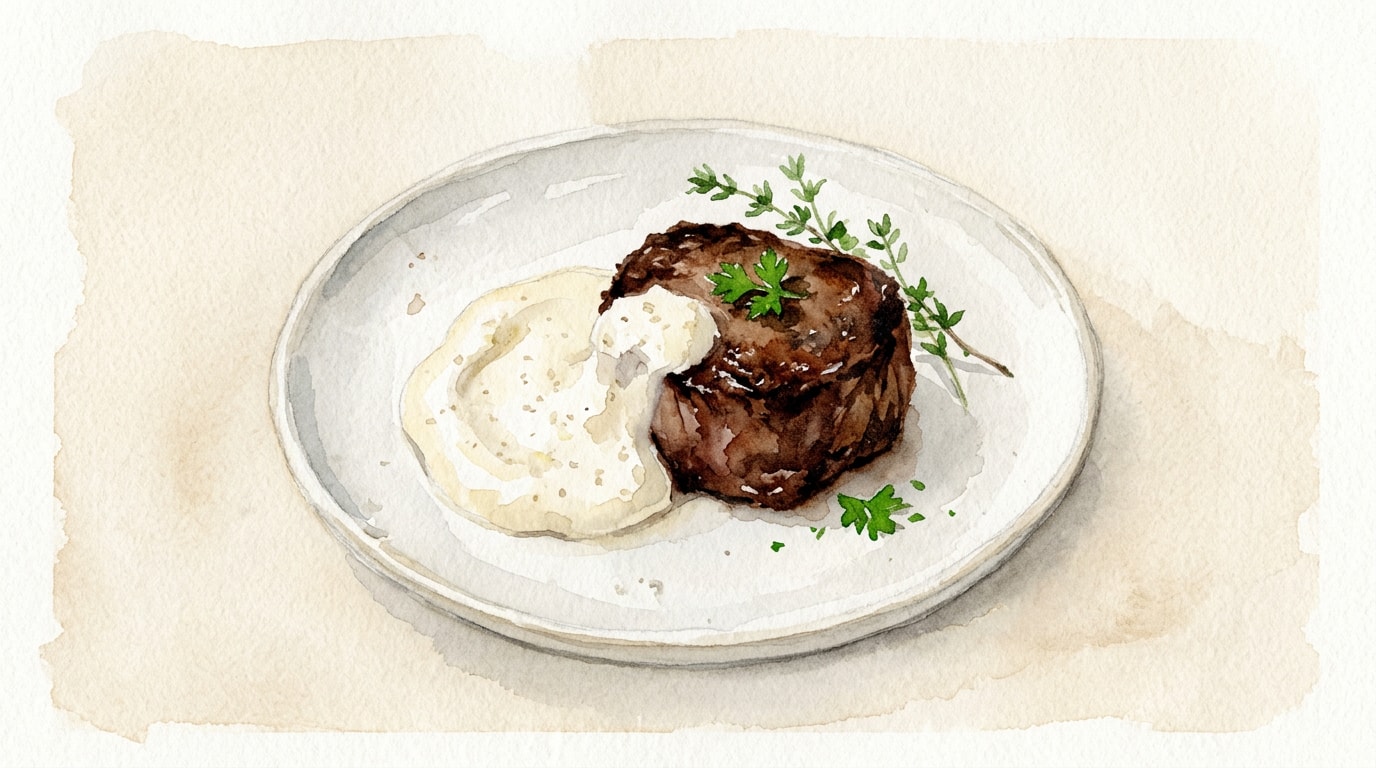
Transfer the beef to a cutting board and tent loosely with aluminum foil. Let the meat rest undisturbed for 15 minutes. The internal temperature will continue to rise by 3 to 5 degrees. Remove the twine, slice into thick medallions, and serve alongside the chilled horseradish sauce.
Chef's Notes
- Dry brining is the secret to a superior crust. If time permits, salt the tied tenderloin up to 24 hours in advance and leave it uncovered in the refrigerator.
- Tying a tenderloin is not just for aesthetics; the tail end is significantly thinner than the center cut. Tying tucks the tail underneath to ensure edge-to-edge even cooking.
- Never skip the resting phase. Cutting into the beef immediately will cause all the juices to spill out onto your cutting board, resulting in a dry roast.
- Carryover cooking will raise the internal temperature of your roast by roughly 3 to 5 degrees Celsius after it leaves the oven. Always anticipate this rise.
- Calibrate your instant-read thermometer by plunging it into a glass of ice water; it should read exactly 0C (32F).
Storage
Refrigerator: 3 days — Store beef and sauce in separate airtight containers. Beef is excellent served cold the next day.
Freezer: 1 month — Beef can be frozen, but texture will degrade slightly. Do not freeze the horseradish sauce as the dairy will separate.
Reheating: Reheat gently in a 120C/250F oven until just warmed through to avoid overcooking. Do not microwave.