Equipment
* optional
Ingredients
Piperade Base
- 30 ml olive oil
- 1 yellow onion, thinly sliced
- 2 red bell pepper, cored and thinly sliced
- 1 green bell pepper, cored and thinly sliced
- 3 garlic, minced
- 400 g crushed tomatoes, canned or fresh diced
- 3 g espelette pepper
- 2 g salt
Arctic Char
- 600 g arctic char fillets, pin bones removed, portioned into 4 pieces
- 15 ml olive oil
- 30 ml water
- 1 g salt
- 1 lemon, cut into wedges
Nutrition (per serving)
Method
Preheat the oven to 135°C/275°F. Select an oven-safe baking dish large enough to hold the char fillets in a single layer without overlapping.
Heat 30ml of olive oil in a large saute pan over medium heat. Add the sliced onions and both the red and green bell peppers, stirring with a spatula. Cook gently until the vegetables are softened and sweet, taking care not to brown them, which will take about 10 minutes.
Stir the minced garlic, crushed tomatoes, Espelette pepper, and 2g of salt into the pan with the peppers. Lower the heat to medium-low and simmer the mixture until it reduces into a thick, jam-like stew. This should take about 15 minutes.
While the piperade is simmering, prepare the arctic char. Pat the fillets completely dry with a paper towel. Rub them lightly with the remaining 15ml of olive oil and season evenly with 1g of salt.
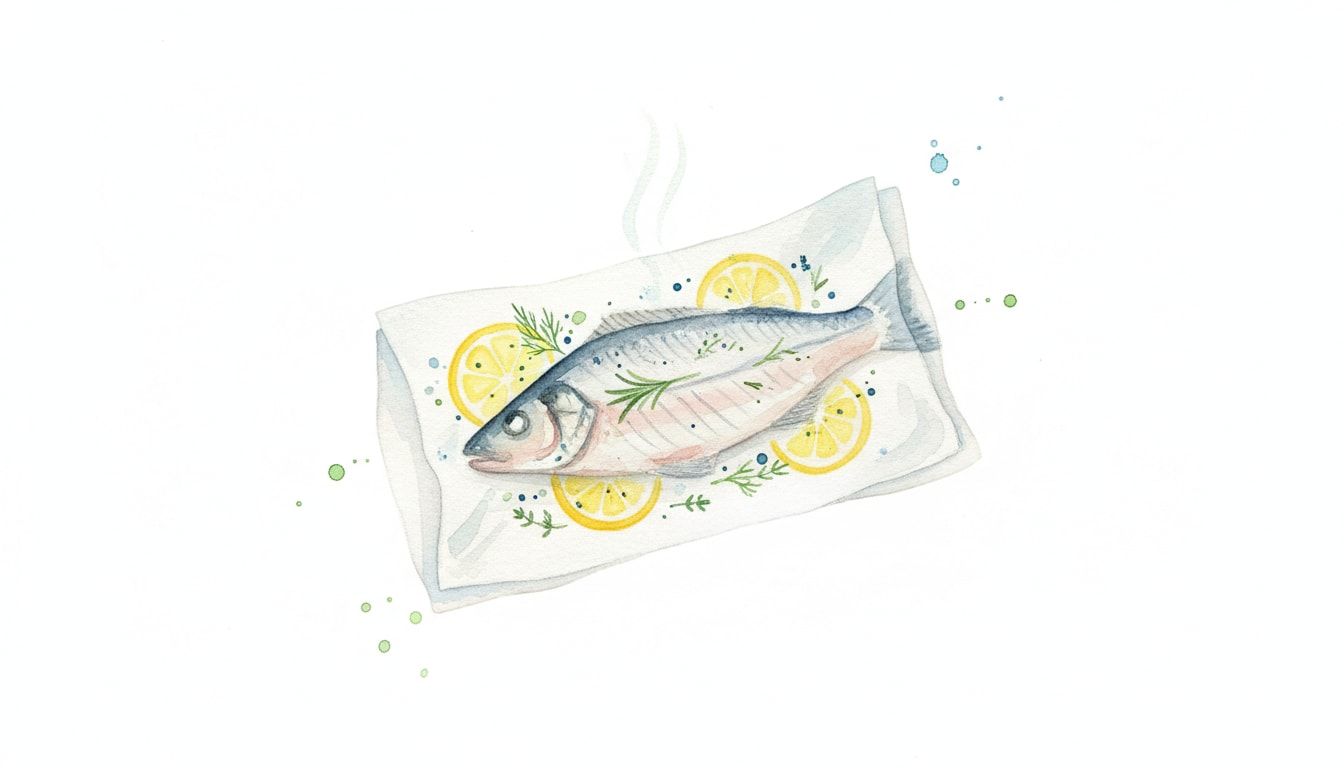
Place the seasoned char fillets skin-side down into the prepared baking dish. Add the water to the bottom of the dish, avoiding pouring it directly on the fish. Cover the dish tightly with parchment paper or foil and place it in the preheated oven. Steam-bake until the fish turns opaque and reaches an internal temperature of 49°C/120°F, about 12 to 15 minutes.
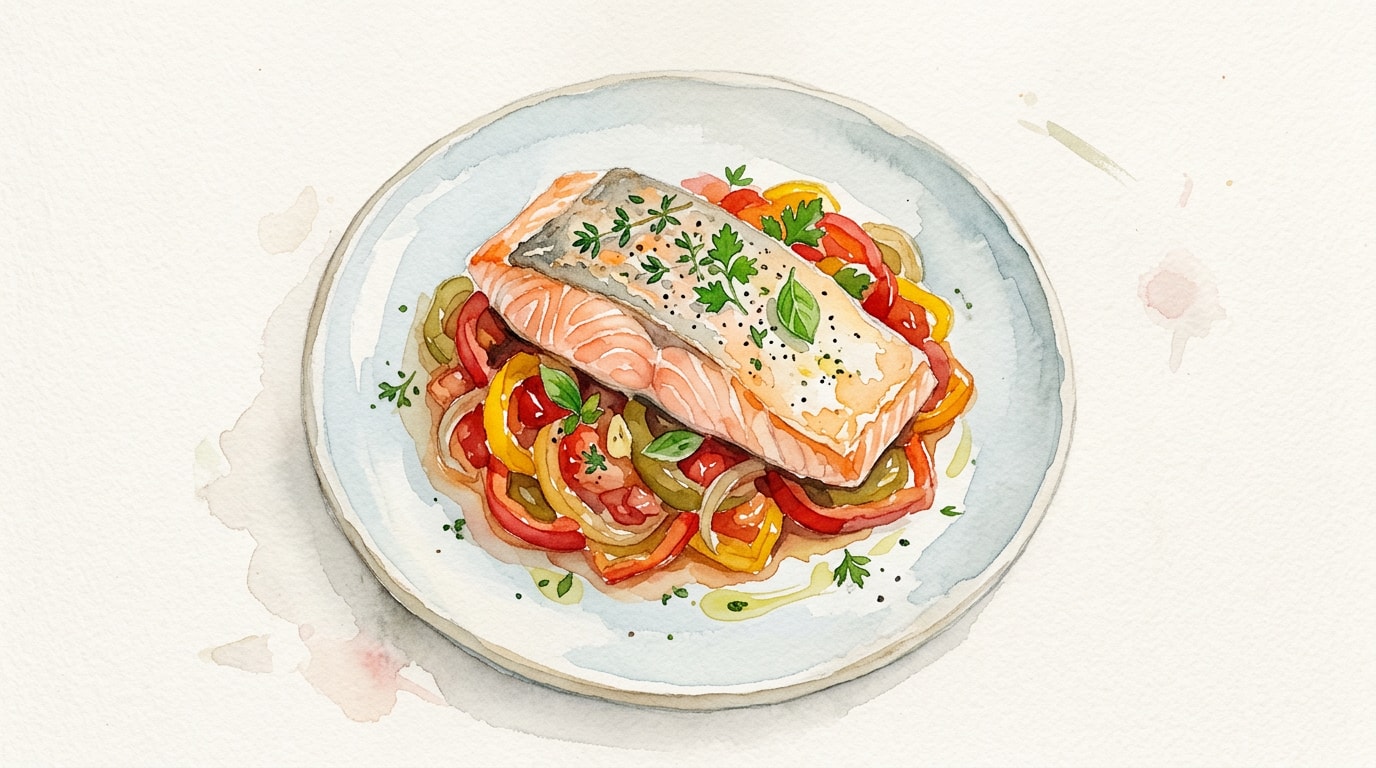
Spoon a generous bed of the warm piperade onto each serving plate, creating a nest for the fish.
Using a spatula, carefully lift the steamed char from the baking dish and lay one fillet over the piperade on each plate. Squeeze a wedge of fresh lemon over the fish and serve immediately.
Chef's Notes
- Arctic char is a fantastic, sustainable alternative to salmon. It possesses a delicate texture halfway between salmon and trout, making it highly receptive to the low-oven steaming method.
- True Basque piperade relies on the slow cooking of the onions and peppers. Do not rush this step; the natural sugars need time to coax out their deep sweetness to balance the acidity of the tomatoes.
- Espelette pepper is a cornerstone of Basque cuisine, offering a mild, fruity heat. If you must substitute it, a blend of sweet paprika and a tiny pinch of cayenne will replicate the flavor profile best.
- Steaming fish in a low oven (often called slow-roasting) is practically foolproof. Because the ambient heat is so low, the window of perfect doneness is widened by several minutes, preventing the proteins from seizing.
Storage
Refrigerator: 3 days — Store the fish and the piperade in separate airtight containers to maintain texture.
Freezer: 1 month — The piperade freezes beautifully for up to a month. Freezing the cooked fish is not recommended as it degrades the delicate texture.
Reheating: Gently reheat the piperade on the stove until simmering. Reheat the fish in a 120C oven just until warm to prevent overcooking.