Equipment
* optional
Ingredients
Seafood
- 500 g live mussels, scrubbed and debearded
- 500 g littleneck clams, purged of sand
- 300 g large shrimp, peeled and deveined
- 250 g calamari tubes and tentacles, cleaned, sliced into 1cm rings
Rich Marinara Base
- 45 ml extra virgin olive oil
- 15 g garlic, thinly sliced
- 50 g shallots, finely diced
- 2 g red pepper flakes
- 120 ml dry white wine
- 800 g san marzano whole peeled tomatoes, hand-crushed
- 120 ml seafood stock
Pasta
- 400 g dried linguine
- sea salt
Finishes
- 15 g fresh flat-leaf parsley, finely chopped
- 15 g fresh basil, hand-torn
Nutrition (per serving)
Method
Prepare all seafood. Scrub mussels and remove beards. Purge clams in salted water. Discard any bivalves that have broken shells or remain open when firmly tapped. Ensure shrimp are peeled and calamari is sliced into even rings to ensure uniform cooking. Wash hands and surfaces thoroughly after handling raw seafood.
Heat the extra virgin olive oil in a large Dutch oven over medium heat. Add the thinly sliced garlic, diced shallots, and red pepper flakes. Sauté gently until the shallots are translucent and the garlic is fragrant but not browned.
Pour in the dry white wine to deglaze the pan, using a wooden spoon to scrape up any fond from the bottom. Allow the wine to simmer and reduce by half.
Add the hand-crushed San Marzano tomatoes and seafood stock to the Dutch oven. Bring to a gentle simmer, then reduce heat to medium-low. Allow the sauce to cook and thicken slightly.
Meanwhile, bring a large pot of heavily salted water to a rolling boil (100°C/212°F). Drop in the dried linguine and cook for exactly 2 minutes less than the package instructions indicate for al dente.
Increase the heat under the tomato sauce to medium-high. Nestle the cleaned clams and mussels into the sauce. Cover the Dutch oven tightly and allow to steam until the shells open. Once opened, use tongs to temporarily transfer the bivalves to a holding bowl to prevent overcooking. Discard any shells that remain firmly shut.
With the sauce still at a lively simmer, stir in the shrimp and calamari rings. Cook briefly until the shrimp reach an internal temperature of 63°C/145°F and curl into a C-shape, and the calamari turns completely opaque. This happens very quickly.
Using tongs, transfer the undercooked linguine directly from the boiling water into the Dutch oven with the sauce, allowing some starchy pasta water to cling to the noodles. Return the cooked clams and mussels (with any accumulated juices) to the pot. Toss vigorously over medium heat until the sauce emulsifies, thickens, and perfectly coats the pasta.
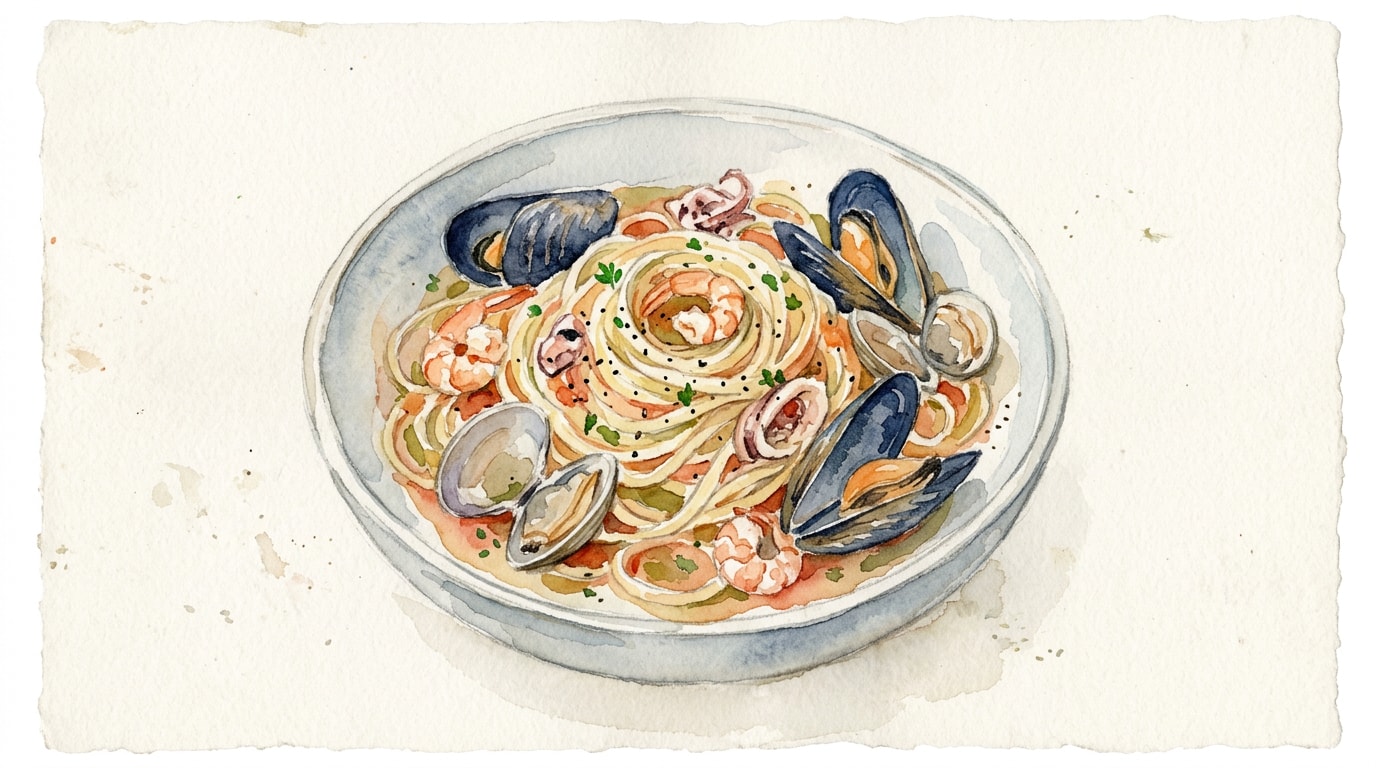
Remove the pan from the heat. Fold in the finely chopped parsley and hand-torn basil. Portion immediately into warmed shallow bowls, ensuring an even distribution of the mixed seafood on top of each serving.
Chef's Notes
- Never rinse your pasta after boiling. The surface starches are critical for binding the rich tomato and seafood juices into a cohesive sauce.
- Bivalves release an incredible amount of savory oceanic liquor as they steam open. This briny liquid fundamentally seasons the marinara, which is why it is essential to hold back on heavy salting early in the sauce making.
- Hand-crushing canned San Marzano tomatoes creates a rustic, uneven texture that traps the seafood juices perfectly, whereas pureeing them leads to a flat, overly smooth mouthfeel.
- Timing is everything in Frutti di Mare. Pulling the clams and mussels out momentarily prevents them from turning into rubber while the shrimp and calamari undergo their brief, rapid poaching.
Storage
Refrigerator: 2 days — Seafood degrades quickly in texture. Store in an airtight container.
Reheating: Reheat gently in a skillet over medium-low heat, adding a splash of water, until just warmed through. Do not microwave.