Equipment
Ingredients
Aromatics and Base
- 15 ml extra virgin olive oil, room temperature
- 150 g yellow onion, finely diced
- 100 g carrots, peeled and diced
- 100 g celery, diced
- 15 g garlic, minced
Soup Body
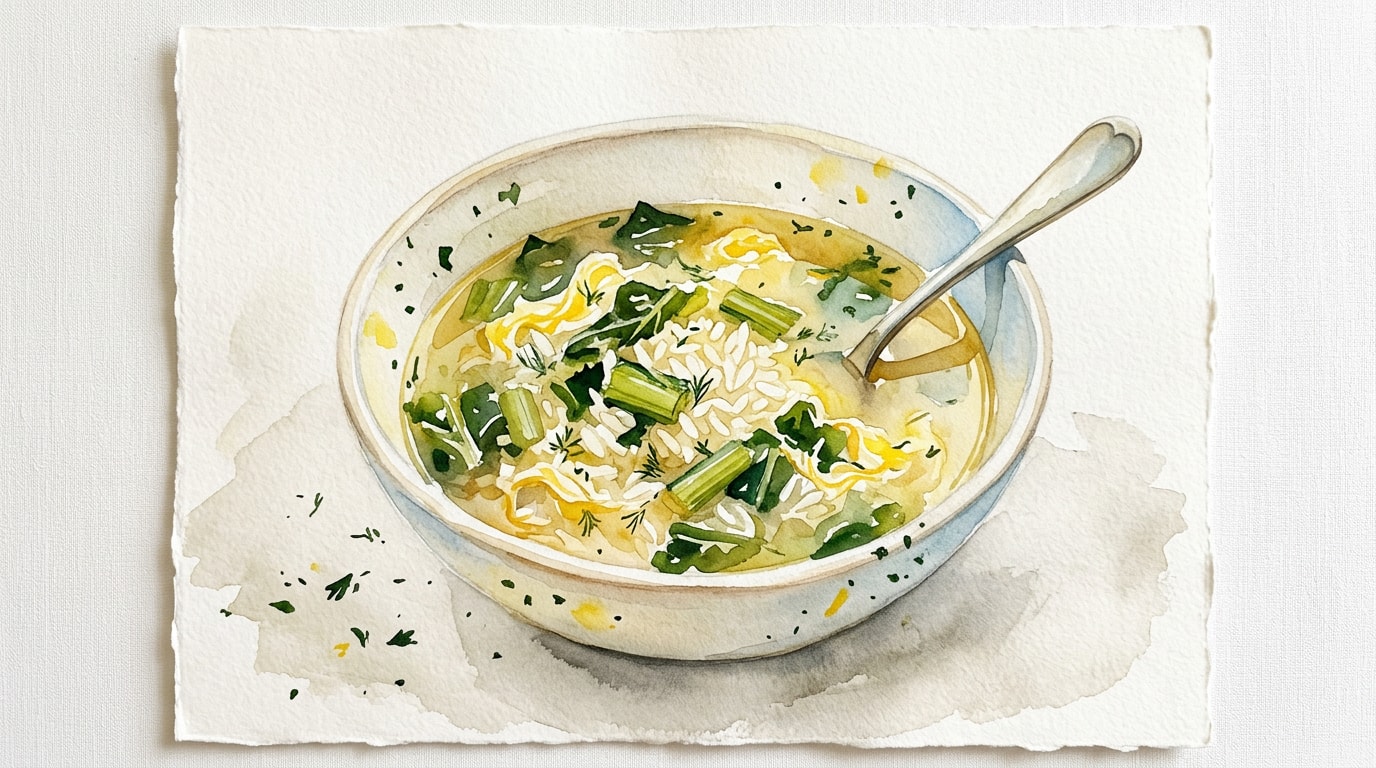
- 250 g swiss chard, stems diced, leaves chopped and separated
- 100 g long grain white rice, rinsed well
- 1200 ml vegetable broth, low sodium preferred
Seasoning and Finish
- 30 ml lemon juice, freshly squeezed
- 5 g kosher salt
- 2 g black pepper, freshly ground
Nutrition (per serving)
Method
Wash the Swiss chard thoroughly. Remove the tough stems from the leafy greens. Dice the stems into small pieces and roughly chop the leaves. Keep them in separate piles.
Heat the olive oil in a large pot or Dutch oven over medium heat. Add the diced yellow onion, carrots, celery, and the diced Swiss chard stems. Cook until the vegetables begin to soften and the onions turn translucent.
Stir in the minced garlic and rinsed white rice. Cook briefly until the garlic is fragrant and the rice grains become slightly toasted and coated in the oil.
Pour in the vegetable broth and season with the kosher salt. Increase the heat to bring the liquid to a gentle boil, then immediately reduce the heat to maintain a steady simmer around 95°C/203°F. Cover the pot and cook until the rice is tender.
Uncover the pot and stir in the chopped Swiss chard leaves. Allow the soup to simmer for just a few minutes until the greens are completely wilted but still vibrant green.
Remove the pot from the heat. Stir in the fresh lemon juice and black pepper. Taste the broth and adjust the seasoning with additional salt or lemon juice if desired before serving warm.
Chef's Notes
- Swiss chard stems act similarly to celery and require more cooking time than the delicate leaves, which is why they are added during the initial aromatic saute phase.
- Toasting the rice grains briefly in the oil before adding the broth creates a subtle nutty flavor and helps the grains retain their shape as they simmer.
- Fresh lemon juice contains volatile aromatic compounds that dissipate when boiled. Always add it off the heat right before serving for the maximum flavor impact.
- If you plan to store this primarily for leftovers, consider cooking the rice separately and ladling the hot broth over a scoop of rice in individual bowls to prevent the grains from bloating in the fridge.
Storage
Refrigerator: 4 days — Rice will continue to absorb broth; add a splash of water or extra broth when reheating.
Freezer: 3 months — Rice may soften and change texture upon thawing.
Reheating: Warm gently on the stovetop over medium heat, stirring occasionally.