Equipment
Ingredients
Protein
- 1 whole rabbit, cut into 8 portions
Braise and Aromatics
- 100 g dijon mustard
- 15 ml olive oil
- 30 g unsalted butter
- 100 g shallots, finely diced
- 15 g garlic, minced
- 250 ml dry white wine
- 350 ml chicken stock, warm
- 5 g fresh thyme, tied in a bundle
- 2 bay leaves
Serving and Garnish
- 150 g creme fraiche, room temperature
- 300 g egg noodles, dry
- 10 g fresh parsley, finely chopped
- kosher salt
- black pepper
Nutrition (per serving)
Method
Pat the rabbit pieces dry with paper towels. Season generously with salt and pepper, then coat completely with 50g of the Dijon mustard. Wash hands and all surfaces that contacted the raw rabbit immediately to prevent cross-contamination.
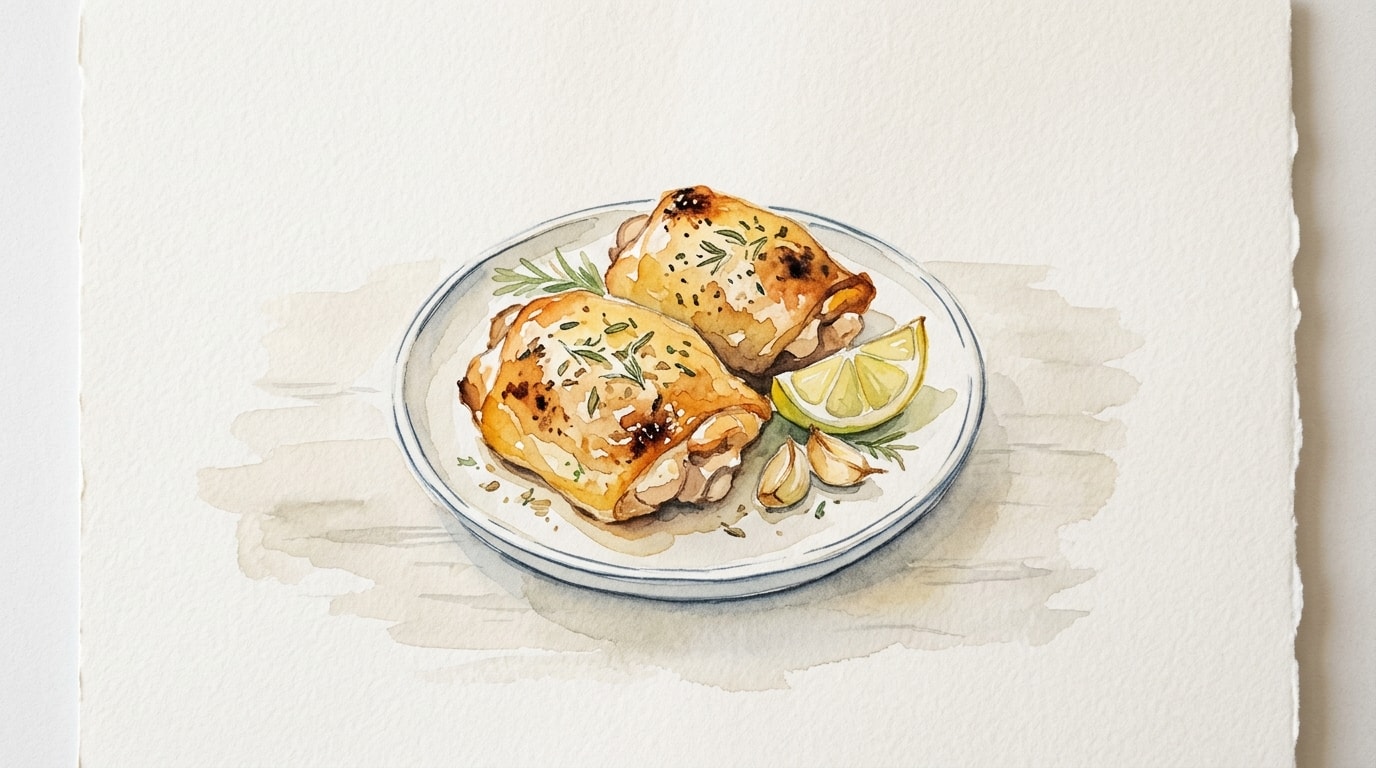
Heat the olive oil and butter in a heavy-bottomed Dutch oven over medium-high heat. Using tongs, carefully add the rabbit pieces and sear until lightly browned on all sides, about 8 minutes. Remove the rabbit to a clean plate and set aside.
Reduce the heat to medium. Add the diced shallots to the remaining fat in the Dutch oven and cook until softened and translucent, about 4 minutes. Add the minced garlic and cook for 1 minute more until fragrant.
Pour in the dry white wine to deglaze the pan, scraping up any browned bits from the bottom. Simmer vigorously until the liquid is reduced by half.
Pour in the warm chicken stock, thyme bundle, and bay leaves. Return the seared rabbit and any accumulated juices to the pot. Bring to a gentle simmer, cover, and cook until the rabbit is exceptionally tender and registers at least 71C/160F on a meat thermometer.
While the rabbit finishes braising, bring a medium pot of generously salted water to a rolling boil. Cook the egg noodles according to package instructions until al dente. Drain well and cover to keep warm.
Transfer the cooked rabbit to a warm platter. Remove and discard the thyme stems and bay leaves from the braising liquid. Turn the heat to low. Whisk the room temperature creme fraiche and the remaining 50g of Dijon mustard into the sauce until smooth and heated through. Do not let it boil.
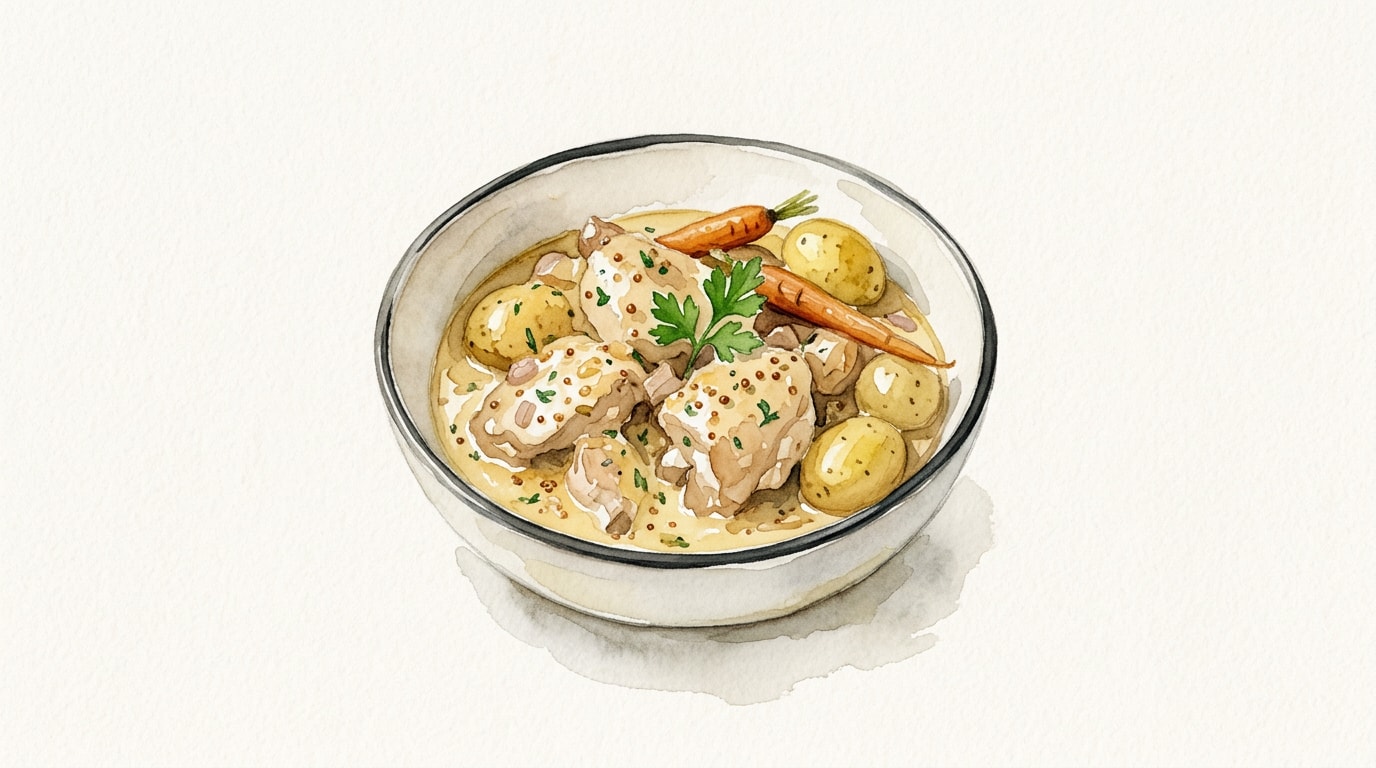
Divide the warm egg noodles among shallow bowls. Top with the braised rabbit pieces and spoon a generous amount of the mustard cream sauce over the meat and noodles. Garnish with chopped fresh parsley and serve immediately.
Chef's Notes
- Rabbit is extremely lean. Unlike pork shoulder or beef chuck, it requires a gentle, strictly controlled simmer. A rolling boil will seize the muscle fibers and dry out the meat rapidly.
- Using authentic Dijon mustard from France makes a noticeable difference here. Look for brands that use actual black or brown mustard seeds and verjuice or white wine rather than standard vinegar.
- Coating the raw meat in mustard before searing creates a deeply savory crust (a technique known as a mustard persillade base) that enhances the Maillard reaction without burning.
- If your sauce feels too thin after whisking in the dairy, you can remove the meat, increase the heat to reduce the stock significantly before lowering the heat again and adding the creme fraiche.
Storage
Refrigerator: 3 days — Store rabbit and sauce separately from noodles to prevent the pasta from absorbing all the liquid and becoming mushy.
Freezer: 2 months — Freeze the rabbit and braising liquid before adding the creme fraiche, as dairy can separate when frozen.
Reheating: Reheat gently on the stovetop over low heat until the meat reaches 74C/165F. Do not let the sauce boil rapidly or it may split.