Equipment
Ingredients
Grains & Produce
- 200 g short-grain brown rice, rinsed well
- 400 ml water
- 400 g sweet potato, peeled and diced into 1.5cm cubes
- 150 g broccoli rabe, tough stems trimmed, roughly chopped
- 150 g lacinato kale, destemmed and roughly chopped
- 2 garlic, minced
Protein
- 450 g yellowfin or ahi tuna steaks, sushi-grade, thoroughly patted dry
Low-Sodium Gochujang Sauce
- 30 g gochujang, Korean fermented chili paste
- 15 ml low-sodium soy sauce
- 15 ml unseasoned rice vinegar
- 10 ml toasted sesame oil
- 10 ml maple syrup
Cooking Oils & Garnish
- 30 ml neutral cooking oil
- 5 g toasted sesame seeds, for garnish
Nutrition (per serving)
Method
Preheat the oven to 200°C (400°F). Combine the rinsed brown rice and water in a medium saucepan. Bring to a boil, then reduce heat to low, cover, and simmer for 40 minutes or until water is absorbed and rice is tender.
Toss the cubed sweet potatoes with 15ml of neutral oil. Spread them in an even layer on a baking sheet and roast in the preheated oven for 25 to 30 minutes, flipping halfway, until tender and lightly caramelized.
In a small mixing bowl, whisk together the gochujang, low-sodium soy sauce, rice vinegar, toasted sesame oil, and maple syrup until smooth. Set aside to let the flavors meld.
Heat 5ml of neutral oil in a large skillet over medium heat. Add the minced garlic and cook for 30 seconds until fragrant. Add the chopped broccoli rabe and kale. Sauté for 4 to 5 minutes until wilted and tender but still bright green. Transfer the greens to a plate and wipe the skillet clean.
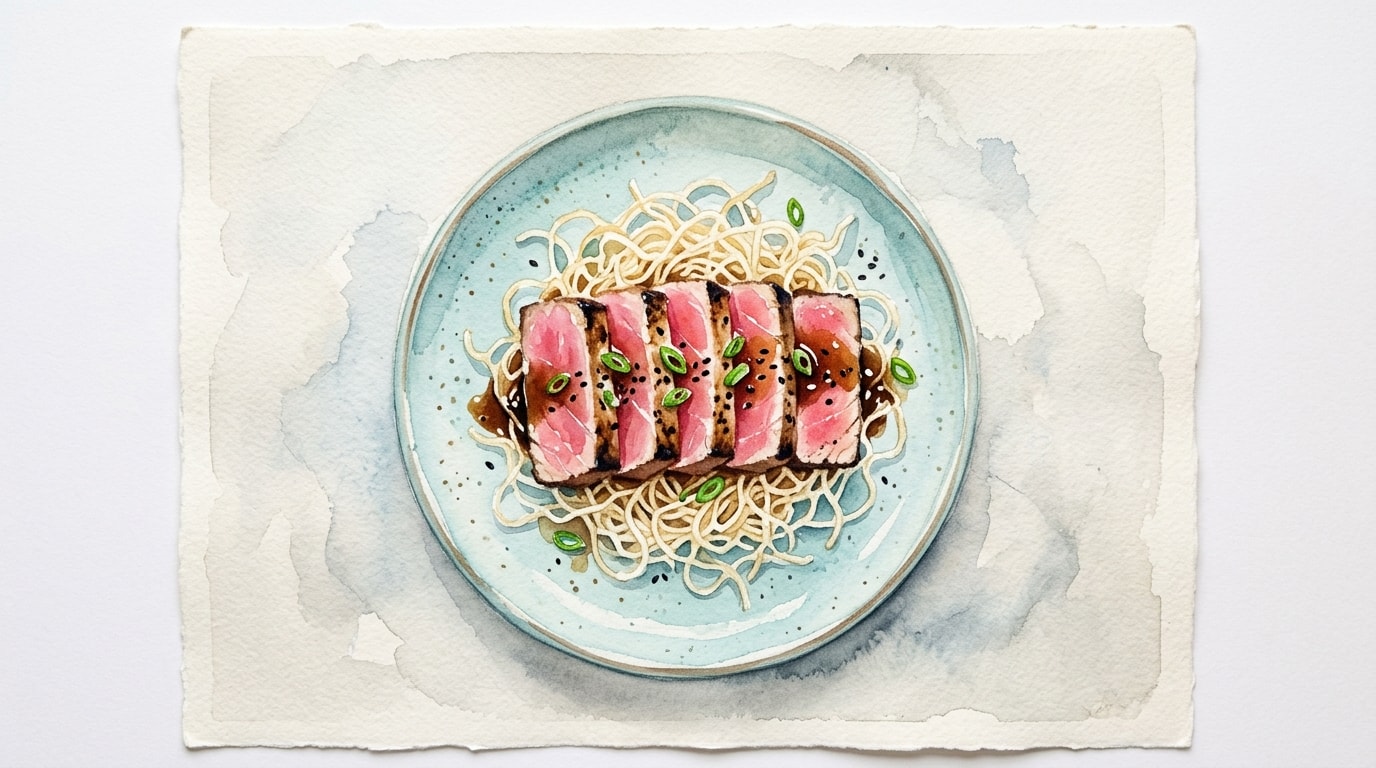
Return the heavy skillet to high heat and add the remaining 10ml of neutral oil. Wait until the oil is shimmering and just beginning to smoke. Sear the tuna steaks for 1 to 2 minutes per side for a rare center (internal temperature of 46°C/115°F), or longer to your preferred doneness. Remove immediately to a cutting board.
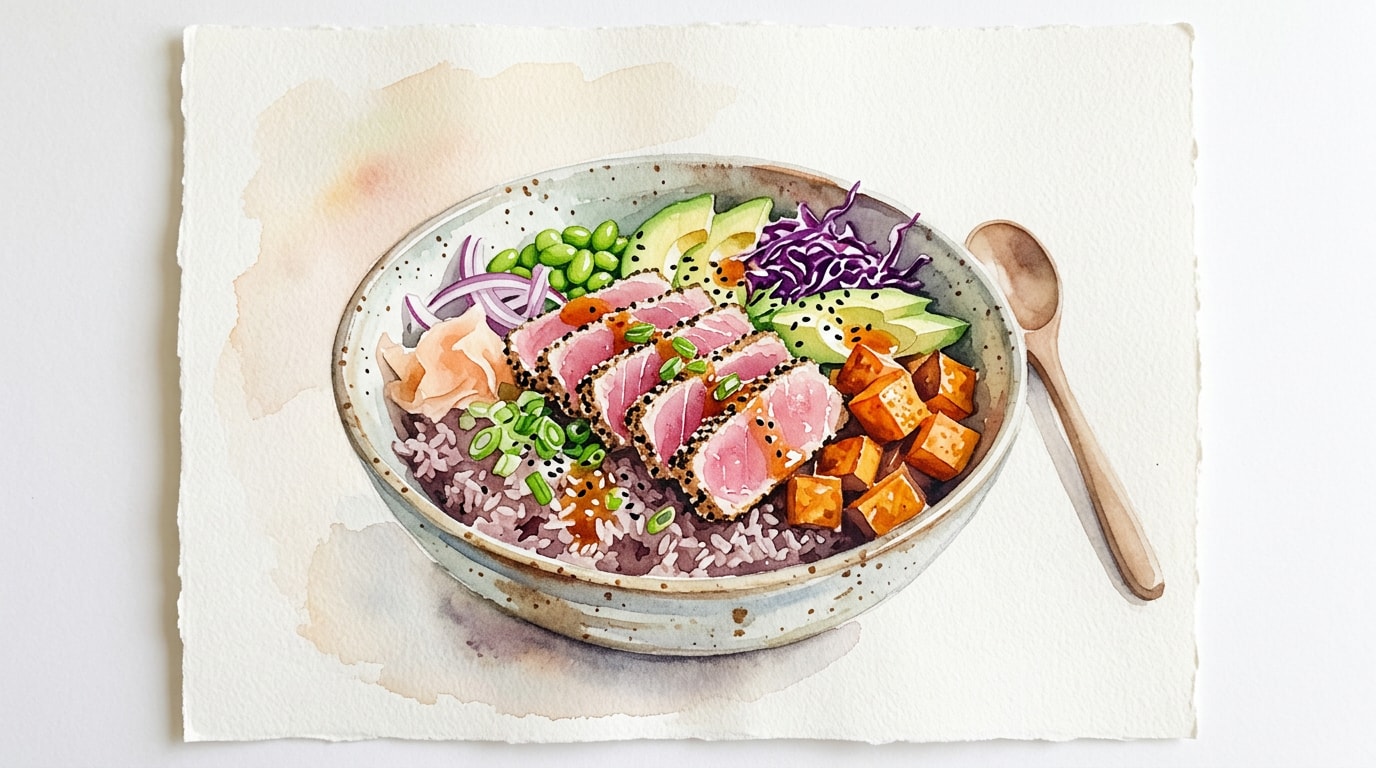
Using a very sharp knife, slice the seared tuna against the grain into 1cm thick strips.
Divide the warm brown rice among four bowls. Arrange the roasted sweet potatoes, garlicky greens, and sliced tuna in distinct sections over the rice. Drizzle with the gochujang sauce and garnish with toasted sesame seeds.
Chef's Notes
- Sourcing Tuna: Since the tuna is served rare, purchasing 'sushi-grade' or 'sashimi-grade' tuna from a reputable fishmonger is vital for safety.
- Controlling Sodium: By using coconut aminos or low-sodium soy sauce in the dressing, we control the overall sodium profile while retaining umami.
- Pan Selection: A cast iron skillet is ideal for searing the tuna because it retains heat beautifully, preventing a temperature drop when the cold fish hits the pan.
- Slicing Technique: Always slice tuna against the grain using a single, smooth pull of a sharp knife to prevent tearing the delicate flesh.
Storage
Refrigerator: 2 days — Keep dressing separate. Seared tuna is best consumed immediately or within 1 day.