Equipment
Ingredients
Brisket Broth
- 400 g beef brisket, whole piece
- 250 g korean radish (mu), peeled and cut into large chunks
- 20 g garlic, whole peeled cloves
- 2500 ml water
- 30 ml soup soy sauce (guk-ganjang)
- g salt
Kimchi Dumplings (Mandu) & Rice Cakes
- 400 g sliced rice cakes (tteokguk tteok)
- 150 g ground beef, 80/20 lean to fat ratio
- 150 g fermented kimchi, finely chopped and tightly squeezed of liquid
- 100 g firm tofu, crumbled and squeezed dry in a cheesecloth
- 10 g garlic, minced
- 15 ml sesame oil
- 24 dumpling wrappers
Spicy Gochugaru Oil
- 15 g gochugaru (korean chili flakes)
- 45 ml neutral oil
- 5 ml sesame oil
Garnish
- 4 egg yolk, raw, separated from whites
- 40 g scallions, thinly sliced on the bias
- 5 g roasted seaweed (gim), cut into thin strips
Nutrition (per serving)
Method
Rinse the sliced rice cakes under cold water, then place them in a bowl submerged in cold water to soak. This prevents them from splitting during cooking.
In a large stockpot, combine the whole brisket, chunks of radish, whole garlic cloves, and water. Bring to a boil over high heat, skimming any foam or scum that rises to the surface.
Reduce the heat to maintain a gentle simmer at 90°C/195°F. Cover the pot and cook until the brisket is tender and the broth is deeply flavorful, about 1 hour and 30 minutes.
While the broth simmers, prepare the dumpling filling. In a mixing bowl, combine the ground beef, thoroughly squeezed kimchi, squeezed tofu, minced garlic, and sesame oil. Mix vigorously with your hands until the mixture becomes slightly tacky.
Place about 15 grams of filling in the center of a dumpling wrapper. Wet the edges lightly with water, fold into a half-moon shape, and press the edges firmly to seal. Bring the two opposite corners of the half-moon together and pinch to form a traditional round shape. Repeat until all filling is used.
Make the gochugaru oil. Place the gochugaru and sesame oil in a small heatproof bowl. In a small saucepan, heat the neutral oil until it reaches 150°C/300°F. Carefully pour the hot oil over the gochugaru mixture. It will bubble vigorously. Stir once and set aside to infuse.
Using a slotted spoon, remove the brisket, radish, and garlic from the broth. Discard the garlic. Slice the radish into bite-sized pieces and slice the brisket across the grain into thin strips. Set aside for garnishing.
Strain the broth through a fine mesh sieve into a clean pot for a perfectly clear soup. Season the broth with soup soy sauce and salt to taste.
Bring the seasoned broth back to a boil at 100°C/212°F. Drain the soaked rice cakes and add them to the pot along with the assembled dumplings. Cook until the dumplings and rice cakes float to the surface and the rice cakes are tender and chewy.
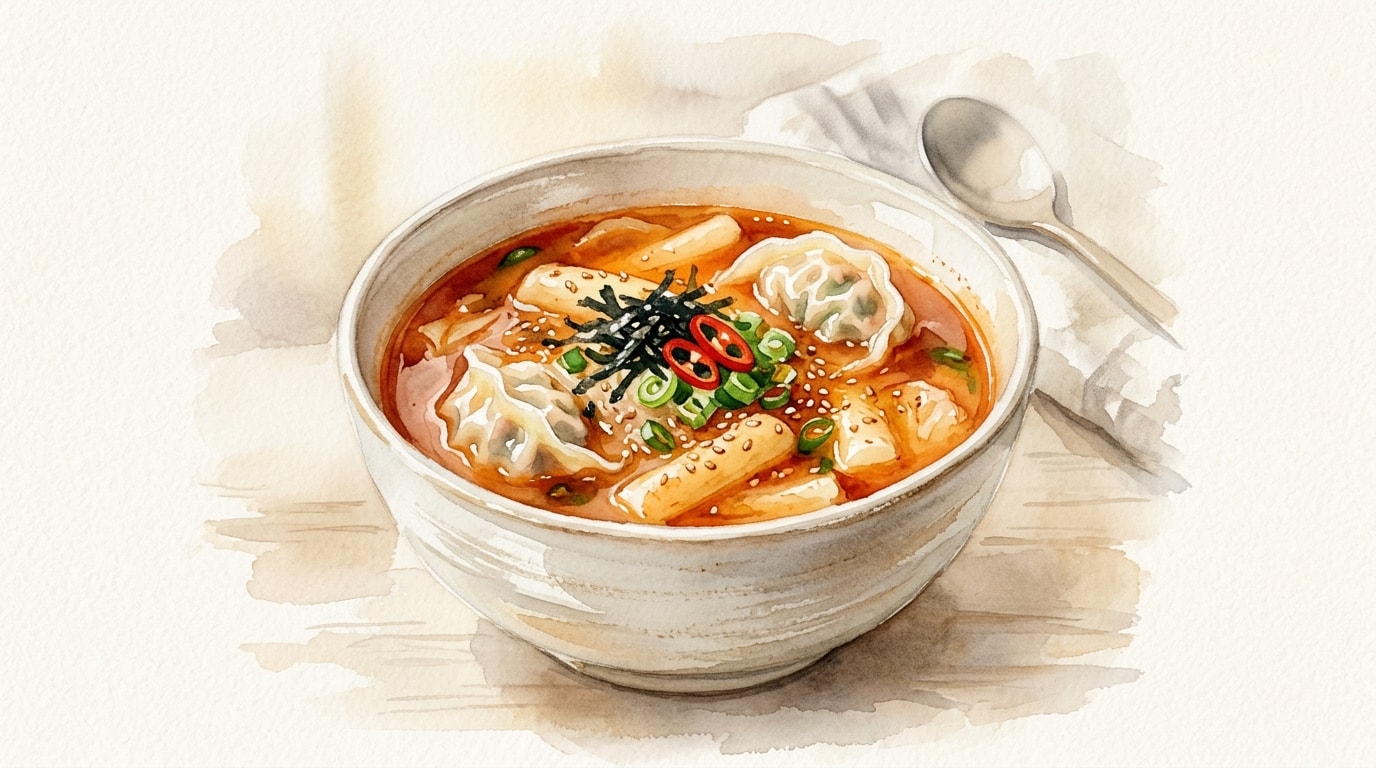
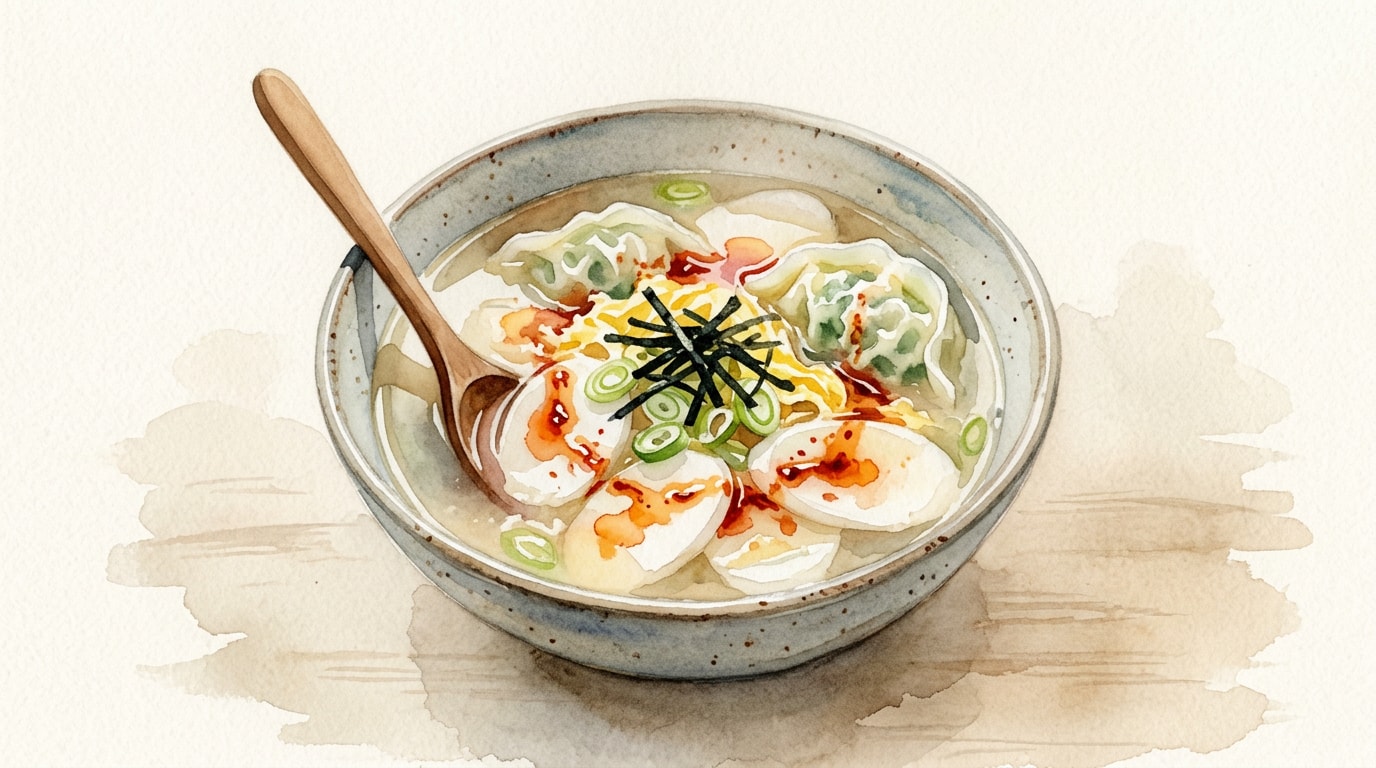
Ladle the hot soup, dumplings, and rice cakes into wide serving bowls. Carefully arrange the sliced brisket and radish on top. Carefully place one raw egg yolk in the center of each bowl. Garnish with sliced scallions, shredded roasted seaweed, and a drizzle of the spicy gochugaru oil. Serve immediately.
Chef's Notes
- Squeezing the moisture from the tofu and kimchi is the most critical step for the dumpling filling. Excess moisture creates steam inside the wrapper, causing them to rupture.
- Traditional Korean soup soy sauce (guk-ganjang) is a byproduct of making doenjang (soybean paste). It is saltier, lighter in color, and far more complex than regular soy sauce. Do not substitute dark soy sauce, or the broth color will be ruined.
- Soaking the rice cakes in cold water not only speeds up the cooking process but also prevents the starchy exterior from dissolving too quickly, keeping your broth clear rather than cloudy.
- Allowing the boiled brisket to cool slightly before slicing helps the meat fibers set, giving you much cleaner, uniform slices for an elegant presentation.
Storage
Refrigerator: 3 days — Store the broth, brisket, and dumplings separately from the rice cakes to prevent them from turning to mush.
Freezer: 1 month — Uncooked dumplings freeze exceptionally well. Do not freeze the soaked rice cakes.