Equipment
Ingredients
Base
- 400 g short-grain white rice, rinsed well
- 480 ml water
Vegetables
- 250 g spinach, trimmed and washed
- 200 g bean sprouts, rinsed
- 150 g carrot, peeled and julienned
- 150 g zucchini, julienned
- 100 g shiitake mushrooms, stems removed and caps thinly sliced
Seasonings and Oils
- 45 ml toasted sesame oil
- 30 ml soy sauce
- 30 ml vegetable oil
- 15 g garlic, minced
- 10 g roasted sesame seeds
- 5 g salt
Protein
- 4 eggs, large
Gochujang Sauce
- 60 g gochujang
- 15 ml toasted sesame oil
- 15 ml water
- 15 ml apple cider vinegar
- 15 g sugar
- 5 g garlic, minced
- 5 g roasted sesame seeds
Nutrition (per serving)
Method
Place the rinsed short-grain white rice and 480 milliliters of water in a rice cooker, then start the standard cooking cycle until fluffy and tender.
Combine the gochujang, 15 milliliters of toasted sesame oil, 15 milliliters of water, apple cider vinegar, sugar, 5 grams of minced garlic, and 5 grams of roasted sesame seeds in a small bowl. Stir vigorously until completely smooth.
Bring a medium pot of water to a rolling boil and cook the bean sprouts for exactly 2 minutes to soften them slightly while retaining a crunch.
Remove the bean sprouts, drain them well, and toss them in a mixing bowl with 1 gram of salt, 3 grams of minced garlic, and 5 milliliters of toasted sesame oil.
Using the same pot of boiling water, submerge the spinach and cook for 30 seconds until completely wilted and bright green.
Drain the spinach, shock it under very cold water, firmly squeeze out all excess moisture with your hands, and toss it in a mixing bowl with 1 gram of salt, 3 grams of minced garlic, and 10 milliliters of toasted sesame oil.
Heat 10 milliliters of vegetable oil in a skillet over medium-high heat, add the julienned carrots along with a pinch of salt, and cook until softened and vibrant.
Remove the carrots from the skillet, add another 10 milliliters of vegetable oil, and cook the julienned zucchini with a pinch of salt until slightly translucent and tender.
Remove the zucchini, add the sliced shiitake mushrooms to the skillet along with the soy sauce and 15 milliliters of toasted sesame oil, cooking until browned and savory.
Wipe the skillet clean, add the remaining vegetable oil over medium heat, and fry the eggs sunny-side up until the whites are fully set for safety, reaching 71 degrees C or 160 degrees F, while keeping the yolks slightly runny.
Divide the warm cooked rice evenly among four wide shallow bowls.
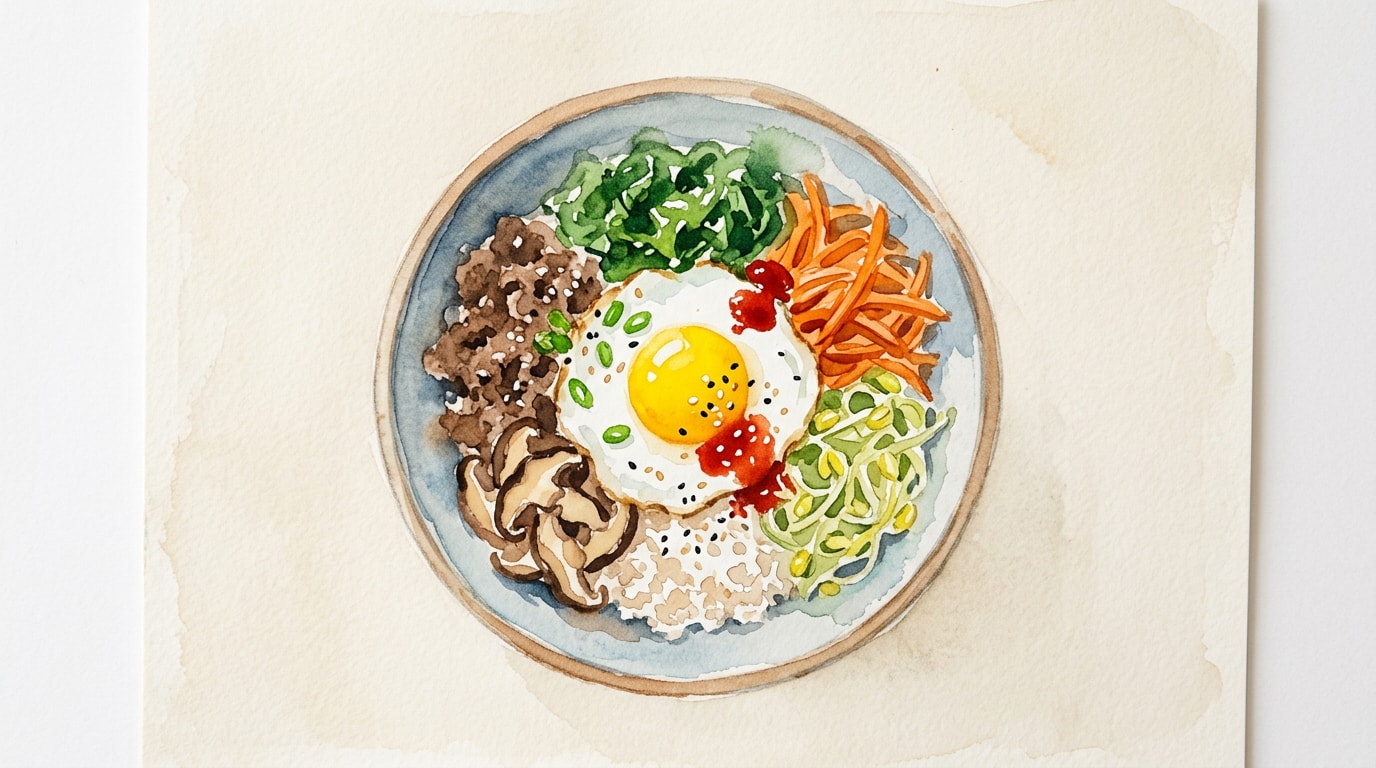
Arrange the seasoned bean sprouts, spinach, carrots, zucchini, and shiitake mushrooms in separate neat sections around the perimeter of the rice.
Place one fried egg gently in the center of each bowl and serve immediately with the prepared gochujang sauce on the side.
Chef's Notes
- For authentic dolsot bibimbap at home without specialized stone bowls, press the cooked rice into a heavily oiled cast iron skillet over medium-high heat until a crispy crust forms on the bottom, then arrange the toppings and serve straight from the pan.
- Squeezing the water out of the blanched spinach is critical. Excess water will inevitably dilute the sesame seasoning and make the final dish soggy.
- Keep your vegetable sizes highly uniform. Julienning the carrots and zucchini to the exact same thickness ensures they cook evenly and mix beautifully with the grains of rice.
- Do not skip shocking the spinach in cold water immediately after blanching. It stops the cooking process instantly and locks in the vibrant green color.
Storage
Refrigerator: 3 days — Store the sauce, rice, and vegetables in separate airtight containers.
Reheating: Warm the rice and vegetables gently in a microwave or skillet. Fry a fresh egg to serve. Do not heat the gochujang sauce.