
Equipment
Ingredients
Fish and Poaching Broth
- 500 ml water
- 15 g lemongrass, smashed and cut into long pieces
- 10 g galangal, thickly sliced
- 2 g kaffir lime leaves, roughly torn
- 400 g white fish fillets, skinless, such as tilapia, cod, or snapper
Curry Base Enrichment
- 50 g fingerroot, peeled and sliced
- 60 g red curry paste, store-bought or homemade
Curry Sauce
- 400 ml coconut milk, full fat, do not shake the can
- 45 ml fish sauce
- 15 g palm sugar, finely chopped
Noodles and Accompaniments
- 200 g dried rice vermicelli
- 100 g bean sprouts
- 100 g yardlong beans, thinly sliced crosswise
- 30 g thai basil, picked leaves
- 100 g green cabbage, finely shredded
- 4 eggs, hard boiled and halved
Nutrition (per serving)
Method
In a medium saucepan, bring the water to a rolling boil at 100°C/212°F. Add the smashed lemongrass, galangal, and kaffir lime leaves. Carefully lower the white fish fillets into the water and boil gently until the fish is opaque, about 5 to 7 minutes. The internal temperature of the fish should reach at least 63°C/145°F.
Using a slotted spoon, remove the cooked fish fillets and transfer them to the bowl of a food processor. Discard the lemongrass, galangal, and kaffir lime leaves. Reserve the poaching liquid in the saucepan.
Add the peeled fingerroot and red curry paste to the food processor with the cooked fish. Blend until the mixture transforms into a uniform, slightly fluffy paste.
Scoop out the thick cream from the top of the canned coconut milk. In a clean medium saucepan, heat this thick coconut cream over medium heat until it bubbles vigorously and the coconut oil begins to separate slightly, about 5 minutes.
Add the blended fish and curry mixture to the bubbling coconut cream. Stir continuously to fry the paste in the coconut oil for 2 to 3 minutes until very fragrant.
Pour in the remaining coconut milk and all of the reserved fish poaching liquid. Stir to combine and bring to a gentle simmer at around 85°C/185°F. Season with the fish sauce and chopped palm sugar.
Allow the curry to simmer uncovered for 15 minutes. This reduces the liquid slightly and allows the flavors of the fingerroot and coconut to meld into a rich sauce.
While the curry simmers, boil the dried rice vermicelli in a separate pot of water according to package directions. Drain thoroughly in a colander and rinse under cold water to stop the cooking and remove excess starch.
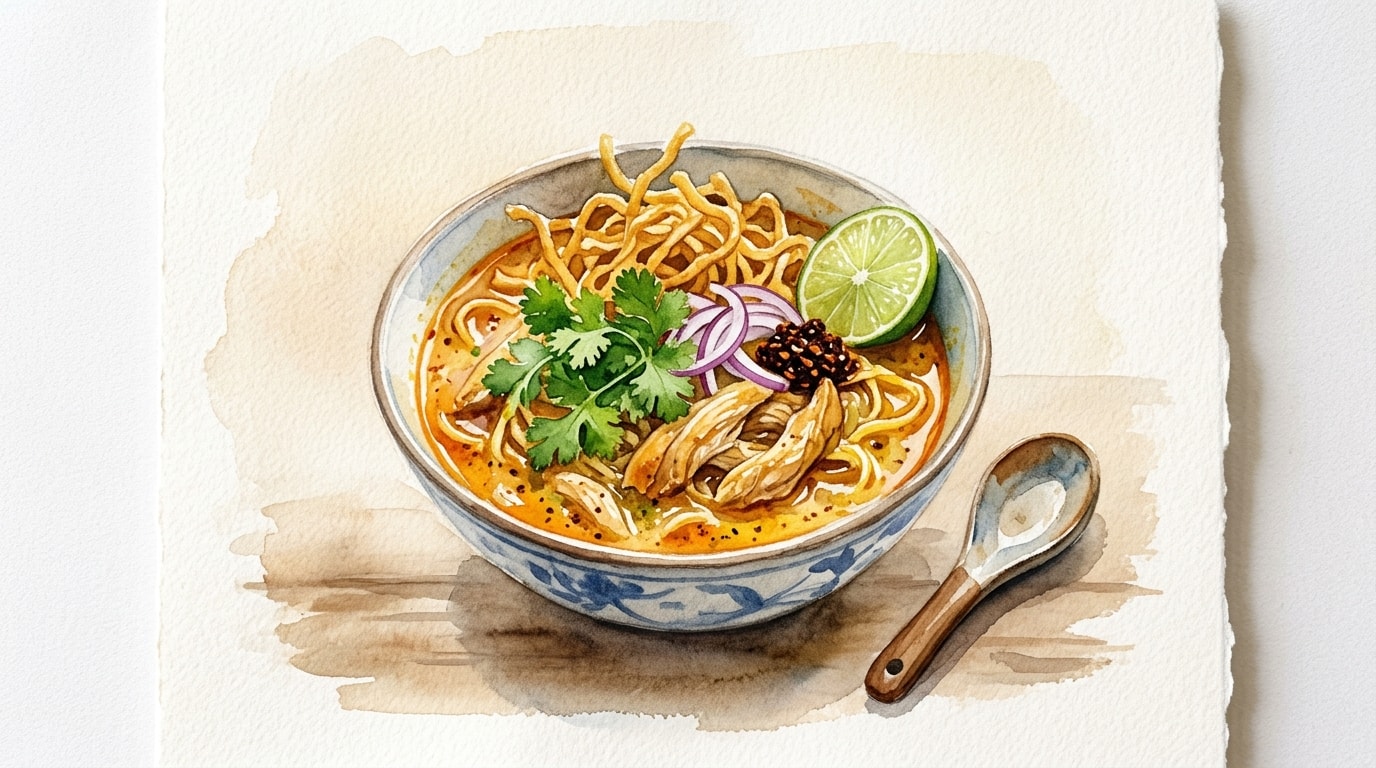
Place one or two noodle nests in the bottom of each serving bowl. Ladle the hot fish curry generously over the noodles, ensuring plenty of the minced fish solids are included.
Serve immediately alongside a large communal platter of the fresh bean sprouts, sliced yardlong beans, shredded cabbage, Thai basil, and hard-boiled eggs for guests to garnish their own bowls.
Chef's Notes
- Fingerroot (krachai) is non-negotiable for this dish. Its unique earthy, medicinal flavor eliminates any muddy taste from the fish and provides the characteristic flavor profile of Nam Ya.
- Do not skip the fresh vegetables. The richness of the coconut milk and the spice of the curry paste require the crisp texture and cooling effect of raw cabbage, beans, and sprouts for balance.
- Pounding or blending the cooked fish rather than flaking it creates a wonderful emulsion. The fish proteins thicken the curry broth into a hearty sauce that clings perfectly to the slippery vermicelli.
- If you prefer a spicier curry, pound 3 to 5 extra dried chilies in a mortar and pestle and add them to the curry paste before blending with the fish.
Storage
Refrigerator: 3 days — Store curry and noodles separately. Fresh vegetable accompaniments will degrade quickly once prepped.
Freezer: 1 month — Curry freezes exceptionally well. Do not freeze noodles or fresh vegetables.