Equipment
Ingredients
Aromatics & Tempering
- 30 ml coconut oil, liquid
- 4 g brown mustard seeds
- 2 g cumin seeds
- 10 curry leaves, fresh
- 150 g red onion, finely diced
- 15 g ginger, minced or grated
- 10 g garlic, minced
Spice Blend
- 4 g ground coriander
- 3 g ground turmeric
- 2 g kashmiri chili powder, ground
Main Components
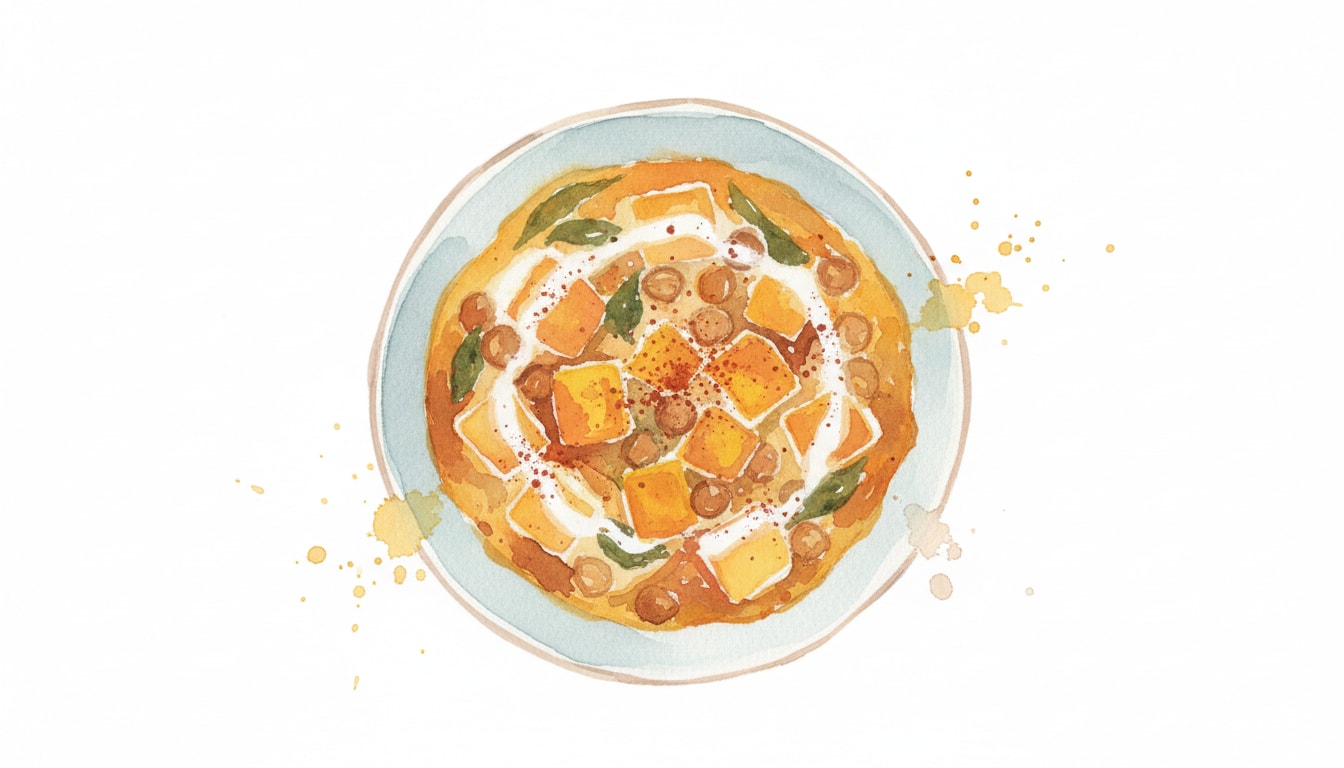
- 600 g butternut squash, peeled and cut into 2.5cm cubes
- 200 g crushed tomatoes, canned or fresh puree
- 400 ml full-fat coconut milk, canned
- 240 g chickpeas, cooked, drained, and rinsed
- 6 g salt
Finishing
- 2 g garam masala
- 10 g fresh cilantro, roughly chopped
- 15 ml lime juice, freshly squeezed
Nutrition (per serving)
Method
Prepare the butternut squash by peeling, seeding, and cutting it into uniform 2.5cm (1-inch) cubes. Mince the ginger and garlic, and finely dice the red onion.
In a heavy-bottomed pot, heat the coconut oil over medium heat. Add mustard seeds. Once they begin to pop aggressively, immediately add cumin seeds and curry leaves (stand back as they will splatter).
Add the diced onion and sauté until translucent and beginning to brown at the edges. Add ginger and garlic, cooking for another minute until aromatic.
Lower the heat slightly. Add ground coriander, turmeric, and chili powder. Stir constantly for 30 seconds to toast the spices without burning them.
Stir in the crushed tomatoes and cook for 3-4 minutes until the oil starts to separate from the tomato mixture. Add the butternut squash cubes and salt, stirring to coat the vegetable in the masala base.
Pour in the coconut milk. Bring to a boil, then immediately reduce heat to a gentle simmer. Cover partially and cook until the squash is tender but not falling apart.
Add the drained chickpeas to the pot. Simmer uncovered for an additional 5 minutes to heat the chickpeas through and thicken the sauce slightly.
Remove from heat. Stir in the garam masala and fresh lime juice. Taste and adjust salt if necessary. Garnish with fresh cilantro before serving.
Chef's Notes
- To maximize flavor, ensure the onions are cooked thoroughly until golden before adding spices; this forms the 'gravy' base.
- If you prefer a richer curry, use full-fat coconut milk. For a lighter version, use light milk but be aware the sauce will be thinner.
- The 'tempering' step (popping mustard seeds) is crucial for authentic flavor. Do not skip it, and ensure the oil is hot enough or the seeds will just boil in oil rather than popping.
- This dish pairs exceptionally well with basmati rice or flaky paratha flatbread.
Storage
Refrigerator: 4 days — Flavors deepen significantly after 24 hours.
Freezer: 3 months — Squash may become slightly softer upon thawing; reheat gently.
Reheating: Reheat on the stovetop over low heat, adding a splash of water if the sauce has thickened.