Equipment
Ingredients
Seafood
- 600 g firm white fish fillets, cut into 5cm pieces
Aromatics and Produce
- 150 g red onion, finely diced
- 200 g tomatoes, chopped
- 15 g fresh ginger, minced
- 15 g fresh garlic, minced
- 10 g green chilies, slit lengthwise
- fresh curry leaves
- 10 g fresh cilantro, roughly chopped
Spices and Pantry
- 30 ml coconut oil
- 400 ml full-fat coconut milk
- 100 ml water
- 5 g black mustard seeds
- 2 g fenugreek seeds
- 5 g kashmiri chili powder
- 5 g ground coriander
- 3 g turmeric powder
- 15 g tamarind paste
- 8 g fine sea salt
Nutrition (per serving)
Method
Using a chef's knife and cutting board, portion the fish fillets into even 5cm chunks to ensure uniform cooking. Set aside in the refrigerator while preparing the base.
Heat the coconut oil in a large skillet over medium-high heat. Once the oil shimmers, add the black mustard seeds and fenugreek seeds. Cook until the mustard seeds begin to pop vigorously, which releases their essential oils.
Immediately add the fresh curry leaves, diced red onion, minced ginger, minced garlic, and slit green chilies. Stir constantly with a wooden spoon and sauté until the onions soften and turn a light golden color.
Lower the heat slightly. Stir in the Kashmiri chili powder, ground coriander, and turmeric powder. Toast the dry spices for about 30 seconds until highly fragrant, being careful not to let them burn.
Add the chopped tomatoes and fine sea salt to the skillet. Cook, stirring occasionally, until the tomatoes break down completely and the oil begins to separate from the resulting paste.
Pour in the full-fat coconut milk, water, and tamarind paste. Stir well to combine, scraping up any browned bits from the bottom of the pan. Bring the mixture to a gentle simmer and let it cook to meld the flavors.
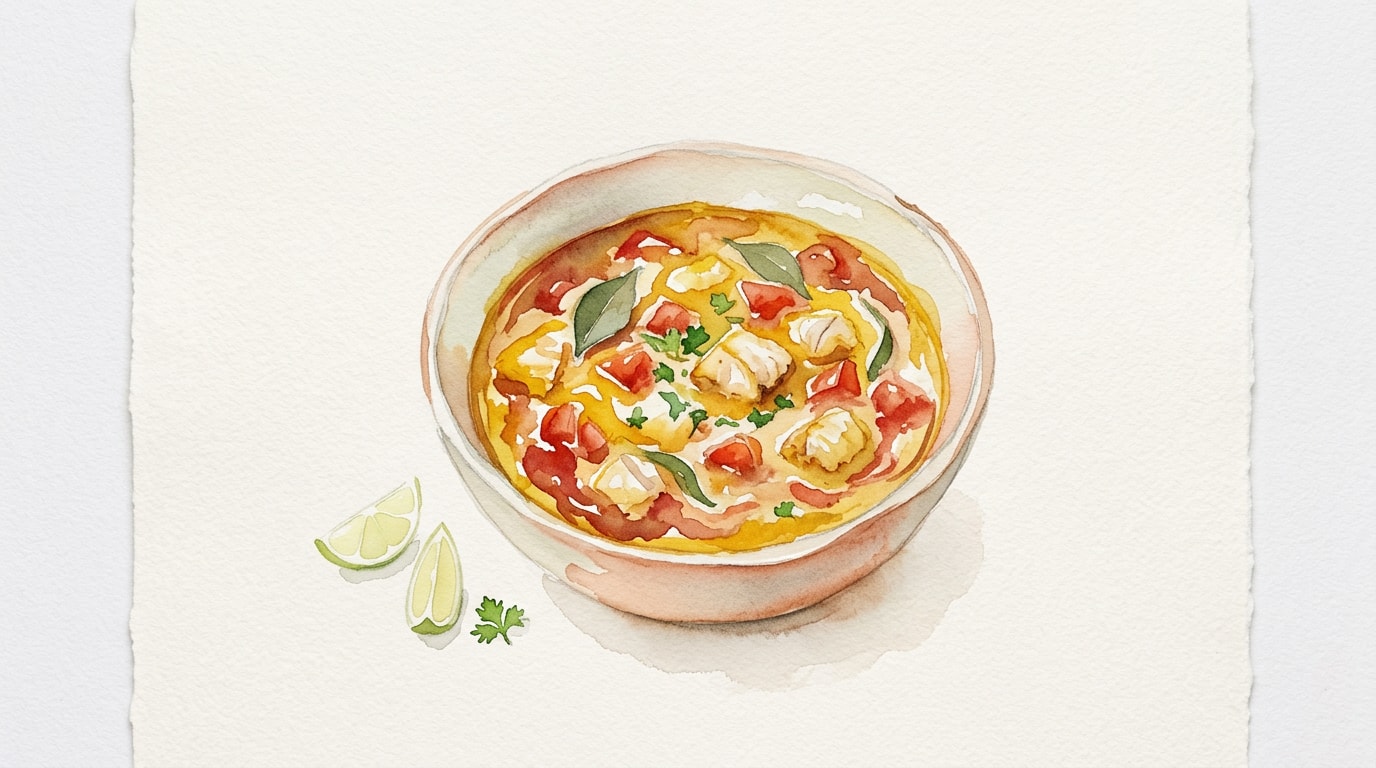
Gently nestle the fish chunks into the simmering liquid in a single layer. Spoon some of the sauce over the top of the fish. Simmer gently uncovered until the fish is opaque, flakes easily, and reaches a safe internal temperature of 63°C/145°F.
Remove the skillet from the heat. Garnish with roughly chopped fresh cilantro. Allow the curry to rest briefly before serving with steamed rice or flatbread.
Chef's Notes
- Tempering, known as tadka, is a crucial first step. Ensure your coconut oil is hot enough that the mustard seeds immediately sputter and pop, which unlocks their pungent essential oils and transforms their flavor from bitter to nutty.
- Always choose a firm-fleshed white fish for curries, such as barramundi, halibut, cod, or mahi-mahi. Delicate fish like sole or flounder will disintegrate during the poaching process.
- Kashmiri chili powder provides a vibrant, deep red color without overwhelming heat. If substituting with standard cayenne pepper, reduce the quantity by at least half to avoid making the dish too spicy.
- Fresh curry leaves are uniquely aromatic with citrus and complex herbal notes. If you cannot source them, it is better to omit them entirely rather than substituting with dried curry powder, which is a completely unrelated ingredient.
- Tamarind provides a sour, fruity depth that cuts through the richness of the coconut milk. If using fresh lime juice as a substitute, only add it off the heat at the very end to prevent the citrus from turning bitter.
Storage
Refrigerator: 3 days — Store in an airtight container. The flavors will deepen overnight.
Freezer: 1 month — Freeze in a sealed container. Thaw overnight in the refrigerator before reheating. Fish texture may become slightly softer.
Reheating: Reheat gently on the stovetop over medium-low heat until thoroughly warmed to 74C. Avoid rapid boiling to prevent the fish from overcooking and the coconut milk from splitting.