Equipment
Ingredients
The Ham & Aromatics
- 2500 g boneless unsmoked gammon joint, tied
- yellow onion, halved
- 2 carrot, roughly chopped
- 2 celery, roughly chopped
- 2 bay leaves, dried
- 5 g black peppercorns, whole
- 3000 ml water
The Glaze
- 150 g honey, runny
- 50 g english mustard, prepared
- 50 g dark brown sugar, lightly packed
- 10 g whole cloves
Nutrition (per serving)
Method
Place the gammon joint, halved onion, chopped carrots, chopped celery, bay leaves, and black peppercorns into a large stockpot.
Cover the contents completely with cold water. Bring to a boil, then reduce the heat, cover, and gently simmer for 2 hours. Skim off any white scum that floats to the top during the first 30 minutes.
Carefully remove the gammon from the hot liquid and transfer it to a cutting board. Let it sit until it is cool enough to handle safely, about 15 minutes.
Preheat the oven to 200°C/400°F.
Using a sharp knife, carefully peel away the thick leathery rind (skin) from the ham, ensuring you leave an even, generous layer of white fat intact underneath.
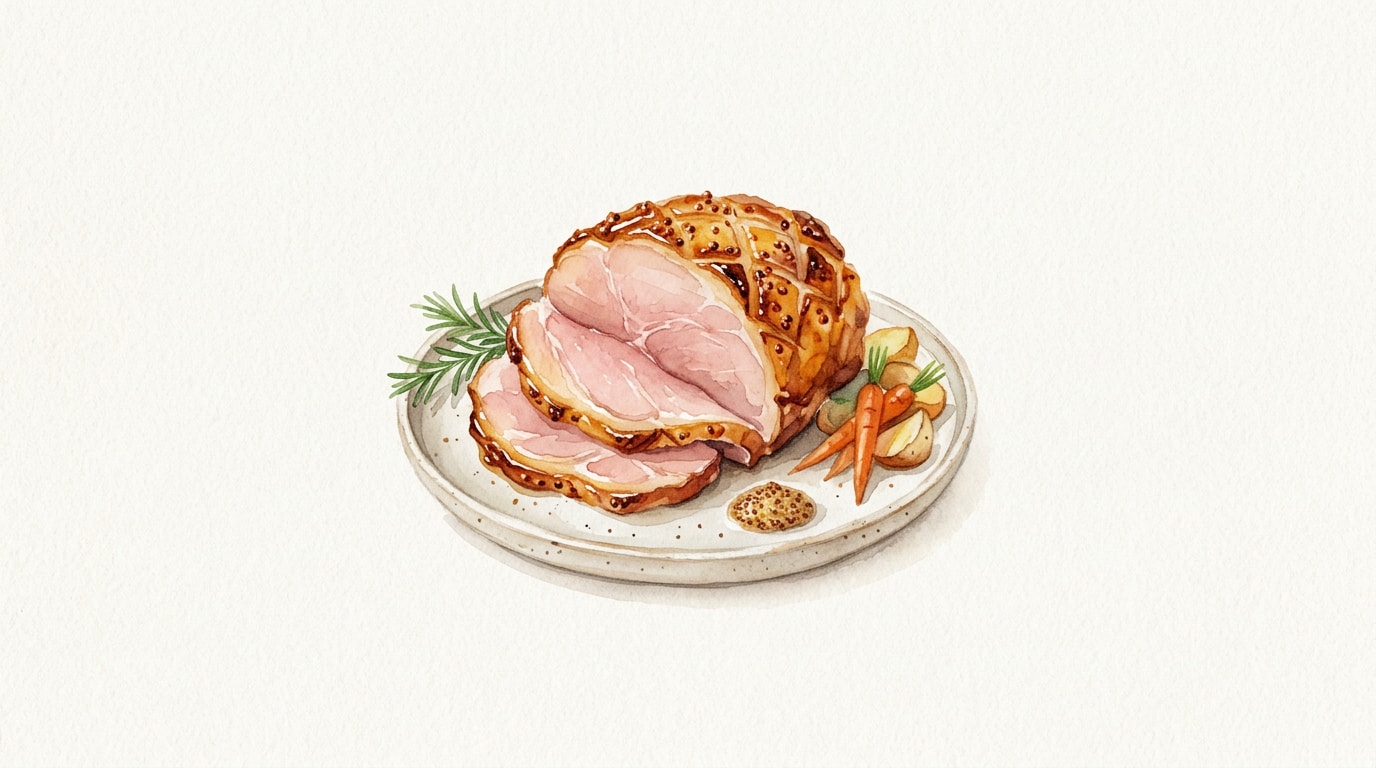
Score the remaining fat layer in a crisscross diamond pattern, taking care not to cut all the way down into the meat. Press one whole clove firmly into the center or intersecting points of each diamond.
In a small bowl, combine the honey, English mustard, and dark brown sugar. Stir until a smooth paste forms.
Transfer the studded ham to a roasting pan. Brush exactly half of the honey mustard glaze generously and evenly over the scored fat.
Roast the ham for 15 minutes, then remove from the oven to brush with the remaining glaze. Return to the oven and roast for an additional 15 minutes until the fat is glossy, bubbling, and deeply caramelized. Ensure the internal temperature reaches at least 74°C/165°F.
Remove the ham from the oven and allow it to rest loosely tented with foil for at least 15 minutes before carving.
Chef's Notes
- Do not discard the poaching liquid. Once strained, it makes an exceptional, deeply savory stock for split pea, lentil, or potato soups.
- English mustard is crucial here, as its sharp horseradish-like bite cuts through the rich pork fat and balances the extreme sweetness of the honey.
- If you prefer an even stickier glaze, replace 50g of the honey with orange marmalade. The pectin in the marmalade helps the glaze adhere and set beautifully on the fat.
- Modern supermarket gammons rarely require overnight soaking, but artisanal or traditionally cured joints often do. Always check with your butcher or the packaging instructions.
Storage
Refrigerator: 5 days — Wrap tightly in foil or parchment paper to prevent the meat from drying out.
Freezer: 2 months — Slice before freezing. Freeze in portions separated by parchment paper.
Reheating: Enjoy cold, or reheat slices gently in a pan with a splash of water or stock to maintain moisture.