Equipment
* optional
Ingredients
Pasta Dough
- 300 g 00 flour
- 3 whole eggs, room temperature
- 1 egg yolk
- 15 ml olive oil
- 3 g salt
Lobsters
- 2 live whole lobsters
Lobster Broth
- 15 ml olive oil
- 1 yellow onion, diced
- 1 carrot, diced
- 2 celery stalk, diced
- 30 g tomato paste
- 60 ml cognac
- 120 ml dry white wine
- 1500 ml water
- 3 thyme sprigs
- 1 bay leaf
- 2 g black peppercorns, whole
Ravioli Filling
- 150 g ricotta cheese, drained
- 50 g mascarpone cheese
- 2 g lemon zest, finely grated
- 5 g chives, minced
- 2 g salt
- 1 g black pepper, freshly ground
Garnish
- 150 g broccoli florets, blanched
- 30 g unsalted butter
- 1 garlic, minced
Nutrition (per serving)
Method
Combine the 00 flour, whole eggs, egg yolk, 15ml olive oil, and 3g salt in a mixing bowl to form a shaggy dough. If serving to highly vulnerable populations, ensure pasteurized eggs are used.
Transfer the dough to a clean work surface and knead firmly until it becomes completely smooth, springy, and elastic.
Wrap the kneaded dough tightly in plastic wrap and let it rest at room temperature to relax the gluten network.
Bring a large pot of salted water to a rolling boil. Plunge the live whole lobsters into the water and par-cook them until the shells turn bright red and the internal temperature reaches 60°C/140°F.
Transfer the par-cooked lobsters into an ice bath container to immediately stop the cooking process. Once cooled, use a chef's knife and cutting board to extract all the meat, separating the tail and knuckle meat for the filling, and keeping the claw meat intact for the garnish. Reserve all shells. Thoroughly wash your hands, knife, and cutting board with hot soapy water after handling undercooked seafood to prevent cross-contamination.
Heat 15ml olive oil in a saucepan over medium-high heat. Add the reserved empty lobster shells and saute them aggressively until they are deeply roasted and highly fragrant.
Add the diced yellow onion, carrot, and celery stalks to the roasted shells in the saucepan, sauteing until the vegetables are softened and lightly caramelized.
Stir the tomato paste into the vegetable and shell mixture, allowing it to cook until it darkens to a deep rust color and coats the bottom of the pan.
Pour the cognac into the saucepan to deglaze, actively scraping up any browned fond from the bottom of the pot. Cook until the sharp alcohol scent has completely evaporated.
Add the dry white wine, water, thyme sprigs, bay leaf, and black peppercorns. Bring to a gentle boil, then lower the heat and simmer the broth uncovered to extract the maximum amount of flavor from the shells.
Carefully pour the finished hot broth through a fine mesh strainer into a clean container, pressing gently on the solids before discarding them. Return the clear strained broth to the saucepan and keep it warm over a very low flame.
Finely chop the par-cooked lobster tail and knuckle meat on a clean cutting board until it forms small, uniform pieces.
Combine the chopped lobster meat, drained ricotta cheese, mascarpone cheese, lemon zest, minced chives, 2g salt, and freshly ground black pepper in a mixing bowl. Stir until well integrated, then transfer the mixture into a piping bag.
Unwrap the rested pasta dough and pass it through a pasta machine, stepping down the thickness settings gradually until the dough forms a smooth, semi-translucent sheet approximately 1.5mm thick.
Pipe small, uniform mounds of the lobster filling onto the pasta sheet, leaving approximately two finger-widths of space between each mound.
Lightly brush cold water in a halo around each mound of filling. Carefully fold the pasta sheet over the filling and press down firmly around each mound, specifically working from the filling outward to push out all trapped air before finalizing the seal.
Cut the sealed dough into individual ravioli using a fluted ravioli stamp or a sharp knife, transferring the finished pieces to a lightly floured section of the work surface.
Melt the unsalted butter in a skillet over medium heat. Add the minced garlic and saute briefly until highly fragrant but not browned.
Add the blanched broccoli florets and the reserved whole lobster claw meat to the skillet with the garlic butter. Toss gently until everything is warmed through and the lobster claws reach a fully cooked internal temperature of 74°C/165°F.
Bring the large pot of salted water back to a gentle, rolling boil. Carefully drop in the fresh ravioli and cook until they float to the surface and the pasta edges become tender.
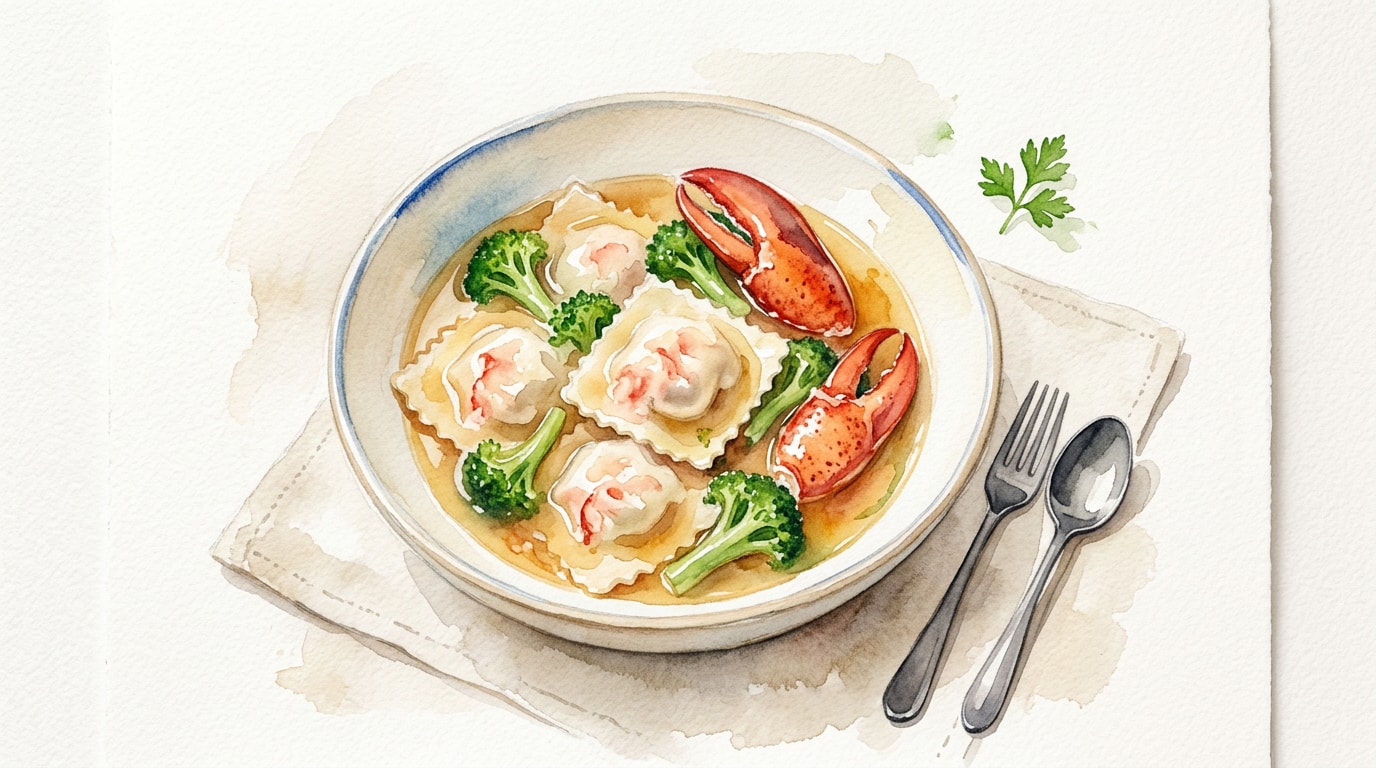
Use a slotted spoon to carefully lift the cooked ravioli out of the water, dividing them among warm serving bowls. Ladle the hot, clear lobster broth generously over the pasta, and thoughtfully arrange the warm sauteed lobster claws and buttery broccoli florets on top of each dish.
Chef's Notes
- For the most intense and robust broth flavor, use a heavy cleaver to deeply crush the roasted lobster shells in the pot before adding the mirepoix, which exposes more surface area and marrow to the liquid.
- Drain the ricotta cheese through cheesecloth in the refrigerator overnight to ensure the filling is exceptionally thick and dry; excessive moisture in the filling will compromise the pasta dough from the inside out.
- A measured dash of cognac not only deglazes the pan but its specific alcohol compounds bond uniquely with the aromatic flavor molecules in the tomatoes and lobster shells, making the final broth taste exponentially richer.
- Do not over-knead the pasta dough once it becomes smooth, and never skip the resting phase; relaxed gluten is mandatory for rolling the dough thin enough without it springing back or tearing.
- When boiling fresh pasta, ensure the water is at a gentle, rolling boil rather than violently churning. A violent boil can agitate delicate fresh ravioli enough to break their seals.
Storage
Refrigerator: 2 days — Store cooked ravioli and broth in separate airtight containers to prevent the pasta from becoming mushy.
Freezer: 1 month — Freeze uncooked ravioli in a single layer on a baking sheet before transferring to a freezer bag. Broth freezes perfectly in an airtight container.
Reheating: Warm broth gently on the stove over medium heat. Cook ravioli directly from frozen in boiling water, adding 1 to 2 minutes to the cooking time.