Equipment
Ingredients
Squash Base
- 800 g kabocha squash, peeled, seeded, and cubed
- 800 ml water
- 30 g granulated sugar
- 4 g salt
Rice Flour Slurry
- 30 g sweet rice flour
- 60 ml cold water
Garnish
- 20 g dried jujubes, pitted and thinly sliced
- 15 g pine nuts, lightly toasted
Nutrition (per serving)
Method
Carefully peel and seed the kabocha squash, then cut it into even 3 cm cubes.
Place the cubed squash and 800ml of water into a large pot. Bring to a boil over medium-high heat. Once boiling, cover the pot, reduce the heat to medium-low, and cook until the squash is very tender and easily pierced with a fork, about 15 minutes.
Remove the pot from the heat. Using an immersion blender directly in the pot, blend the cooked squash and water until completely smooth, ensuring no lumps remain.
In a small bowl, whisk the sweet rice flour with 60ml of cold water to create a slurry. Ensure there are no dry pockets or lumps.
Return the pot to medium-low heat. Slowly pour the sweet rice flour slurry into the smooth squash base while stirring continuously. Simmer gently, stirring often to prevent sticking at the bottom, until the porridge thickens to a glossy, bisque-like consistency.
Stir in the salt and sugar. Taste the porridge and add more sugar if the natural sweetness of the squash requires it. Remove from heat.
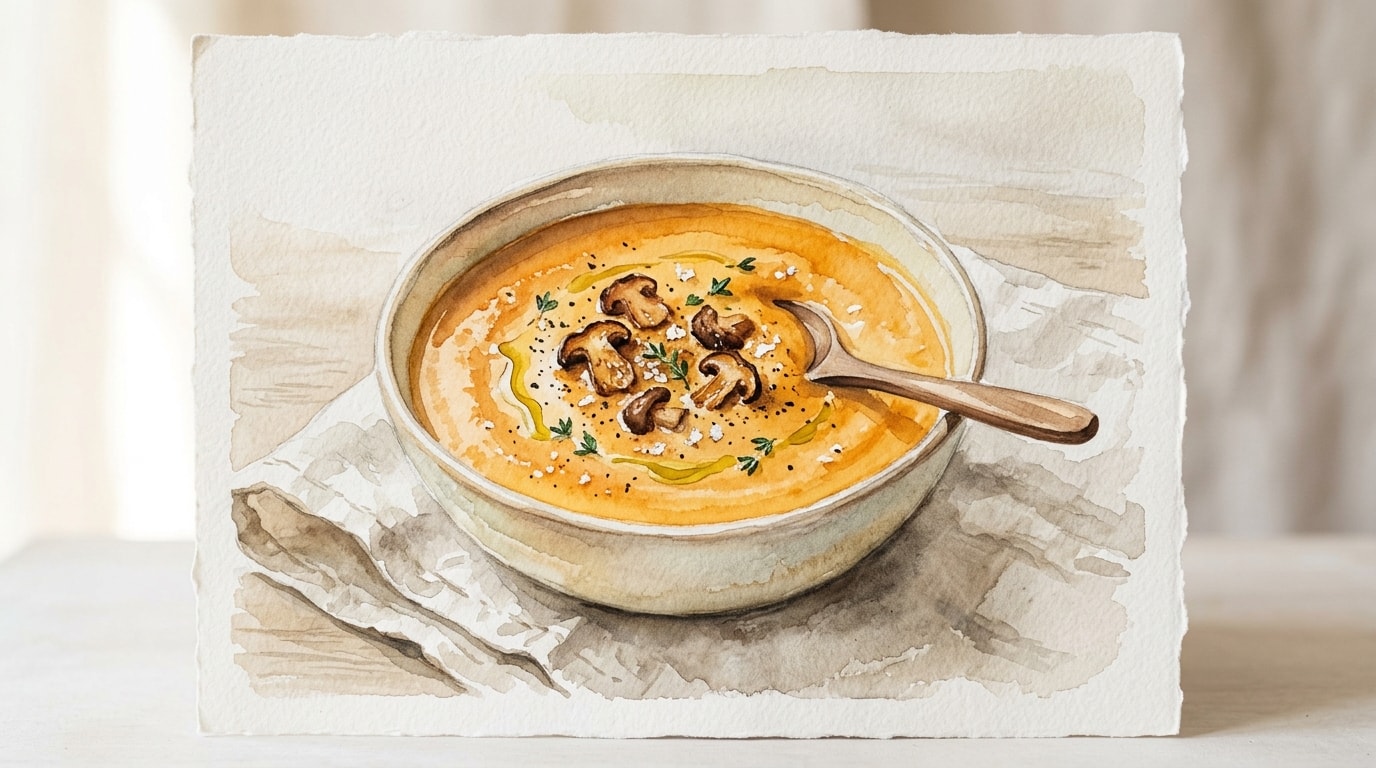
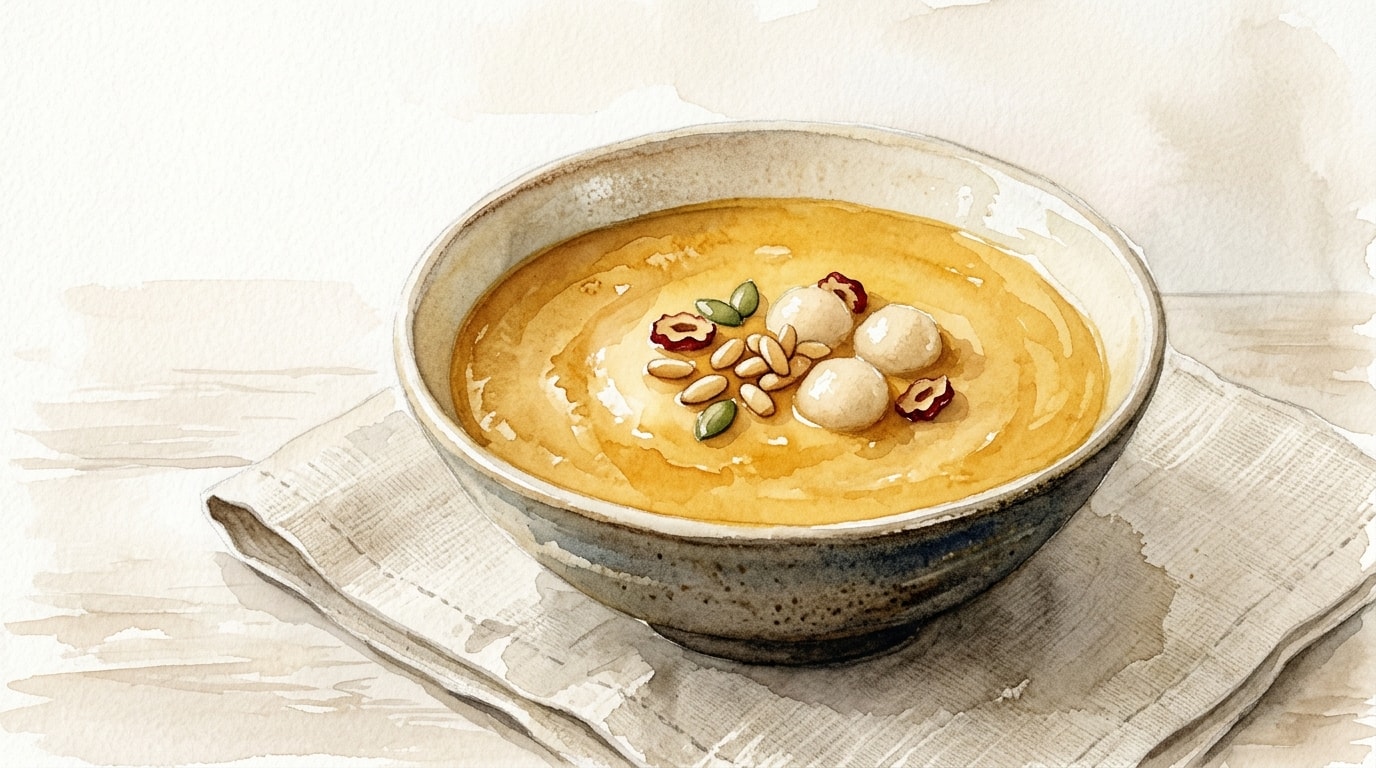
Ladle the hot porridge into bowls. Garnish each serving with thinly sliced jujubes or dates and a sprinkle of pine nuts. Serve immediately.
Chef's Notes
- Kabocha squash is preferred for its dense, sweet, and chestnut-like flavor, but butternut squash is an excellent substitute. If using butternut, you may need slightly less water as it has a naturally higher moisture content.
- To make peeling the tough, thick skin of kabocha squash much easier and safer, microwave the whole squash for 3 to 4 minutes to slightly soften the exterior before carefully cutting into it.
- Sweet rice flour, also known as glutinous rice flour or mochiko, is absolutely crucial for achieving the signature glossy, velvety texture of this dish. Standard rice flour will result in a gritty or chalky consistency.
- Traditional Korean jujubes offer a distinct floral sweetness, but standard Medjool dates work beautifully as an accessible, naturally sweet alternative for the garnish.
Storage
Refrigerator: 4 days — Store in an airtight container.
Freezer: 3 months — Thaws perfectly. Reheat gently on the stovetop.
Reheating: Warm on the stovetop over medium-low heat, stirring frequently. Add a splash of water if it has thickened too much.