Equipment
Ingredients
Base
- 800 g kabocha squash, peeled, seeded, and cut into 3cm cubes
- 80 g sweet white rice, rinsed under cold water until clear, drained
- 1000 ml water
Seasoning
- 4 g kosher salt
- 30 g granulated sugar
Garnish
- 20 g dried jujubes, pitted and thinly sliced
- 10 g pine nuts, lightly toasted
Nutrition (per serving)
Method
Prepare the kabocha squash by peeling the tough outer skin, scooping out the seeds, and cutting the flesh into roughly 3cm cubes. Rinse the sweet white rice under cold running water until the water runs completely clear.
In a large heavy-bottomed pot, combine the cubed squash, rinsed sweet white rice, and water. Place over medium-high heat and bring to a rolling boil at 100°C/212°F.
Once boiling, reduce the heat to medium-low, cover the pot with a tight-fitting lid, and simmer for 25 minutes. Check periodically to ensure the bottom is not scorching.
Remove the pot from the heat. Carefully use an immersion blender to puree the mixture directly in the pot until it reaches a completely smooth, velvety consistency with no remaining lumps of squash or rice.
Return the pureed porridge to the stove over the lowest possible heat. Stir in the kosher salt and granulated sugar. Simmer gently for an additional 2 to 3 minutes, stirring constantly with a long-handled spoon to prevent splattering.
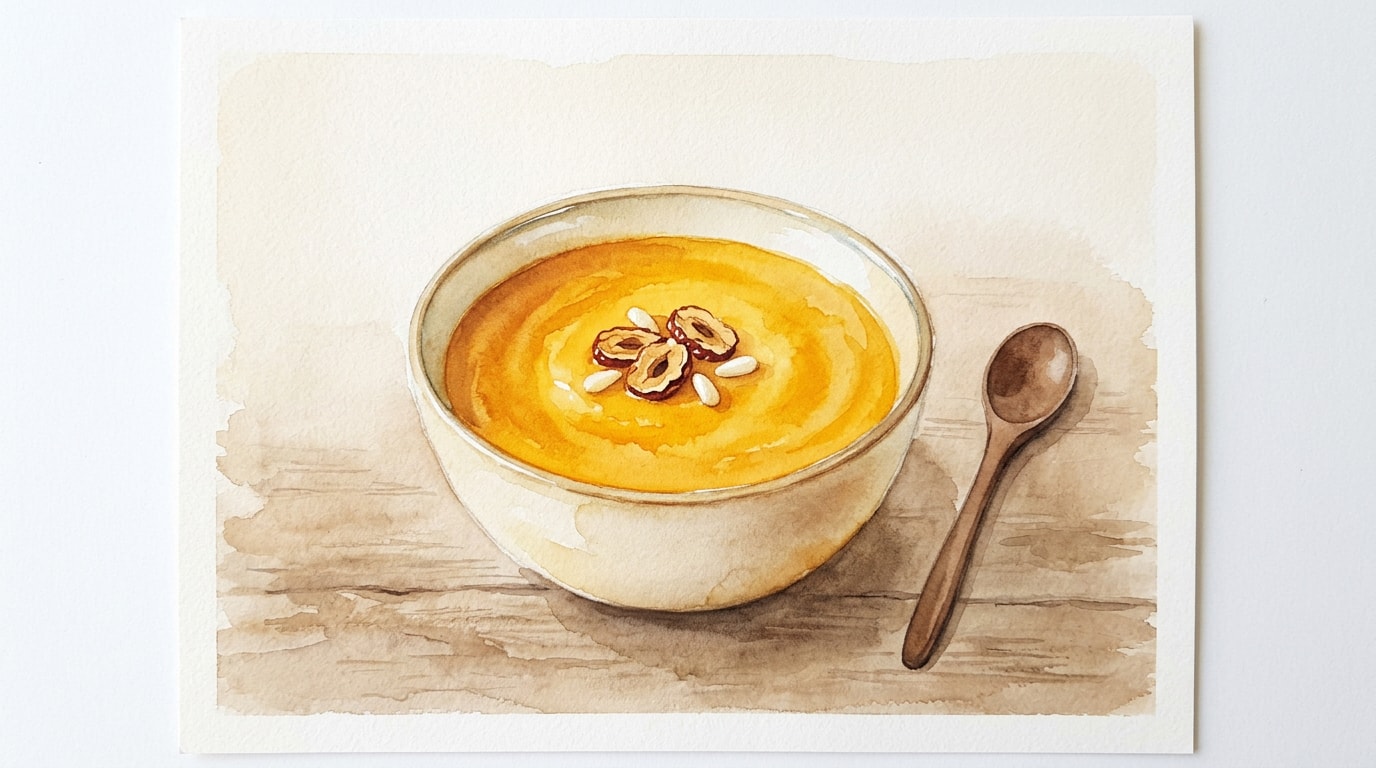
Ladle the hot porridge into serving bowls. Garnish each bowl with the sliced jujubes (or dates) and lightly toasted pine nuts. Serve immediately while warm.
Chef's Notes
- Kabocha squash has a naturally dense, sweet flesh with lower water content than butternut squash, resulting in a richer, more velvety texture. If using butternut squash, you may need to reduce the water slightly or simmer longer to reach the correct consistency.
- Sweet white rice, also known as glutinous rice, is strictly essential for the characteristic sticky, bisque-like mouthfeel of Hobak-juk. Standard short-grain or long-grain rice will not yield the same glossy, cohesive finish.
- Peeling raw kabocha can be difficult and dangerous due to its tough skin. To make it easier, you can microwave the whole squash for 3 to 4 minutes to soften the exterior slightly before peeling.
- The sweetness of winter squash varies greatly depending on the season and specific crop. Always taste your pureed porridge before adding the full amount of sugar, adjusting based on the natural sweetness of the vegetable.
Storage
Refrigerator: 5 days — Store in an airtight container. The porridge will thicken significantly as it cools.
Freezer: 3 months — Freeze in individual portions. Thaw overnight in the refrigerator before reheating.
Reheating: Reheat gently on the stovetop over low heat or in the microwave. Stir in a splash of water to loosen the consistency if it has become too thick.